
Apps Games Articles
Venmo
Venmo
Rating 4.1star icon
Editor's summary
Editor rating
star icon star icon star icon star icon empty star icon
4.3

One-line summary Venmo is one of the easiest ways to split, send, and request money in daily life, but its occasional bugs, transaction limits, and a few awkward UX choices keep it from feeling completely bulletproof.

  • Installs

    50M+

  • Developer

    Venmo

  • Category

    Finance

  • Content Rating

    Everyone

  • Latest version

    26.4.1

  • Package

    com.venmo

Screenshots
In-depth review
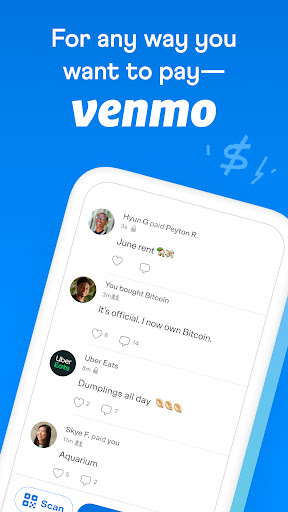
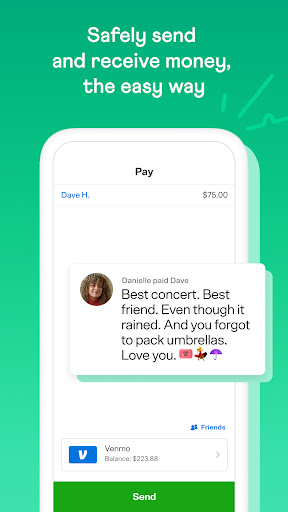
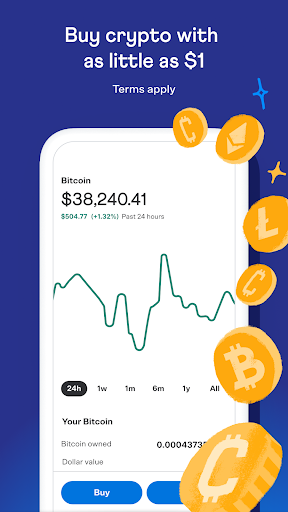
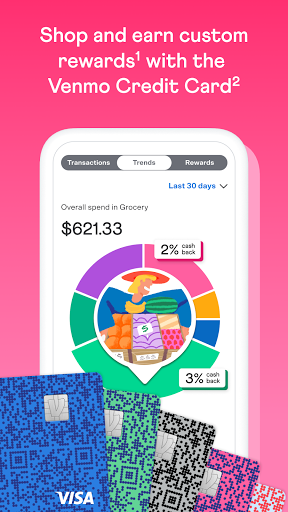
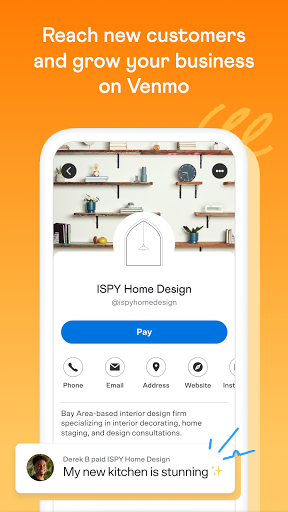
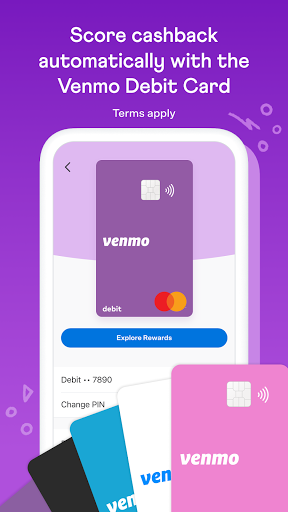
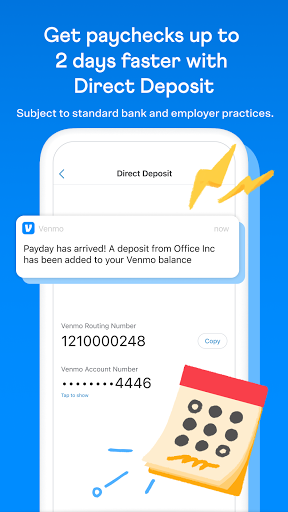
Venmo remains one of the most recognizable peer-to-peer payment apps for a reason: in day-to-day use, it makes paying people feel casual, quick, and almost frictionless. After spending time with the app as a regular money-moving tool rather than a novelty, what stood out most was how well it handles the little social transactions that make up real life. Paying a friend back for dinner, requesting rent from a roommate, splitting a group expense, or sending money to family all feel straightforward. This is where Venmo is strongest, and it still delivers an experience that is easier and friendlier than a lot of finance apps that lean too hard into sterile banking design. The app’s core flow is its best feature. Sending money is simple, and requesting money is just as important here. In practice, the request flow is one of the app’s most useful tools because it removes the need for reminders and awkward follow-ups. If you are the person constantly covering the group tab, Venmo makes the cleanup process much less painful. I also liked that it supports splitting requests among multiple friends, which is genuinely helpful for shared purchases and group events. That feature is not perfect, though. It works, but it can feel less intuitive than it should, especially when you want a quick at-a-glance view of who owes what. Some group balances and split details make more sense after drilling into the right screen than they do from the main home view. Venmo also does a good job of feeling approachable. The interface is cleaner and less intimidating than a traditional banking app, and most of the primary actions are easy to find. Even if you are not especially tech-savvy, it does not take long to understand how to pay, request, check your balance, or move money out to a bank. That ease of use matters, because apps like this live or die on whether they can be used in the middle of everyday life without making you stop and think. In my testing, Venmo mostly succeeds. It feels like a tool built for quick actions, not a financial dashboard demanding your attention. Another thing Venmo gets right is flexibility around access to your money. Standard bank transfers are available if you are willing to wait, and there is also a faster transfer path for people who need money moved quickly. That balance between free patience and paid speed is practical. It also helps that Venmo has grown beyond bare-bones person-to-person transfers. The app now includes debit card, credit card, business profile, teen account, and crypto-related features. Not all of these will matter to everyone, and some users will never touch them, but they do make the app feel more like a broader financial hub than a one-trick payment button. That said, Venmo is not without rough edges. The biggest concern is that, for an app handling real money, some parts of the experience still feel a little too casual. The social tone is part of the brand, but money apps need to be unambiguous. Venmo can sometimes make it too easy to move fast without enough friction. If you are not paying close attention, there is real potential to send money to the wrong person or act too quickly. The app does include security settings such as a PIN, which helps, but I came away feeling that stronger protective defaults would make the app better for everyone, especially less careful users. The second issue is reliability at the margins. Most of the time, Venmo works exactly as expected. But when something goes wrong, even a small glitch becomes more frustrating than it would in a social app because this is money. During testing, the general performance felt solid, but there is still a faint sense that some screens and features are more polished than others. Transaction history, balances, and split-payment views should always feel rock solid. If they hesitate, load oddly, or present information in a slightly confusing way, confidence drops fast. The third weakness is that Venmo’s growing feature set can make the app feel a bit busier than necessary. If all you want is to send money, some of the surrounding products and prompts can feel like clutter. None of it is hard to ignore, but the app is no longer the lean, singular utility it once felt like. There is a difference between adding options and adding noise, and Venmo occasionally edges toward the latter. Who is Venmo for? It is best for people who regularly split meals, collect shared bills, send money to friends and family, or want a low-friction payment app that feels familiar and easy to use. It is especially good for socially connected, everyday transactions where speed and simplicity matter more than deep financial controls. It is also a decent fit for users who like having the option to expand into cards, direct deposit, or business use without switching apps. Who is it not for? If you want a highly controlled, ultra-minimal money app with strict confirmation steps and no social layer, Venmo may not be your favorite. It is also less ideal for users who get anxious about sending money to the wrong contact or who want every balance and split detail surfaced in the cleanest possible way. Overall, I came away with a positive impression. Venmo still nails the most important thing: it makes everyday payments feel easy. That alone keeps it highly recommendable. But it also shows the strain of being more than a payment app now. A few interface decisions, occasional rough edges, and the need for stronger confidence-building safeguards stop it short of greatness. Still, for most people who just need to pay and get paid without turning it into a project, Venmo remains a very good choice.
Alternative apps