
Apps Games Articles
PayPal - Pay, Send, Save
PayPal Mobile
Rating 4.2star icon
Editor's summary
Editor rating
star icon star icon star icon star icon
half star icon
4.5

One-line summary PayPal remains one of the easiest and safest ways to move money and shop online, though its occasionally confusing menus and feature sprawl can make simple tasks feel more buried than they should.

  • Installs

    100M+

  • Developer

    PayPal Mobile

  • Category

    Finance

  • Content Rating

    Everyone

  • Latest version

    8.101.0

  • Package

    com.paypal.android.p2pmobile

In-depth review
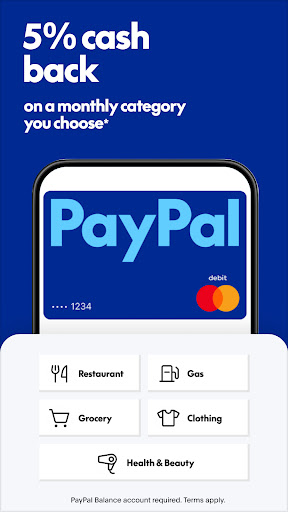
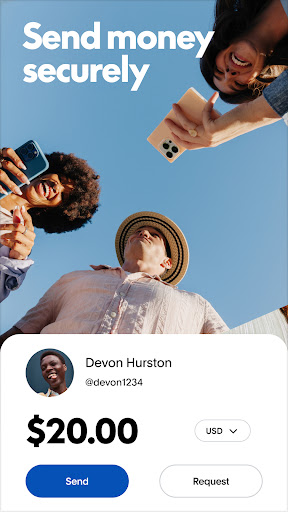
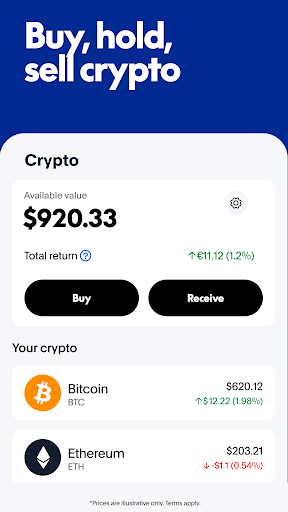
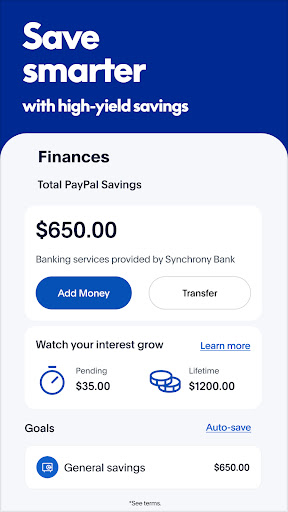
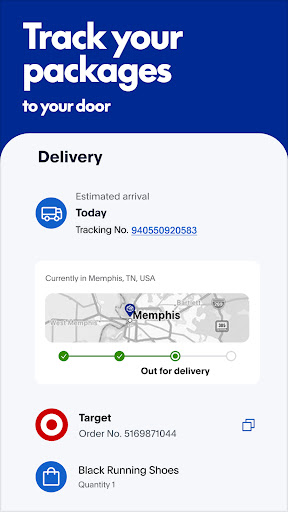
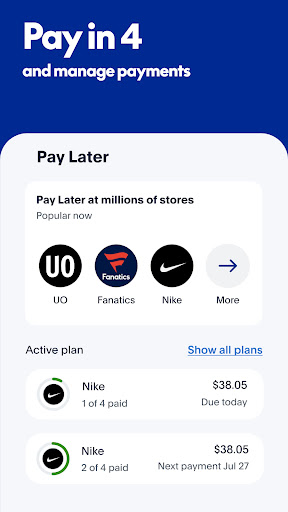
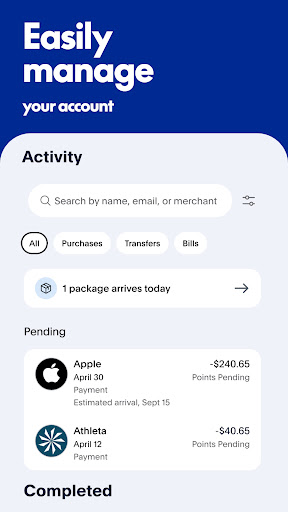
After spending real time with PayPal - Pay, Send, Save on Android, the clearest takeaway is that this is still one of the most practical money apps you can keep on your phone. It is not the prettiest finance app, and it is not always the most streamlined, but when you need to send money, receive money, pay online, check a balance, or sort out a purchase without exposing your card details everywhere, PayPal still makes a strong case for itself. What struck me first is how familiar and usable the app feels. PayPal has the advantage of being deeply established, and that maturity shows in the basics. Logging in, checking recent activity, and jumping into common actions like sending or requesting money feels fast enough and generally intuitive. The home screen does a decent job of surfacing the things most people are likely to use regularly, and the app is clearly designed around the idea that many users want to complete a money task in seconds, not linger inside a finance dashboard. In everyday use, the strongest part of PayPal is convenience. Sending money is simple, and receiving it feels equally straightforward. If you already live in the PayPal ecosystem for online shopping, freelance payments, or splitting costs with friends and family, the app reduces a lot of friction. It is especially useful when you do not want to hand over your bank or card details directly to every merchant or individual. That sense of separation is one of the app’s biggest strengths, and in practice it gives transactions a reassuring layer of distance and security. The second thing I liked is how much functionality is packed in without making the app completely collapse under its own weight. Beyond person-to-person payments, there are tools for offers, debit card access, installment-style payment options, package tracking, savings features, and even crypto for those who want it. Not everyone will use all of that, and I certainly did not need every corner of the app, but the upside is clear: for many people, PayPal can act as a financial utility knife. You can use a little of it or a lot of it depending on your habits. That said, this breadth is also where one of the app’s weaknesses appears. PayPal is trying to be a payments app, shopping companion, rewards hub, and financial services portal all at once. The result is that the interface can sometimes feel busy. When I wanted to do something basic, like find a more detailed piece of account information or locate a specific fee-related explanation, the path was not always as direct as it should have been. Some parts feel polished and immediate; others feel tucked away behind too many taps or pushed into a web-style help flow. For an app built around reducing friction, that inconsistency stands out. Another genuine strength is trust. In use, PayPal feels like a service built around the idea that transactions can go wrong and that users need some protection when they do. That matters. It changes how comfortable you feel using it for online purchases, especially with unfamiliar sellers. The app itself reinforces that confidence by keeping transaction history visible and making it fairly easy to monitor what has happened and where your money went. For people who buy online often, that peace of mind is not a minor perk; it is a core reason to use PayPal in the first place. Still, the experience is not friction-free. A second weakness is that some actions can feel more opaque than they should. Money movement is easy when everything is standard, but when you want more detailed context, exact fee clarity, or certain account-management details, the app can become less elegant. I also found that not every feature feels equally accessible across every scenario. The app is strongest when you are doing mainstream PayPal things. Once you step into edge cases or more detailed account tasks, it can feel less transparent. The third strength is reliability in the core flow. On a normal day, the app does what it is supposed to do: it lets you pay, transfer, request, and track activity without unnecessary drama. That sounds obvious, but for a finance app it is everything. The app’s scale and maturity show in the confidence of its main workflows. It feels like software designed for regular use, not occasional novelty. My third complaint is that the app can occasionally feel over-engineered for users who only want a simple wallet. If all you need is a clean peer-to-peer payment app with minimal extras, PayPal may feel heavier than necessary. Promotions, add-on services, and feature blocks can make the experience busier than a minimalist would prefer. There is real value here, but also more visual and navigational clutter than some people will want. So who is this app for? It is for people who shop online often, send or receive money across personal or work contexts, want an extra buffer between merchants and their financial details, or appreciate having payments, rewards, and a few extra money tools in one place. It is also a strong fit for anyone already invested in PayPal on the web, because the mobile app makes that ecosystem much easier to live in day to day. Who is it not for? If you hate feature-heavy finance apps, want ultra-simple navigation above all else, or prefer a stripped-down payment tool with fewer menus and fewer adjacent services, PayPal may feel a bit bloated. And if you regularly need highly detailed account controls inside the app itself, you may find certain sections less straightforward than expected. Overall, PayPal - Pay, Send, Save succeeds because its core purpose still works very well. It makes digital payments feel convenient, familiar, and reasonably secure, and that remains incredibly valuable. The app is not flawless: some flows could be clearer, some information is harder to reach than it should be, and the growing pile of features can make the experience feel crowded. But in the moments that matter most, when you simply need to pay, send, request, or check a transaction, PayPal delivers. For most people, that will outweigh the messier corners of the app.
Alternative apps