
Apps Games Articles
Genshin Impact
COGNOSPHERE PTE. LTD.
Rating 4.1star icon
Editor's summary
Editor rating
star icon star icon star icon star icon
half star icon
4.5

One-line summary Genshin Impact is easy to recommend for its gorgeous open world, satisfying elemental combat, and surprisingly rich story, but its huge storage demands and grind-heavy gacha progression make it a tougher sell on phones and for impatient players.

  • Installs

    50M+

  • Developer

    COGNOSPHERE PTE. LTD.

  • Category

    Adventure

  • Content Rating

    Teen

  • Latest version

    3.6.0_13833164_13951843

  • Package

    com.miHoYo.GenshinImpact

In-depth review
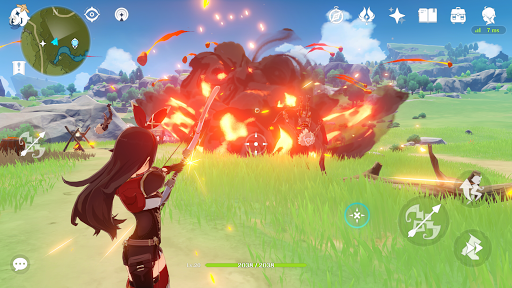
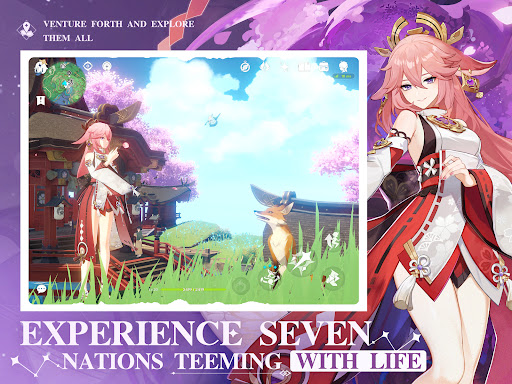
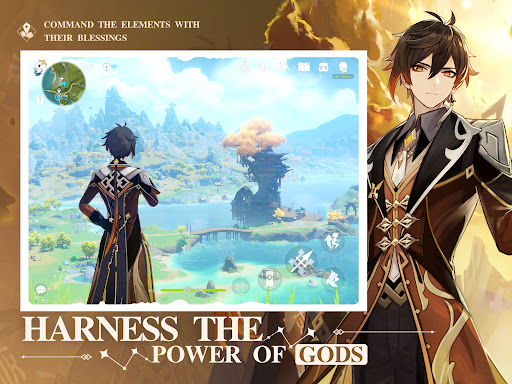
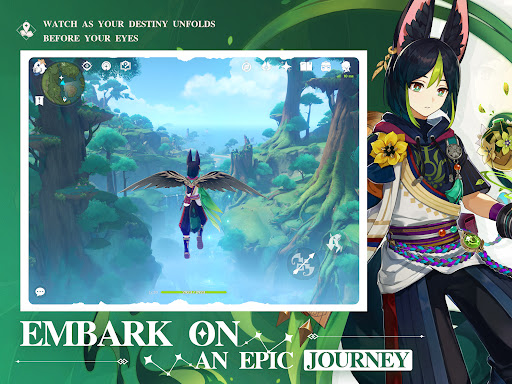
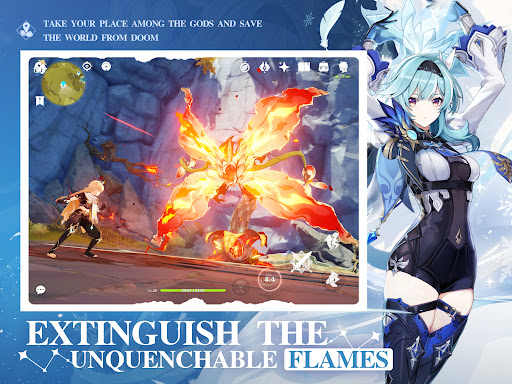
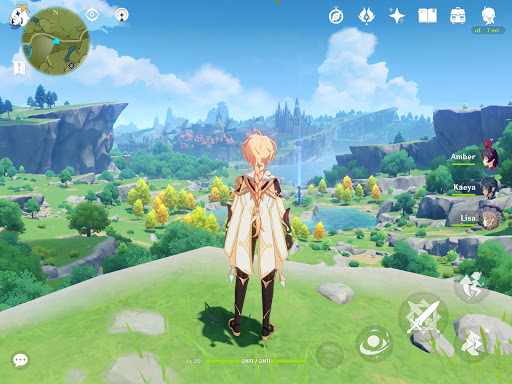
Genshin Impact remains one of the most impressive games you can download on Android, not because it does one thing brilliantly, but because it manages to combine scale, style, and moment-to-moment play in a way that still feels unusual on mobile. After spending real time with it, what stood out most was how quickly it stops feeling like a typical free-to-play app and starts feeling like a full-scale action RPG that simply happens to live on your phone. The first hook is the world itself. Teyvat is enormous, and more importantly, it feels designed to reward curiosity. In practice, that means the game is at its best when you stop chasing objectives and just wander. Climbing a ridge to see what is over the next hill, gliding into a hidden corner, stumbling into a puzzle, or following a suspicious landmark almost always leads to something worthwhile. The scenery does a lot of heavy lifting here. Even on a smaller screen, Genshin has a lush, painterly look that gives every region a distinct mood. It is one of those rare mobile titles where simply traveling through the map can be enjoyable on its own. Combat is the second major reason the game works so well. On paper, the elemental reaction system sounds like a mechanical gimmick. In play, it is what gives battles their rhythm and keeps them from becoming repetitive button mashing. Swapping between characters to combine elements adds a nice layer of planning without making the game feel inaccessible. Early fights are simple enough for casual players, but the system has enough depth that you can gradually get more efficient and more creative as your roster expands. That sense of building a team and learning how characters work together is one of the game’s strongest long-term motivators. The third big strength is presentation. Genshin is polished in the ways that matter: character animations are expressive, the soundtrack is consistently excellent, and story scenes often land with more confidence than you would expect from a mobile game. Some quests are genuinely memorable, and the game is very good at creating a sense of place and lore without making the world feel like a static backdrop. When the narrative is clicking, it adds real momentum to exploration and progression. That said, Genshin Impact is not frictionless, and some of its biggest annoyances show up only after the honeymoon period. The first is size and performance. This is a massive game, and it demands a lot from a phone. Long downloads, large storage requirements, heat, loading hiccups, and occasional lag are all part of the mobile experience to varying degrees depending on your device. On stronger hardware, it can feel remarkably smooth. On a middling phone, it can feel like you are asking too much from the platform. If you are tight on storage or sensitive to frame drops, this is not a minor inconvenience; it is a real quality-of-life issue. The second weakness is progression friction, especially around the gacha economy and character building. You can absolutely play without spending money, and importantly, the game does not force purchases just to see the main story or enjoy exploration. But if you become attached to specific characters, the experience changes. Saving enough currency for pulls takes time, and building the characters you do get can become a grind of repeated farming. There is a rewarding sense of growth when a team finally comes together, but the path there is often slower than it needs to be. The third issue is pacing. Genshin loves dialogue, and while some story arcs earn that attention, not every quest does. There are stretches where the game feels talkative to a fault, especially if you are in the mood for action and exploration rather than extended conversations. A more flexible approach to skipping or speeding through slower story sections would make the overall experience easier to recommend to players who value momentum over lore. In everyday use, Genshin Impact feels best as a game you settle into rather than a game you rush through. There is always something to do, but not everything is equally compelling. Some sessions are magical: a new area to explore, a strong story beat, a boss fight that makes your team setup click. Other sessions are more routine: spending resources, cleaning up tasks, farming materials, or working through slower quest content. Whether that loop feels relaxing or exhausting depends a lot on what you want from it. This game is for players who enjoy open-world exploration, anime-style presentation, team-building, and gradually unfolding story content. It is also a good fit for people who like dipping into a living game over a long period rather than consuming everything in one weekend. It is not for players who want a lightweight mobile title, fast progression, or a purely skill-based system without random character acquisition. And if you dislike grinding or have little patience for long dialogue sequences, the rough edges will show up quickly. Even with those caveats, Genshin Impact earns a recommendation because the foundation is so strong. Few mobile games feel this expansive, this polished, or this confident in their world design. It asks for storage, time, and patience, and sometimes too much of all three. But when it is firing on all cylinders, it delivers a genuinely impressive adventure that still feels bigger and better crafted than most of what the platform offers.
Alternative apps