
Apps Games Articles
Lily’s Garden - Design & Relax
Tactile Games
Rating 4.6star icon
Editor's summary
Editor rating
star icon star icon star icon star icon
half star icon
4.5

One-line summary Lily’s Garden is easy to recommend if you want a genuinely engaging story wrapped around a generous, low-pressure puzzle loop, but it’s a tougher sell for players who hate replaying hard levels or spending multiple stars on tiny story tasks.

  • Installs

    50M+

  • Developer

    Tactile Games

  • Category

    Puzzle

  • Content Rating

    Everyone

  • Latest version

    2.34.0

  • Package

    dk.tactile.lilysgarden

In-depth review
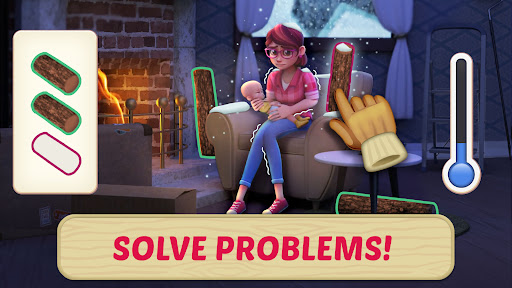
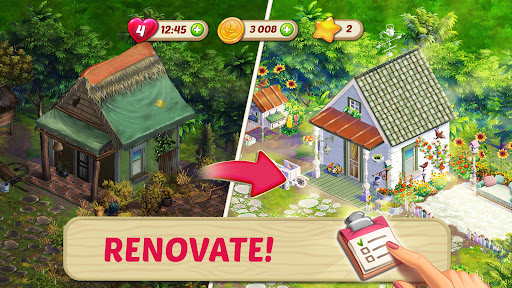
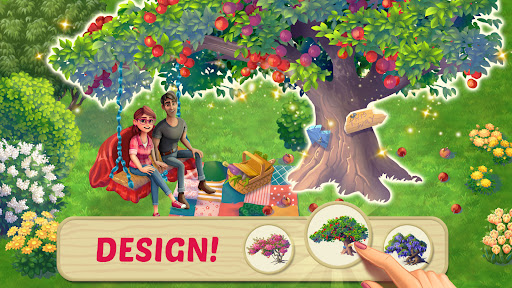
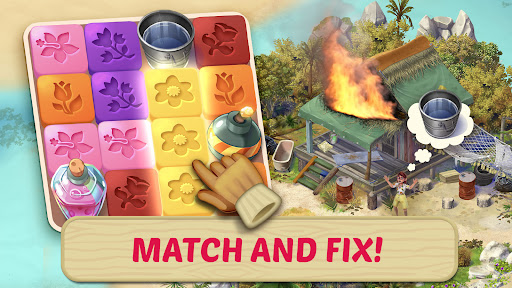
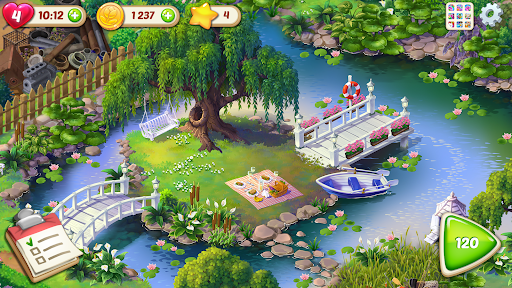
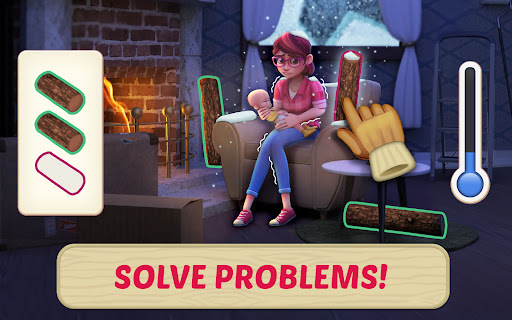
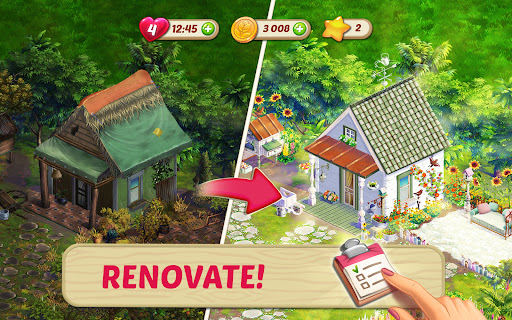
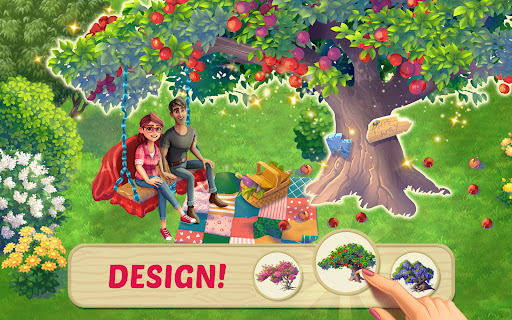
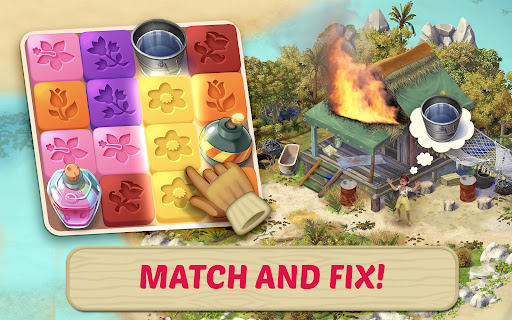
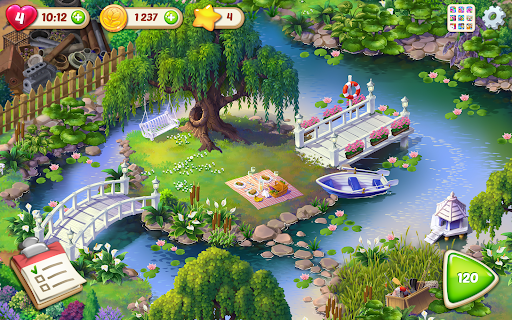
Lily’s Garden - Design & Relax is one of those mobile games that looks familiar at first glance and then quietly wins you over by being better put together than expected. On paper, it is a match puzzle game tied to a home-and-garden makeover story. In practice, it feels more like a long-running comfort game with enough personality to keep the repetitive parts from becoming stale too quickly. After spending real time with it, the biggest surprise was not the garden renovation system or even the puzzle design. It was the writing. Story-heavy puzzle games often treat the narrative as a flimsy excuse to move you from one level to the next, but Lily’s Garden puts real effort into making the characters distinct and the dialogue readable. Lily herself comes across as charming rather than generic, and the game leans into romance, family drama, and quirky side characters with more confidence than most apps in this category. If you are the kind of player who normally taps through story scenes without looking, this may be one of the few games that gets you to slow down and actually follow what is happening. That strong narrative layer is the first major strength. The second is the overall flow of play. The core puzzles are satisfying in a very familiar way: make matches, build boosters, clear board goals, move on. What helps Lily’s Garden stand out is that it usually avoids feeling punitive in the early and middle stretches. There are hard levels, and some of them absolutely demand persistence, but the game often gives enough free lives, limited-time bonuses, and event rewards that playing for free feels viable. It does not constantly corner you into spending money just to continue, which makes a huge difference in day-to-day enjoyment. You can chip away at a rough level, walk away, come back, and eventually get through it without the app feeling openly hostile. The third strength is presentation. The art is bright, clean, and inviting, with gardens and estate areas that feel pleasant to revisit. The renovation choices are not infinitely deep, but they are varied enough to make decorating feel like a reward instead of a chore. Being able to personalize the estate gives the progression some texture; you are not just clearing levels for abstract stars, you are slowly reshaping a place that becomes visually tied to your own choices. That gives the game a cozy sense of ownership that many puzzle apps chase but do not quite achieve. That said, Lily’s Garden is not friction-free. Its biggest weakness is pacing in the star economy and task structure. The game can ask for multiple stars to complete what feels like a tiny action in the story, and over time that starts to expose the grind underneath the charm. When you are breezing through levels, this is easy to ignore. When you hit a cluster of harder boards, however, every small story interaction can feel oddly expensive. It creates moments where the narrative momentum stalls because you are spending too much effort earning stars for minor chores. The second weakness is difficulty spikes. While the game is generally fairer than many of its rivals, it still has stretches where success feels less like pure strategy and more like waiting for the right board layout or the right chain reaction. Some levels take far more retries than they probably should, and that can be draining when you are mainly here for the relaxing vibe. The app says “relax,” but parts of the campaign definitely test your patience. If you strongly dislike replaying the same stage over and over, this game will eventually annoy you. The third weakness is that a few quality-of-life frustrations linger longer than they should. Some boosters feel too dependent on orientation or luck, and there are moments where you wish for more control over how a near-win can be converted into a win. The game is polished overall, but not perfect; occasional sluggishness, finicky input, or puzzle-specific irritations can interrupt the smoothness of a session. None of this ruined the experience during testing, but it did keep the app from feeling truly premium. One area Lily’s Garden handles well is ads. Even though the app contains ads and in-app purchases, the experience does not feel overrun by forced interruptions. Optional ads tied to extra rewards are much easier to tolerate than constant interstitials, and that choice helps preserve the game’s relaxed tone. It is a small design decision with a big impact: this feels like a game that wants you to stay, not one that wants to exhaust you into quitting. Who is this for? It is a great fit for players who enjoy match puzzles but want more context, more charm, and more of a reason to keep going than just another numbered level. It is also a good pick for people who like long-term mobile games they can check in on daily without feeling pressured to spend. If you enjoy decorating spaces, following character drama, and making steady progress over weeks or months, Lily’s Garden is easy to sink into. Who is it not for? If you want a pure puzzle game with no story interruptions, this is not that. If you are allergic to makeover mechanics, romance-driven writing, or the occasional grind wall, you may bounce off it even if the underlying match gameplay is competent. Likewise, players looking for deep design simulation rather than light cosmetic choices may find the renovation side too simple. Overall, Lily’s Garden succeeds because it understands that comfort games still need personality. It is not flawless, and its hard levels and star-gated pacing can absolutely wear on you, but it offers a rare combination of solid puzzle design, appealing presentation, and a story that is actually worth noticing. In a crowded category, that is enough to make it stand out for the right audience.