
Apps Games Articles
Stickman Hook
Madbox
Rating 4.0star icon
Editor's summary
Editor rating
star icon star icon star icon star icon empty star icon
4.3

One-line summary Stickman Hook is easy to recommend if you want a slick, instantly satisfying arcade time-killer, but the heavy ad pressure and eventually repetitive level design keep it from being an all-time mobile classic.

  • Installs

    100M+

  • Developer

    Madbox

  • Category

    Arcade

  • Content Rating

    Everyone

  • Latest version

    8.5.0

  • Package

    com.mindy.grap1

In-depth review
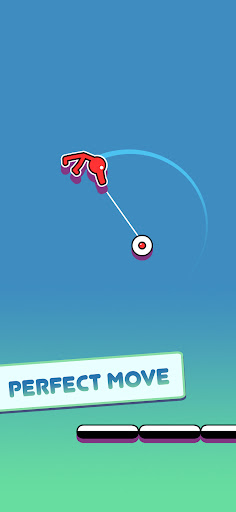
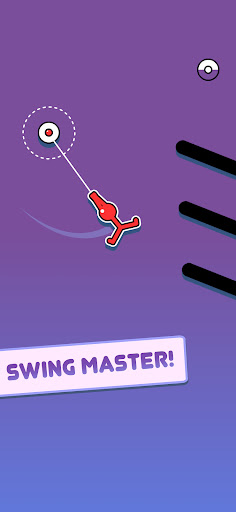
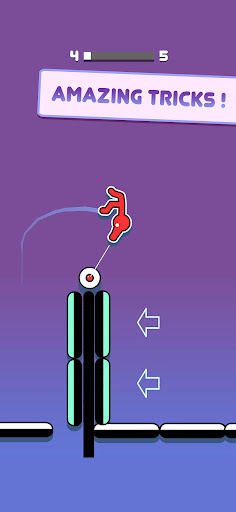
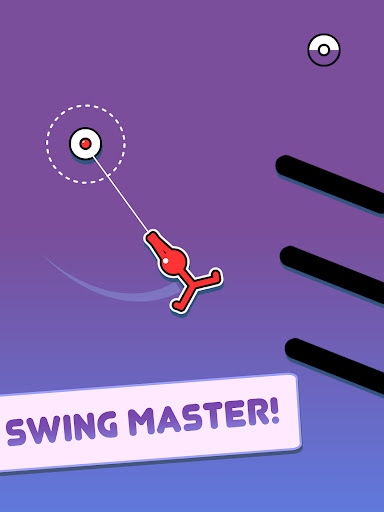
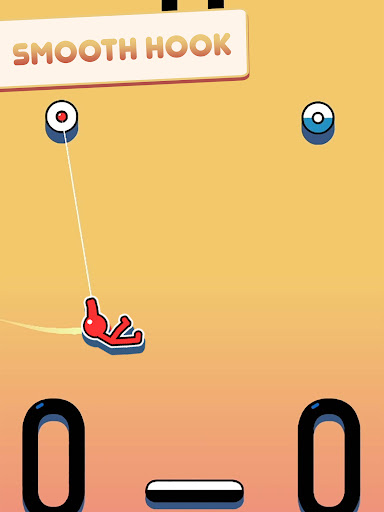
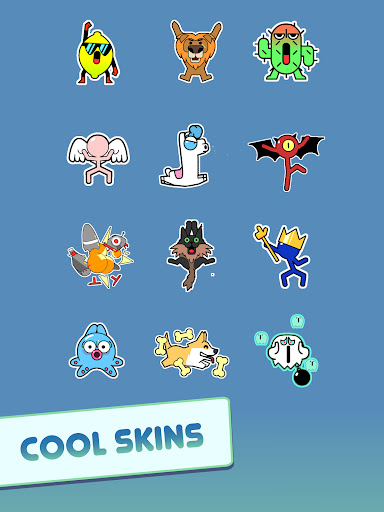
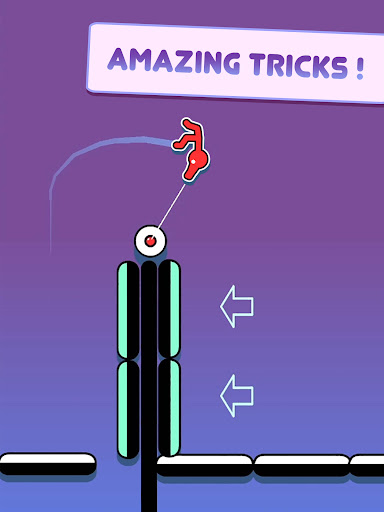
Stickman Hook understands one of the oldest truths in mobile gaming: if moving through the world feels good, people will keep playing long after they should have stopped. After spending real time with it, that is exactly the hook here. The core action is wonderfully simple: tap to latch onto anchor points, release at the right moment, and use momentum to fling a little stick figure toward the finish line. It sounds almost too basic to sustain interest, yet in practice it is hard to put down because the motion has that smooth, rubbery, almost toy-like feel that makes every successful swing satisfying. The first thing that stood out in my time with the game was how approachable it is. Stickman Hook does not bury you in systems, upgrades, or confusing menus. You launch it, tap, swing, and within seconds you understand the rhythm. That simplicity is one of its biggest strengths. It is the kind of game you can hand to someone who rarely plays mobile games and they will immediately get it, but there is still enough nuance in timing and momentum to keep skilled players engaged. Early on, levels teach you how to think about speed, arc, and release timing without ever feeling like a tutorial lecture. When you start chaining swings together cleanly, bouncing off pads, and skipping chunks of a level through clever momentum, the game briefly feels brilliant. Its second major strength is pacing. Most stages are short, which makes the game perfect for tiny bursts of play: waiting in line, commuting, or filling a few idle minutes. That short-form structure works especially well because failure is rarely punishing. If you mistime a swing, you are usually back in action quickly. That creates a "one more try" loop that mobile arcade fans will recognize immediately. I found myself replaying awkward runs not out of frustration, but because I knew I could clean them up and make them look cooler. A lot of casual games aim for that loop; Stickman Hook actually earns it. The third thing it gets right is personality. This is not a story-heavy game and it does not need to be, but the visual style is clean, colorful, and readable, and the unlockable skins help keep progression from feeling completely abstract. There is also a playful tone to the whole package, especially in the end-of-level animations and the exaggerated physics. It never takes itself seriously, which is exactly the right call for a game built around a tiny acrobat ragdolling across bright obstacle courses. That said, Stickman Hook is also a textbook example of a game that occasionally gets in the way of its own fun. The biggest problem during regular play is ads. There is no elegant way to put this: they show up often enough to become part of the experience, and not in a good way. Because levels are so short, interruptions feel even more intrusive. You can go from a five-second victory to a much longer ad break, and that imbalance hurts the flow the game works so hard to build. In a title centered on momentum, breaking momentum outside the level is especially annoying. The second weakness is repetition. Early on, levels feel fresh because you are still learning how the physics behave and how obstacles alter your path. But after extended play, the game begins to recycle ideas more obviously. Patterns repeat, layouts start to blur together, and some of the thrill fades once you realize you are seeing remixed versions of familiar concepts. This does not make the game bad; it just means the endless-session magic has limits. Stickman Hook is strongest in bursts, not necessarily in marathon sessions. The third issue is that its touch controls, while mostly excellent, are not flawless. The game is built on precision timing, so moments where a hook target does not connect as expected or where the physics behave a little strangely stand out more than they would in a less exacting game. Most of the time, the exaggerated motion adds charm. Occasionally, though, it tips into unpredictability. There is a fine line between funny ragdoll chaos and a run that feels stolen by awkward input or odd trajectory, and Stickman Hook does cross that line now and then. So who is this for? It is ideal for players who want a fast, accessible arcade game with a very low learning curve and a satisfying physical gimmick. If you like score-chasing, shaving seconds off runs, unlocking cosmetics, or zoning out with a game that still rewards timing and reflexes, Stickman Hook is an easy recommendation. It is also a strong pick for younger players or anyone looking for something simple enough to dip into without commitment. Who is it not for? If you are highly sensitive to ads, want deep progression, or need every level to introduce meaningful new mechanics, this may wear thin quickly. Players looking for a more substantial action-platformer or a polished premium-feeling experience may bounce off once the repetition and interruptions start to pile up. Even with those frustrations, I came away liking Stickman Hook more than not. It succeeds at the most important part: the act of swinging around is genuinely fun. That alone carries it a long way. It is not endlessly inventive, and it can absolutely test your patience between runs, but when you are actually in motion, it delivers the breezy arcade satisfaction it promises. For a free mobile game, that makes it more than just disposable filler. It is a very good time-killer with flashes of greatness, provided you can tolerate the rough edges around it.