
Apps Games Articles
Bazooka Boy
Supersonic Studios LTD
Rating 4.4star icon
Editor's summary
Editor rating
star icon star icon star icon star icon empty star icon
4.2

One-line summary Bazooka Boy is easy to recommend for its funny, physics-driven blast puzzles and quick-hit fun, but I’d hesitate if you want long-term variety or a progression system that stays meaningful.

  • Installs

    50M+

  • Developer

    Supersonic Studios LTD

  • Category

    Action

  • Content Rating

    Teen

  • Latest version

    1.16.0

  • Package

    com.Lightneer.BazookaBoy

In-depth review
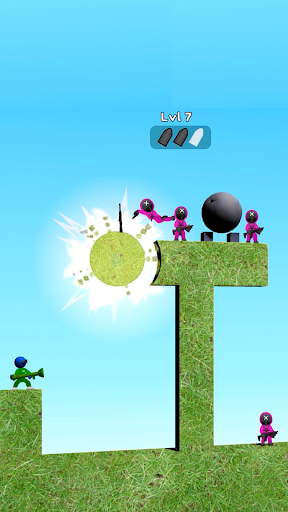
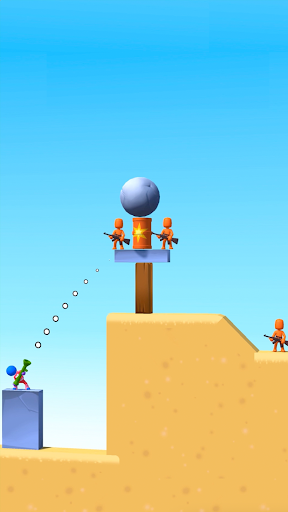
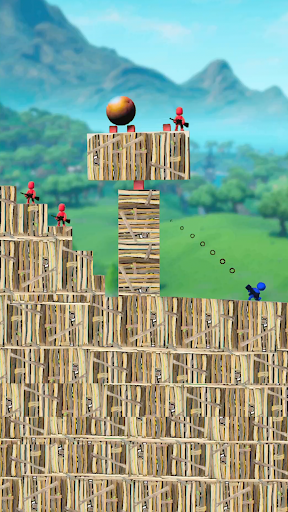
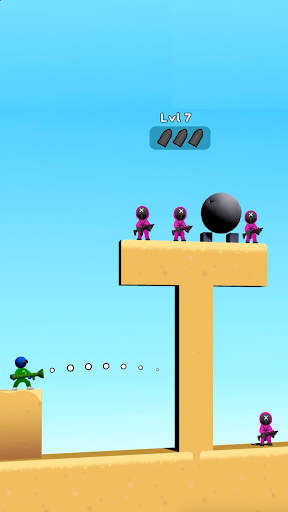
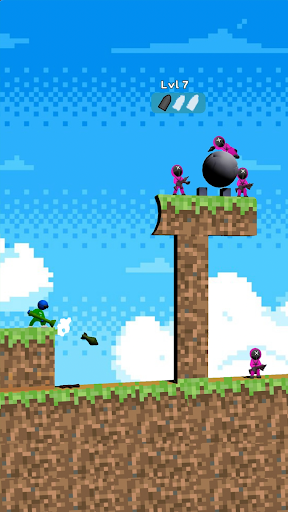
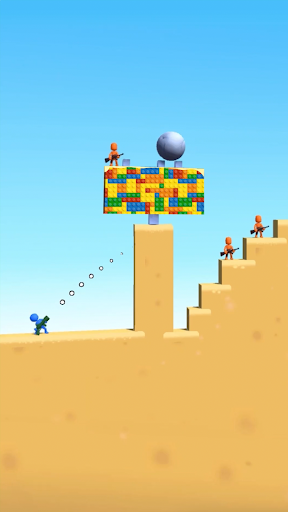
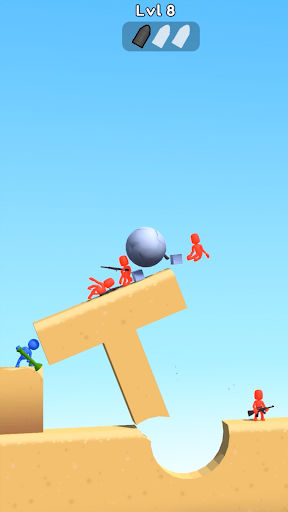
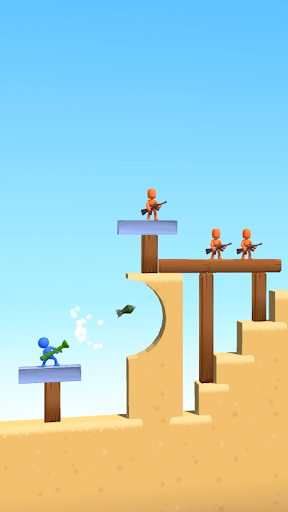
Bazooka Boy understands a very specific kind of mobile fun: short levels, immediate payoffs, and explosions that are just chaotic enough to make failure entertaining. After spending time with it, what stood out most was how often it made me laugh. Not because it is trying to tell jokes, but because the game’s physics regularly turn a smart-looking shot into a self-inflicted disaster. You line up a rocket, expect a clean clear-out, and instead launch debris straight back onto your own character. That slapstick quality gives the game more personality than its simple presentation initially suggests. At its core, Bazooka Boy is a physics-based action puzzle game. Each stage asks you to wipe out enemies and structures with a limited shot angle and a weapon that often has a different feel from the last one. The hook is not twitch skill so much as reading the layout, predicting chain reactions, and avoiding your own blast radius. In practice, that means the game lands somewhere between a destruction sandbox and a puzzle game. The controls are accessible right away, but the better moments come when you stop firing blindly and start thinking about rebound angles, explosive objects, and the safest order to bring a structure down. That is the first big strength: the physics are satisfying enough to carry the whole experience for a long time. Bazooka Boy is one of those games where success feels good, but failure is often just as fun because of how dramatically things can go wrong. The ragdoll reactions and collapsing structures give even familiar stages a playful sense of motion. You are not just pressing a button and watching a number go up; you are setting off little action-puzzle scenarios and seeing whether they unfold in your favor. The second strength is pacing. This is a very easy game to dip into for a minute or stay with far longer than intended. Levels are quick, restarts are painless, and the feedback loop is immediate. It works especially well as a low-commitment phone game because it does not demand deep setup or long sessions to be enjoyable. You can finish a few stages while waiting in line, then accidentally keep going because the next level is only a few seconds away. That “one more try” rhythm is where Bazooka Boy is strongest. A third strength is that it occasionally scratches a more thoughtful itch than its loud visuals suggest. Under the explosions, there is some genuine spatial reasoning. You start noticing weak points in structures, opportunities to trigger chain reactions, and situations where the smartest move is not the most obvious one. It never becomes a heavy strategy game, but it has enough problem-solving baked in to make the action feel more engaging than a pure idle blaster. That said, the game absolutely shows its limits over time. The biggest issue is repetition. In the early stretch, unlocking weapons and seeing new stage setups gives the game momentum. But after enough levels, the pattern becomes hard to ignore. The layouts begin to feel recycled, the challenge curve flattens, and the surprise factor that makes the first hours so appealing starts to thin out. Bazooka Boy is very good at being fun in bursts; it is much less convincing as a game you will want to grind indefinitely. The progression system also loses purpose sooner than it should. Currency comes in steadily, and buying new weapons is a nice incentive at first, but eventually the economy starts to feel disconnected from the actual experience. Once you have a healthy pile of in-game cash and fewer exciting ways to spend it, rewards stop feeling rewarding. That weakens the long-term loop because finishing another batch of levels does not always open up something meaningfully new. Ads are the other major consideration. In my time with the game, the interruption level felt lighter than the worst free-to-play offenders, and that matters. Bazooka Boy remains playable without making every level feel like a toll booth. Still, ad pressure is part of the package, and whether it crosses the line for you will depend on your tolerance. For some players, the quick sessions and disposable nature of the levels make ads easier to accept. For others, even short interruptions chip away at the rhythm that makes the game enjoyable in the first place. There are also occasional rough edges that keep it from feeling fully polished. A game built around physics chaos can get away with some messiness, but not all of it feels intentional. Now and then, the experience slips from funny unpredictability into plain glitchiness, and that distinction matters. Most of the time, Bazooka Boy is smooth enough to stay entertaining, but it does not have the consistency of a truly top-tier mobile puzzler. So who is this for? It is a great fit for players who want a casual action-puzzle game they can open at any time, blast through a few stages, and enjoy without much mental overhead. It is also a good match for anyone who likes destruction physics, chain reactions, and games where messing up is half the fun. It is not a great fit for players who need deep variety, a sophisticated endgame, or a progression system that keeps evolving over the long haul. And if repetitive level design or ad-supported structure tends to wear on you quickly, the honeymoon may be short. Overall, Bazooka Boy succeeds because its core interaction is genuinely enjoyable. Aiming a shot, watching a structure collapse, and seeing enemies and debris fly across the screen is still a satisfying formula. Even better, the game has enough self-sabotaging chaos to keep that formula amusing. It does not fully solve its repetition problem, and it could do much more with progression and long-term content. But as a lively, pick-up-and-play mobile game with strong physics and a good sense of comic destruction, it is easy to like and fairly easy to recommend.
Alternative apps