
Apps Games Articles
OPay
OPay Digital Services Limited
Rating 4.6star icon
Editor's summary
Editor rating
star icon star icon star icon star icon
half star icon
4.5

One-line summary OPay is one of the easiest mobile banking apps to recommend in Nigeria because transfers and bill payments feel genuinely fast and dependable, though inconsistent support and a few rough edges around verification and account controls keep it from being an unquestioned five-star pick.

  • Installs

    10M+

  • Developer

    OPay Digital Services Limited

  • Category

    Finance

  • Content Rating

    PEGI 3

  • Latest version

    6.4.4.136

  • Package

    team.opay.pay

Screenshots
In-depth review
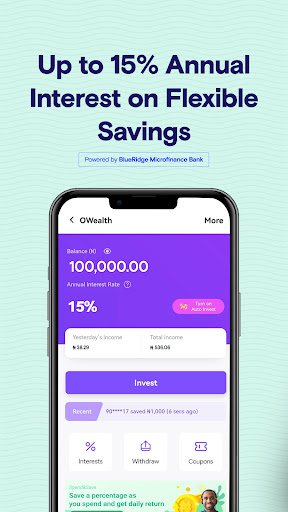
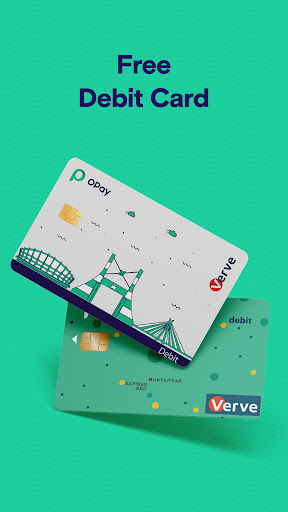
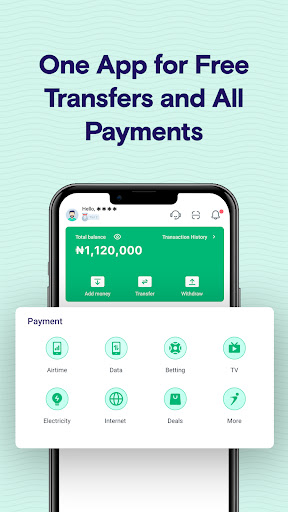
After spending time with OPay as an everyday finance app rather than a one-off test install, the biggest thing that stood out was how little friction it adds to routine money tasks. That sounds simple, but in mobile banking it matters more than flashy features. OPay’s best quality is that it feels built for repetition: opening the app, checking balance, sending money, buying airtime, paying a bill, reviewing history, and moving on. In daily use, that rhythm is smooth. The app’s interface is one of its strongest points. It is clean, readable, and mostly direct about where key actions live. Transfers, bill payments, cards, savings, and account tools are easy to find without digging through layers of menus. Even when an app includes a lot of financial services, it can still feel cluttered; OPay generally avoids that trap better than many finance apps. We especially liked how quickly it lets you get from the home screen to the core actions that most people actually use. If your main need is sending money, topping up airtime or data, and handling household bills without ceremony, OPay gets out of the way. Performance is another major win. In our review use, the app felt light and responsive, and that matters because banking apps become annoying the second they feel hesitant. Transfers are the headline feature here, and OPay clearly knows it. The app gives a strong sense of speed and reliability during everyday payments. Sending money by bank account is straightforward, and the phone-number-based convenience also makes the experience feel less rigid than traditional banking flows. Transaction history is easy to inspect, which helps when you need to confirm what happened after a busy day of payments. That practical efficiency extends to bill payments. Airtime, data, and utility-style payments feel tightly integrated rather than tacked on. OPay works best when you treat it as an all-in-one daily wallet and banking tool. Instead of jumping between separate apps for transfers, data purchases, and balance checks, you can stay inside one ecosystem and get things done quickly. The savings products also add a layer of usefulness beyond spending. Features like balance growth and goal-oriented saving give the app more staying power than a simple transfer tool. If you already keep money inside the app, those options make OPay feel more complete. Security is another area where OPay leaves a positive impression. The app does not present itself as casual about money movement. Tools like card controls, facial verification on sensitive actions, biometric login, account protection via USSD, and privacy touches such as hiding your balance all contribute to a feeling that security has been thought through in practical ways. In use, that can be reassuring, especially for people who make frequent transfers or hold meaningful balances in-app. Still, OPay is not flawless, and the rough edges tend to show up at exactly the moments when a finance app most needs to be dependable. The first weakness is support and issue resolution. When everything works, OPay feels excellent. When something goes wrong, like a failed transfer, refund delay, account access problem, or disputed payment, the experience can become much less graceful. The tools are there to track transactions and raise issues, but getting a fast, satisfying resolution does not always feel as polished as the core payment experience. That gap between “great when normal” and “less reassuring when abnormal” is important. The second weak point is onboarding and verification friction for some users. During testing, we could see how OPay’s security-first posture might become frustrating if you switch devices, run into facial verification trouble, or try to complete account upgrades and hit repeated document loops. These are exactly the situations where users want backup methods and clearer recovery paths. Security is good; being locked out because a verification step fails is not. OPay would benefit from making those edge-case flows feel less brittle. The third issue is that some parts of the product experience feel slightly uneven once you move beyond the basics. The app is strongest at core banking actions, but a few secondary features and settings could be clearer or more flexible. Certain controls are not always as discoverable as they should be, and some saving tools could do a better job supporting multiple goals or more granular withdrawals. None of this breaks the app, but it does remind you that the polish is concentrated most heavily around payments, not every single corner of the platform. Who is OPay for? It is best for people in Nigeria who want a fast, straightforward app for everyday money movement: transfers, bill payments, airtime, data, simple card management, and lightweight savings. It is especially good for users who value speed, simple navigation, and a banking app that does not feel heavy or outdated. Who is it not for? If you are the kind of user who regularly needs hand-holding from customer support, often changes devices, or wants highly flexible financial planning tools instead of efficient daily banking, OPay may occasionally test your patience. Likewise, anyone who expects every support case to be resolved with premium smoothness should keep expectations measured. Overall, OPay earns its strong reputation the old-fashioned way: by being useful over and over again. It makes common financial tasks feel quick, clear, and low-stress, and that alone puts it ahead of many apps in its category. Its shortcomings are real, especially around support consistency and verification friction, but they do not erase the fact that in ordinary daily use, OPay is one of the most convincing mobile banking experiences available for its audience.
Alternative apps