
Apps Games Articles
Super Mario Run
Nintendo Co., Ltd.
Rating 3.9star icon
Editor's summary
Editor rating
star icon star icon star icon star icon empty star icon
4.2

One-line summary Super Mario Run is one of the slickest mobile platformers you can play with one hand, but its always-online design and hard paywall after the opening stretch will quickly tell you whether it’s your kind of Mario.

  • Installs

    100M+

  • Developer

    Nintendo Co., Ltd.

  • Category

    Action

  • Content Rating

    Everyone

  • Latest version

    3.3.2

  • Package

    com.nintendo.zara

In-depth review
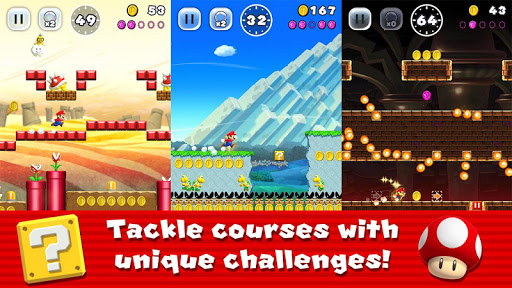
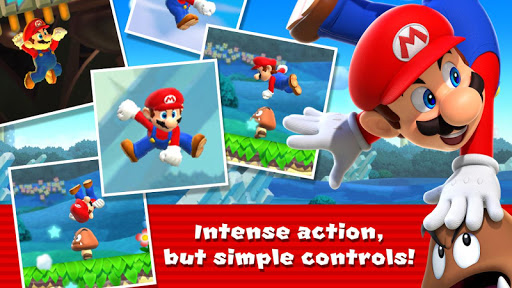
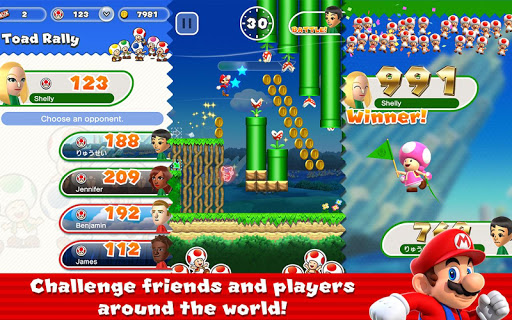
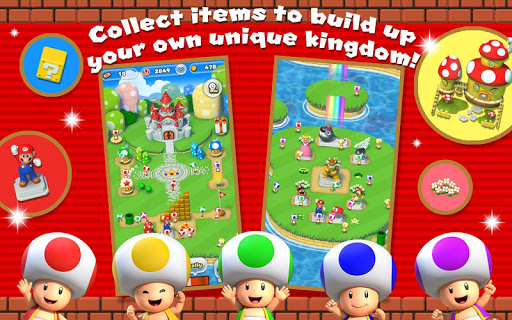
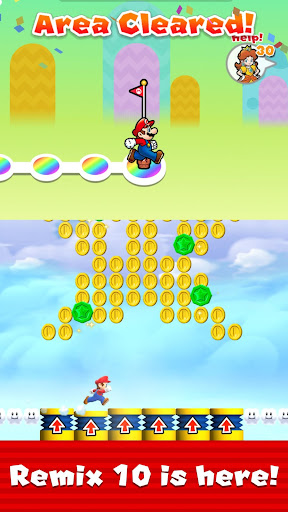
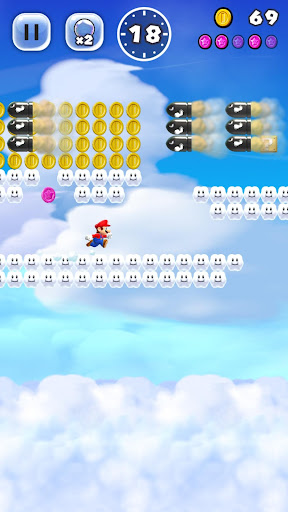
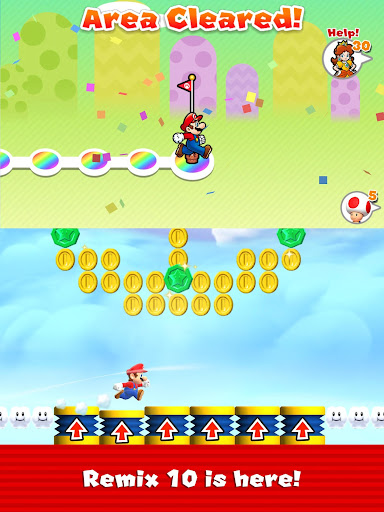
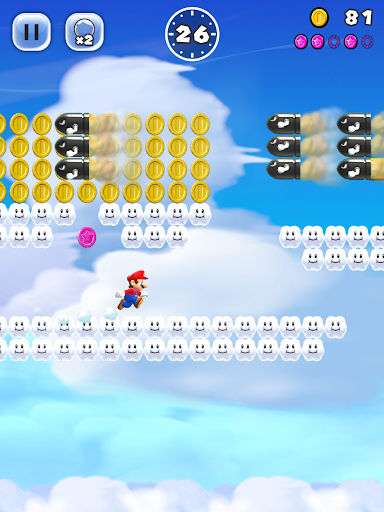
Super Mario Run feels like Nintendo trying to answer a very specific question: what would Mario look like if he were redesigned for a phone instead of squeezed onto one? After spending real time with it, the answer is more convincing than many mobile spinoffs manage to be. This is not a traditional Mario game awkwardly adapted to touch controls. It is a mobile-first platformer built around a single main action—tap to jump—and that focus gives it an immediacy that still stands out. The core idea is simple. Mario runs automatically, and your job is to time jumps, wall jumps, spins, and stylish chains as levels stream by. That sounds dangerously thin on paper, but in practice it is much more nuanced than it first appears. Short taps, longer presses, bouncing off enemies, using walls to redirect momentum, and chasing alternate coin paths all add up to a control scheme that feels clean rather than stripped down. In day-to-day play, this is one of the app’s biggest strengths: it is genuinely comfortable to play one-handed, and it works well in those stop-start moments when mobile games live or die—on a commute, in a waiting room, or while killing a few spare minutes. Just as importantly, it feels like Mario. The animation is lively, the worlds are bright and readable, and the level design has that classic Nintendo ability to teach you something without stopping the game to lecture you. Early on, it is easy to assume the auto-run structure will flatten the experience, but the better stages prove otherwise. The challenge shifts from cautious exploration to timing, rhythm, and route optimization. Once you start replaying levels for colored coins and cleaner runs, the design opens up. What looked like a breezy runner turns into a score-chasing platformer with real depth. That replay value is where Super Mario Run does some of its best work. World Tour is the obvious anchor, but the app is smarter than a simple level pack. Remix 10 is fantastic for bite-size sessions, tossing out rapid-fire micro-levels that are great when you want movement and variety without commitment. Toad Rally adds a competitive edge and pushes you to play stylishly instead of merely surviving, while Kingdom Builder gives all those coins and wins a sense of purpose. None of these modes is individually revolutionary, but together they keep the app from feeling like a one-note runner. That variety is the second major strength: even when I wasn’t in the mood for precise level clears, there was usually another mode that fit the moment. The third big win is the monetization model. On a mobile store filled with energy timers, ad spam, and endless small purchases, Super Mario Run is refreshingly direct. You can try it for free, and if you want the full game, it is a single unlock rather than a machine built to constantly ask for more. Playing it today, that still feels unusually respectful. There are no ad breaks ruining momentum, and no sense that the design has been warped to squeeze spending out of every menu. But this is not an automatic recommendation for everyone. The first hurdle is the structure of the free experience. You can absolutely get a feel for the controls and sample multiple modes, but the app is clearly holding back its real substance unless you pay to unlock everything. If you go in expecting a broad free-to-play Mario game, you will bounce off this quickly. It behaves much more like a demo than a fully free game, and whether that feels fair or frustrating depends entirely on your expectations. The second weakness is that the always-online requirement can make the app feel less convenient than it should. A game designed around quick access and short bursts ought to be effortless to launch anywhere, yet there are moments when that extra dependency gets in the way. It is not enough to ruin the game, but it does chip away at the mobile pick-up-and-play fantasy the design otherwise nails. The third issue is that the one-touch format, while elegant, also imposes a ceiling. If you love traditional Mario partly because of free movement, backtracking, and the joy of improvising through levels at your own pace, Super Mario Run can feel constrained. You are mastering a system rather than wandering through a playground. That distinction matters. I had the most fun when I leaned into the game on its own terms—speed, timing, efficiency, repeat runs—not when I expected a handheld substitute for a full console Mario adventure. There are also smaller irritations. Some runs can feel a little too dependent on perfect timing when the screen is busy, and the kingdom-building side mode is pleasant but rarely as compelling as the platforming itself. The app is polished, but not every corner of it is equally essential. So who is this for? It is an easy recommendation for players who want a premium-feeling mobile game, appreciate short sessions, and enjoy replaying levels to improve routes and collect everything. It is also a good fit for younger players or anyone who wants approachable controls without giving up challenge entirely. Who is it not for? Anyone looking for a large free game, offline play, or a more traditional exploratory Mario structure should be cautious. In the end, Super Mario Run remains one of the better examples of how to adapt a famous console series to phones without turning it into nonsense. It is polished, responsive, charming, and smarter than its simple premise suggests. It is not the definitive Mario experience, and it does ask you to accept a few compromises. But if the idea of a compact, skill-based Mario built for touch screens appeals to you, this is still one of the most worthwhile mobile platformers around.