
Apps Games Articles
PUBG MOBILE
Level Infinite
Rating 4.3star icon
Editor's summary
Editor rating
star icon star icon star icon star icon
half star icon
4.5

One-line summary PUBG MOBILE remains one of the most satisfying shooters on phones thanks to its tense, skill-based matches and excellent gunfeel, but its growing heaviness, cluttered menus, and demanding performance can make it hard to love on weaker devices.

  • Installs

    1B+

  • Developer

    Level Infinite

  • Category

    Action

  • Content Rating

    Teen

  • Latest version

    4.2.0

  • Package

    com.tencent.ig

In-depth review
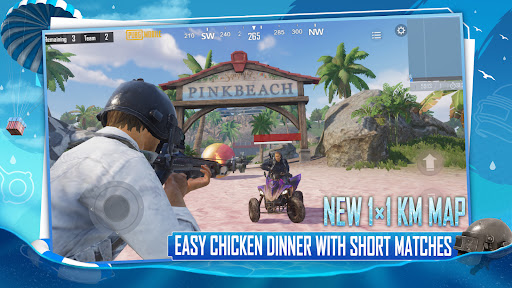
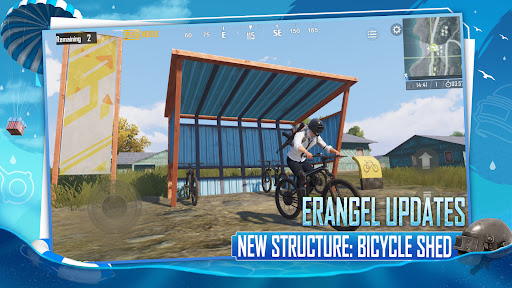
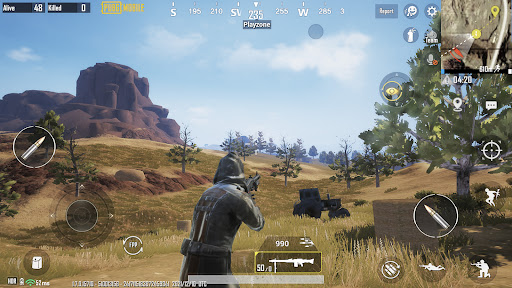
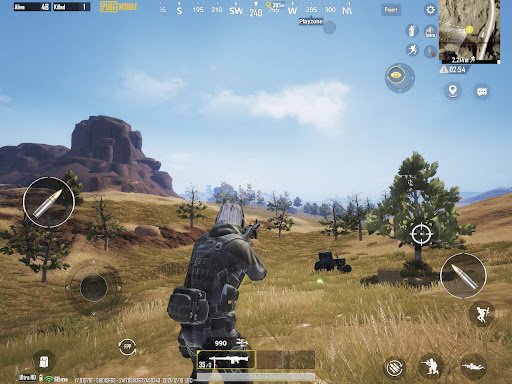
PUBG MOBILE still understands the core fantasy of battle royale better than most mobile games: drop in, scramble for gear, listen for footsteps, and survive long enough for the final circle to turn every decision into a gamble. After spending real time with it, what stands out most is how confidently it delivers that loop on a phone. This is not a watered-down action game pretending to be competitive. When PUBG MOBILE is running well, it feels serious, sharp, and surprisingly immersive. The first few matches reminded me why this formula became so sticky in the first place. Landing is a rush. The early-game loot phase creates immediate tension even before you fire a shot, because every doorway and rooftop feels like a risk. Do you dive into a crowded zone and hope to gear up faster than everyone else, or land safer and accept that you may be under-equipped later? PUBG MOBILE still excels at making those small decisions feel meaningful. It is one of the few mobile games where simply hearing movement in the next building can change your heart rate. The strongest part of the experience is the shooting itself. The controls are more customizable than many casual players may expect, and once adjusted properly, the game gives you a lot of room to improve. Recoil control, peeking, positioning, and timing all matter. Kills feel earned rather than handed out. Even when I lost a duel, I usually understood why. That matters in a competitive shooter, and it is a big reason PUBG MOBILE remains compelling over dozens of matches instead of just a few sessions. There is a satisfying sense that skill growth is real here. A second major strength is variety. The classic battle royale structure is the main attraction, but the overall package offers enough maps, modes, and event-driven twists to keep the game from feeling stale. If you want long, tense survival rounds, it has that. If you want something faster and more direct, there are quicker modes that cut straight to gunfights. Playing with friends is where the game becomes especially strong. Squad matches produce the best stories: last-second revives, desperate vehicle escapes, badly coordinated pushes that somehow work, and those long stretches of silence before absolute chaos breaks loose. The third strength is presentation. PUBG MOBILE still looks and sounds impressively polished for a free mobile title. Weapons have weight, footsteps carry useful information, and the maps do a good job of creating both open danger and close-quarters panic. When the frame rate is stable, the whole thing feels remarkably smooth for a game of this scale. It is one of those mobile titles that can briefly make you forget you are playing on a phone. That said, the experience is no longer as universally accessible as it once felt. The biggest issue I ran into was performance demand. PUBG MOBILE has clearly grown heavier over time, and on anything short of a solid modern device, that growth is noticeable. Longer sessions led to heat buildup and battery drain, and on less capable hardware the game can feel like it is asking for too much. Frame drops in a shooter like this are more than a nuisance; they directly affect aim, movement, and survival. If your phone is older or already struggles with demanding games, this is the main reason to hesitate. The second weakness is interface clutter. Outside the actual matches, PUBG MOBILE can feel busy to the point of distraction. There are a lot of rewards, banners, events, currencies, prompts, and side systems competing for attention. None of this ruins the game, but it does chip away at the clean military-survival tone that the core gameplay does so well. I often found myself wanting to get back into a match rather than navigate another stack of icons and notifications. The third frustration is inconsistency around controls and match flow. The customizable control setup is a real advantage, but some interactions still feel awkward in high-pressure moments, especially movement near cover and vaulting. In a game where one wrong input can throw you into enemy fire, even small control quirks stand out. Matchmaking and lobby difficulty can also feel uneven depending on when and how you play; some rounds are nicely balanced while others immediately feel brutally stacked. Even with those frustrations, PUBG MOBILE is still easy to recommend to the right audience. It is for players who want a serious competitive shooter on mobile, who enjoy learning systems, improving mechanically, and investing time into longer, more tactical matches. It is also a great fit for groups of friends who want a free game that can produce memorable squad sessions. It is not ideal for players who want a very lightweight mobile game, who dislike stressful PvP, or who are using a low-end phone and expect perfectly smooth performance. It is also not the best choice for anyone who gets tired of dense menus and progression noise around the main action. Overall, PUBG MOBILE remains one of the strongest action games on Android because the fundamentals are still excellent. The tension of the circle, the quality of the gunplay, and the satisfaction of a hard-earned win continue to carry it. It is a game that can absolutely consume your evenings when everything clicks. You just have to accept that the modern version asks more from your device—and more patience from you between matches—than it used to.