
Apps Games Articles
Free Fire: Beat Carnival
GARENA INTERNATIONAL I
Rating 4.3star icon
Editor's summary
Editor rating
star icon star icon star icon star icon
half star icon
4.5

One-line summary Free Fire: Beat Carnival is easy to recommend if you want quick, low-friction battle royale matches on almost any phone, but I’d hesitate if you’re sensitive to performance dips, lag spikes, or the game’s increasingly busy, event-heavy style.

  • Installs

    1B+

  • Developer

    GARENA INTERNATIONAL I

  • Category

    Action

  • Content Rating

    Teen

  • Latest version

    1.120.1

  • Package

    com.dts.freefireth

Screenshots

In-depth review
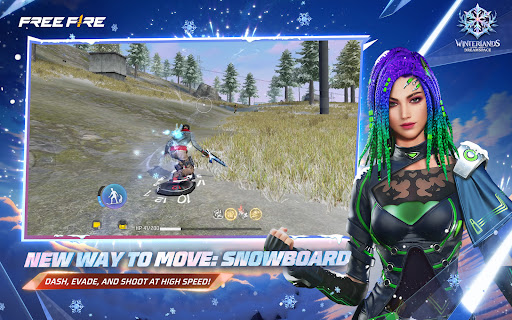
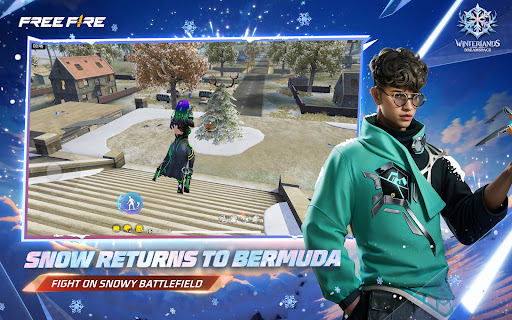
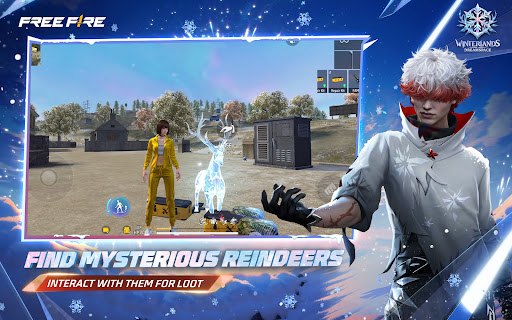
After spending real time with Free Fire: Beat Carnival, the biggest reason it still works is simple: it understands mobile play better than a lot of games in its lane. This is not a slow, methodical shooter that asks for long sessions and perfect concentration. It is built around short, high-energy matches that get you into the action quickly, keep the pace moving, and rarely waste your time. That design decision shapes almost everything about the experience, and for the most part, it works very well. The first thing that stands out in everyday play is how approachable the game feels. Movement, aiming, looting, and switching weapons are all streamlined in a way that makes the game easy to pick up even if you are not deeply invested in mobile shooters. You can drop in for a few matches, get the rhythm of parachuting, scavenging, rotating into the safe zone, and taking close-quarters fights, and feel productive almost immediately. The controls are clearly designed for touchscreens first, and that matters. Even when matches get chaotic, the game usually remains readable enough that your mistakes feel like your own, not the interface’s fault. The second major strength is pacing. Free Fire’s short match structure is more than a bullet point; it is the core of the game’s appeal. Every round has a strong sense of momentum. Early looting is brief, encounters happen quickly, and the shrinking play zone pushes players together without much dead air. If you like battle royale in theory but often bounce off slower, more sprawling matches, Free Fire is refreshingly direct. It also helps that there is enough variety in modes to prevent the whole thing from becoming repetitive. Standard survival matches are still the main draw, but squad play and the faster 4v4 style options add a different tempo and are especially good when you want something more immediately competitive. A third strength is accessibility across devices. In use, Free Fire does a good job of feeling lighter and more flexible than many graphically ambitious shooters. It is not the most visually advanced game on mobile, but it is usually clear, responsive, and practical. On modest hardware, that trade-off makes sense. Character abilities, weapon choices, map features, and seasonal event layers give the game enough personality that it does not feel bare-bones, even when the graphics lean more toward efficiency than realism. That said, the experience is not spotless, and the rough edges become more visible the longer you spend with it. The biggest issue in practice is performance inconsistency. Free Fire’s reputation for being friendly to lower-end phones is deserved, but that does not mean it is immune to stutters, frame drops, or network-feeling hiccups. In several sessions, the game felt smooth enough one match and noticeably less stable the next, especially during crowded fights or event-heavy moments. For a shooter this fast, even minor instability can be irritating. Aiming and repositioning rely on rhythm, and when the frame rate dips, you feel it immediately. Another weakness is that the game’s style and systems can feel crowded. Free Fire has a very playful, flashy identity, with fantasy elements, event tie-ins, cosmetics, and layered character mechanics. That energy can be fun, and it gives the game a distinctive personality, but it also means the overall experience can feel a bit overdesigned. If you prefer a more grounded military tone or cleaner visual readability, Free Fire may occasionally strike you as noisy. Menus, events, and progression hooks can make the app feel busier than it needs to be, especially when you just want to jump into another round. The third frustration is fairness and consistency around competitive play. At its best, Free Fire is a sharp game of quick decisions: where to land, when to engage, when to retreat, when to gamble on better loot. But that tension depends on trust in the match environment. There are moments when matchmaking can feel uneven, and long-term players may be more sensitive to signs of imbalance, whether from skill gaps, suspicious encounters, or systems that create a less even playing field than ideal. It does not ruin every session, but it does chip away at the clean competitive rush the game aims for. Even with those issues, I came away understanding exactly why Free Fire has stayed relevant for so long. It is extremely easy to start playing, it respects short play sessions, and it delivers a kind of mobile-first action that feels immediate instead of cumbersome. The strongest sessions are genuinely exciting: a fast landing, a lucky loot route, a close escape into the safe zone, and a final fight that comes down to movement and nerve. The game is good at producing those stories quickly. Who is it for? It is for players who want a fast battle royale they can run on a wide range of phones, for people who like quick competitive matches rather than long tactical slogs, and for squads that want something social and easy to jump into. It is also a good fit for players who enjoy frequent events, character-based variety, and a less serious tone. Who is it not for? If you want a highly realistic shooter, ultra-stable competitive performance at all times, or a stripped-down interface with minimal distractions, this may wear on you. Likewise, if frame rate consistency is your number one requirement, the occasional roughness will stand out. Overall, Free Fire: Beat Carnival remains one of the more effective mobile action shooters because it knows what it wants to be: fast, accessible, energetic, and easy to return to. It does not always feel polished in every corner, and some of its technical and competitive frustrations are hard to ignore, but when the match flow clicks, it is still immensely hard to put down.