
Apps Games Articles
Sword Play! Ninja Slice Runner
CASUAL AZUR GAMES
Rating 4.5star icon
Editor's summary
Editor rating
star icon star icon star icon star icon empty star icon
4.1

One-line summary Sword Play! Ninja Slice Runner is easy to recommend for its instantly satisfying pick-up-and-play sword action, but the repetition and ad pressure make it harder to love for the long haul.

  • Installs

    10M+

  • Developer

    CASUAL AZUR GAMES

  • Category

    Action

  • Content Rating

    Teen

  • Latest version

    7.2

  • Package

    com.barsstudios.swordplay

In-depth review
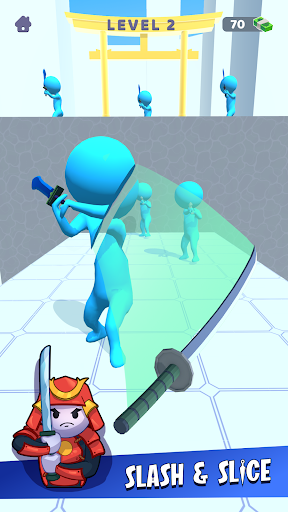
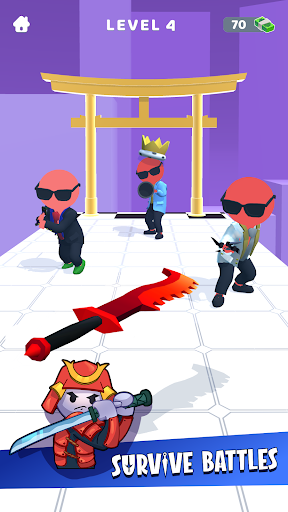
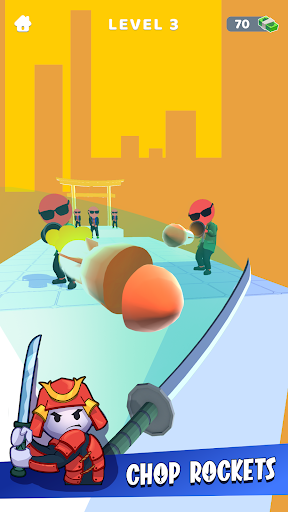
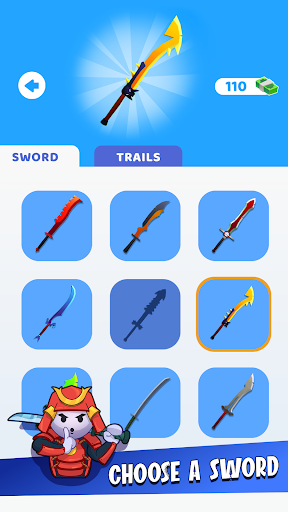
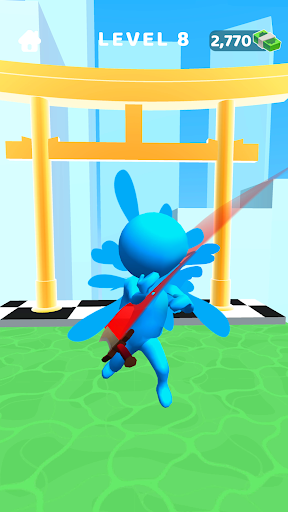
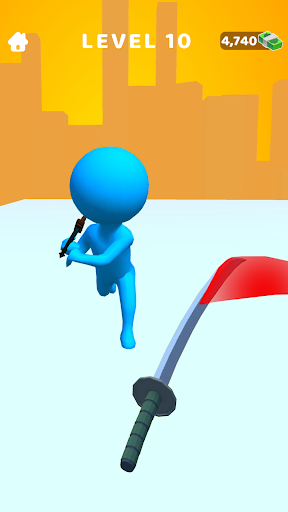
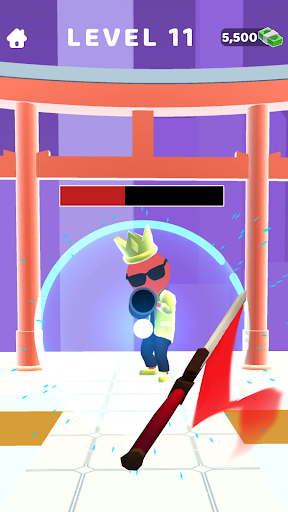
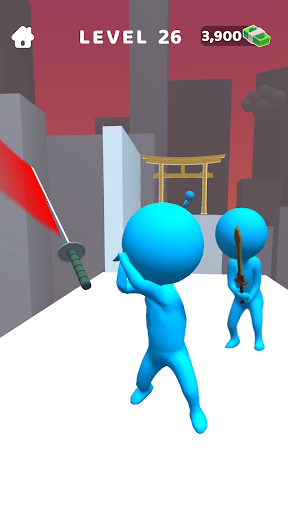
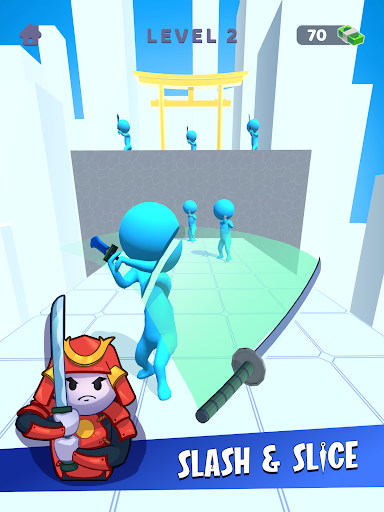
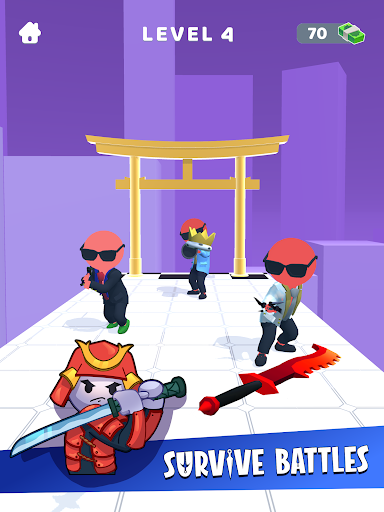
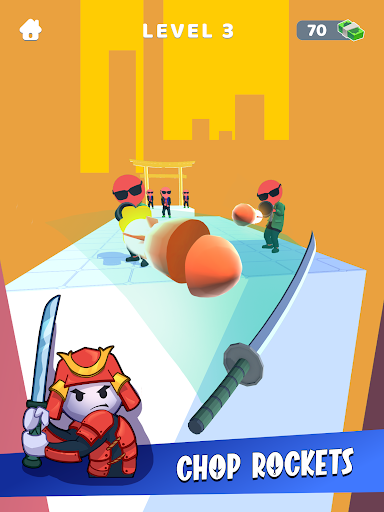
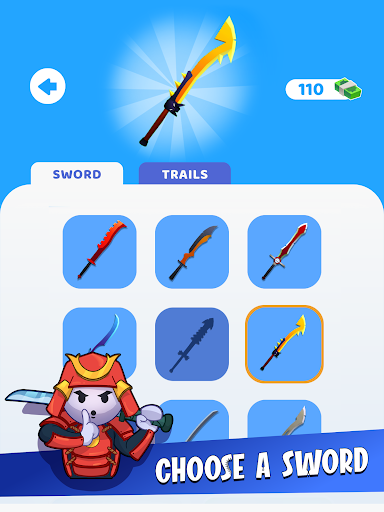
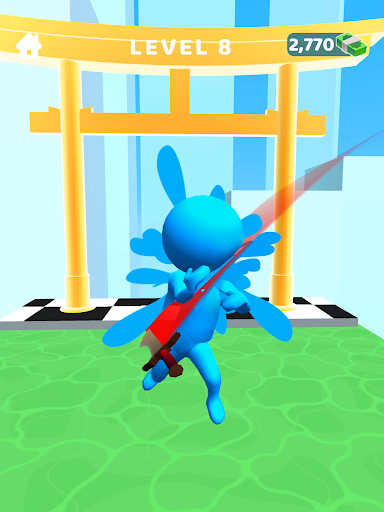
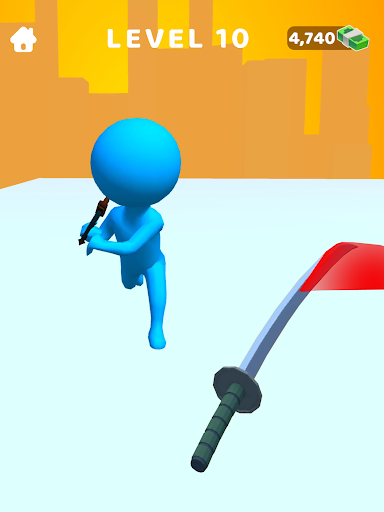
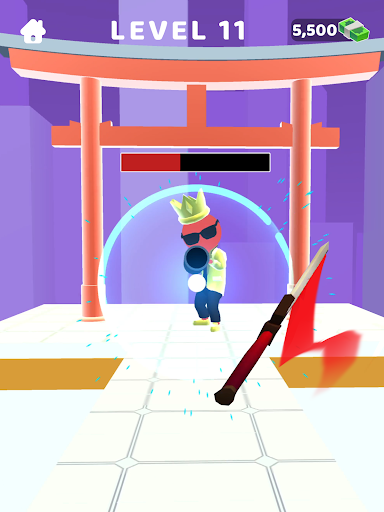
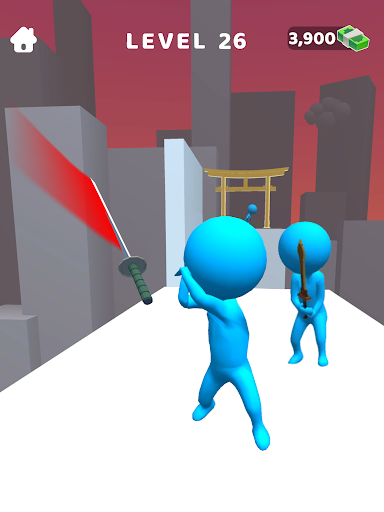
Sword Play! Ninja Slice Runner knows exactly what kind of mobile game it wants to be: fast, tactile, low-friction action built around the simple pleasure of carving through enemies with a swipe of the finger. After spending time with it, that focus is both the game’s biggest strength and the clearest reason it eventually starts to wear thin. From the first few minutes, the appeal is obvious. Your character moves automatically, which means the entire experience is centered on timing, angle, and rhythm rather than on wrestling with virtual sticks or complicated controls. That design choice makes the game immediately accessible. You do not need a tutorial marathon or a lot of patience to understand what matters. You see an enemy, swing your blade, and the game rewards you with quick ragdoll reactions, clean hits, and a steady sense of forward momentum. It is exactly the kind of action game that works well in short bursts when you have a few spare minutes. What surprised me most is how polished that core loop feels at first. The slicing itself has a nice, readable clarity to it. Even when the visual style stays fairly simple, the motion of cutting through groups of foes remains satisfying. There is a real arcade quality to the flow: move, slash, block hazards, break through defenses, and keep going. It is not deep in a technical sense, but it is slick enough to create that “one more level” pull. For players who want a relaxing action game rather than a punishing skill test, this is a real advantage. Another strong point is how well it suits offline play. Sword Play fits naturally into the category of games you keep around for downtime: on a commute, during travel, or when you just want a distraction that does not demand full attention. Because the sessions are short and the control scheme is so light, it works especially well as a casual time-killer. Younger players or anyone who prefers action without much complexity will likely find it approachable. The violence is stylized rather than intense, so the overall tone stays more playful than grim. The progression system also does enough early on to keep you engaged. Unlocking swords, stacking currency, and moving through level after level gives the game a sense of momentum even when the mechanics stay mostly the same. There is a pleasant feeling of accumulation here: more runs, more rewards, more blades. For a while, that is enough. Sword Play is very good at making you feel productive quickly. But after the honeymoon period, the cracks become easier to see. The biggest problem is repetition. The game’s simplicity is refreshing at the start, yet it does not evolve enough to sustain long sessions. Enemy encounters begin to blur together, stage layouts feel familiar sooner than they should, and the broader structure starts to resemble an endless loop more than a steadily expanding adventure. I kept waiting for the game to introduce a new layer of strategy, a more dramatic escalation in enemy behavior, or more memorable level design. Instead, it mostly doubles down on the same basic pattern. That would be easier to forgive if the environment and presentation added more variety, but they do not always do enough heavy lifting. The visual style is functional, and the action reads clearly, but the overall look can feel plain over time. Backgrounds are not especially rich, and the atmosphere never quite develops the identity the katana-and-ninja theme promises. There is room here for stronger music, bolder stage design, and more distinctive bosses to turn the experience from merely pleasant into truly memorable. Ads are the other persistent irritation. As with many free mobile action games, the ad load can intrude on the flow. It is not necessarily a deal-breaker if you are dipping in for a level or two, but in a game built around quick repetition and momentum, interruptions feel particularly noticeable. The stop-start rhythm undercuts one of the app’s best qualities: the pleasure of chaining together slices without friction. If you are sensitive to monetization pressure, this is one of the biggest reasons to hesitate. There are also limits to the game’s depth that more experienced action fans will hit quickly. Because movement is automated and combat remains straightforward, Sword Play never becomes a nuanced sword-fighting game. It is a reflex-and-spectacle game. That is fine, even smart, for its audience, but players looking for deeper combat systems, meaningful builds, or varied mission structure may bounce off once they realize how little the formula expands. So who is this for? It is for casual mobile players, kids, offline gamers, and anyone who wants a satisfying action toy they can understand in seconds. It is also a good fit for people who enjoy progression for its own sake and do not mind replaying variations of the same core loop. Who is it not for? Anyone craving deep mechanics, sustained variety, or a premium-feeling ad-light experience will probably run out of patience before they run out of levels. In the end, Sword Play! Ninja Slice Runner succeeds because the central act of slicing through enemies is genuinely fun. That matters more than anything else. But it also feels like a game that has found a strong mechanic without fully building the richer experience around it. For short sessions, it is easy to enjoy. For long-term play, it starts to feel like a sharp idea stretched thinner than it should be.
Alternative apps