
Apps Games Articles
Earthquake Network
Futura Innovation SRL
Rating 4.4star icon
Editor's summary
Editor rating
star icon star icon star icon star icon empty star icon
4.2

One-line summary Earthquake Network is easy to recommend if you want broad, real-time quake awareness on your phone, but I’d hesitate if you’re sensitive to confusing alerts or expect a flawlessly polished experience out of the box.

  • Installs

    10M+

  • Developer

    Futura Innovation SRL

  • Category

    Communication

  • Content Rating

    Everyone

  • Latest version

    13.2.26

  • Package

    com.finazzi.distquake

Screenshots
In-depth review
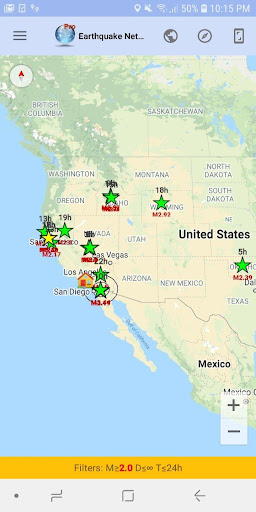
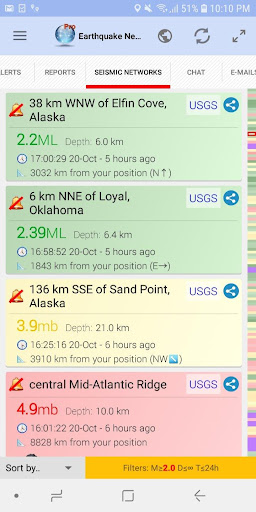
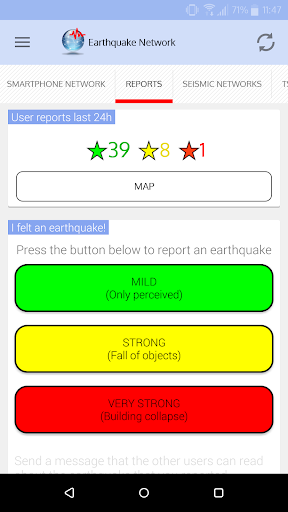
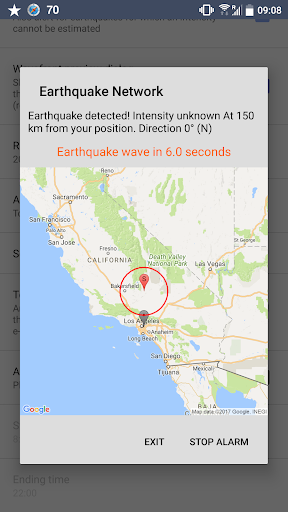
Earthquake Network is one of those apps that asks to live quietly in the background until the moment you really need it. After spending time with it as a daily utility rather than just opening it for a quick look, that purpose becomes clear almost immediately: this is not a glossy weather-style app built mainly for casual browsing, but a practical safety tool that tries to turn your phone into part of a wider earthquake alert system. That focus is also the app’s biggest strength. In day-to-day use, Earthquake Network feels genuinely useful because it combines two things that matter in this category: awareness of ongoing seismic activity and the possibility of early warning in supported situations. The main appeal is not just seeing a map full of recent tremors after the fact. It is the sense that the app is actively watching, and that if conditions allow, it may give you a heads-up before shaking reaches your area. That creates a very different relationship from the typical earthquake tracker, which is often little more than a feed of seismic events. The information density is another thing the app gets right. Once installed and configured, it provides a lot to look at without feeling completely overwhelming. Recent earthquake data, reported shaking, and alert-related information come together in a way that makes the app feel richer than a simple notification tool. If you live in a quake-prone region, that depth matters. During testing, it felt useful both as a passive safety app and as something to open after a seismic event to understand what just happened. It is one of the few apps in this space that feels like it wants to cover the whole cycle: before, during, and after an earthquake. A third strength is that the core concept inspires confidence more than gimmickry. The app’s research-driven angle gives it a serious tone, and that seriousness mostly carries over into the experience. It does not feel designed to entertain. It feels designed to warn, inform, and collect meaningful reports. That makes it especially appealing for people who live in earthquake regions, families that want another layer of awareness, and users who are willing to spend a few minutes adjusting settings so the app behaves properly in the background. That said, Earthquake Network is not a perfectly polished app, and its rough edges show up quickly if you use it continuously. The first weakness is configuration. This is one of those apps that works better once you understand it, but the learning curve is steeper than it should be for a safety utility. Some settings and behaviors are not immediately intuitive, and it can take a bit of trial and error to feel fully in control of what the app will notify you about and when. For experienced Android users, that may be acceptable. For someone who just wants to install it and trust it instantly, it can feel less friendly than it needs to be. The second weakness is alert behavior. Because this app is designed to be proactive, its sounds and warnings matter a lot, and they are not always elegant. In use, the app can occasionally feel noisy or cryptic, especially if an alert tone or background sound appears without a clear explanation. That is the kind of thing that undermines confidence fast. In a category where calm clarity is essential, any unexplained sound or overly aggressive notification behavior feels more disruptive than it would in an ordinary app. If you keep your phone nearby at night, this is the sort of issue you notice immediately. The third weakness is that some of the most appealing convenience features appear to sit behind the paid version or subscription path. The free version is certainly usable, and it is enough to understand the app’s value. But there is a slight sense that the best version of the experience is gated. That is not unusual for utility apps, and in fairness the free tier still offers meaningful functionality. Still, people who want the fullest, most seamless alert experience may feel nudged toward paying sooner than expected. In everyday use, Earthquake Network works best when approached as a serious tool rather than a beautifully polished consumer app. If you spend a little time setting it up, the app becomes a reassuring presence. It is especially compelling for people in seismically active places who want more than a simple earthquake news feed. It is also a good fit for users who appreciate detailed event information and are comfortable tweaking notifications to suit their routine. It is less suitable for people who dislike background apps, want extremely simple interfaces, or expect every alert and sound to be perfectly self-explanatory. If you are the kind of user who gets frustrated by occasional ambiguity in notification behavior, this app may test your patience. And if you live in an area where earthquakes are rare and you mainly want a clean educational tracker, the app may feel more intense than necessary. Overall, I came away impressed more than frustrated. Earthquake Network offers something genuinely meaningful, and that matters more than perfect design polish. It feels purposeful, information-rich, and potentially valuable in a way many utility apps only claim to be. I would recommend it to people who want practical earthquake awareness and are willing to spend time dialing it in. I would not call it effortless, but I would call it worthwhile.