
Apps Games Articles
SayHi Chat Meet Dating People
UNearby
Rating 4.4star icon
Editor's summary
Editor rating
star icon star icon star icon
half star icon
empty star icon
3.7

One-line summary SayHi is easy to jump into and genuinely good at sparking conversations with nearby or global strangers, but its coin-gated messaging and uneven profile quality make it hard to recommend without reservations.

  • Installs

    50M+

  • Developer

    UNearby

  • Category

    Social

  • Content Rating

    Mature 17+

  • Latest version

    10.45

  • Package

    com.unearby.sayhi

Screenshots
In-depth review
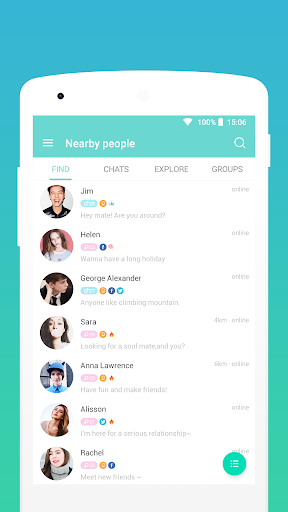
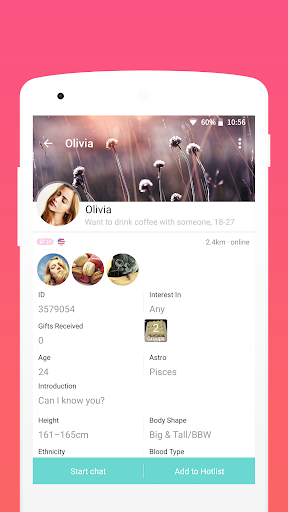
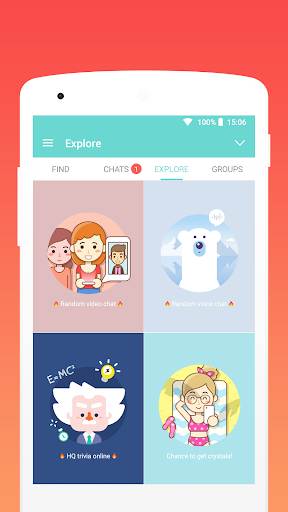
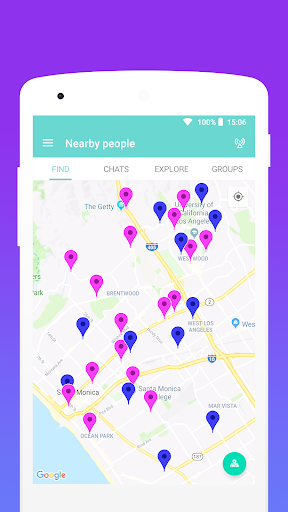
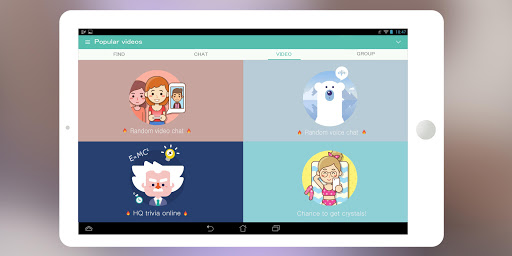
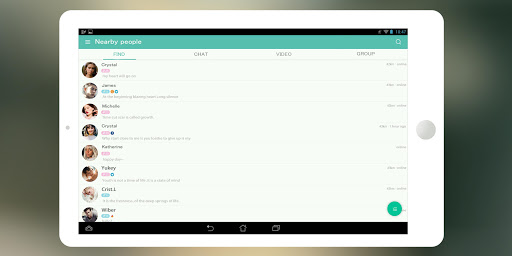
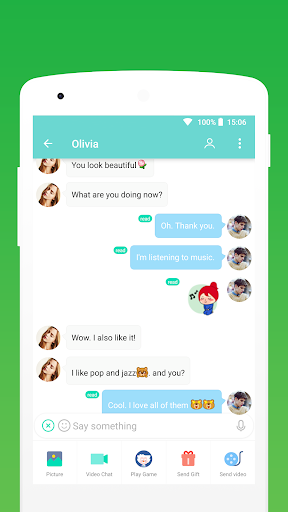
SayHi Chat Meet Dating People sits in that crowded space between social discovery app and lightweight dating platform, and after spending time with it, the clearest takeaway is this: it knows how to get you talking to people quickly, but it also knows how to put a meter on that experience. The app’s biggest strength is how little friction there is between installing it and actually browsing people. SayHi does not feel intimidating. The interface is straightforward, the profile cards are easy to scan, and the general flow pushes you toward discovery instead of burying everything under layers of menus. That matters in an app like this, because the first few minutes decide whether it feels lively or dead. In my testing, SayHi did a decent job of creating that “someone is always around” feeling, whether you are looking locally or just exploring profiles more broadly. If your main goal is to meet new people casually, make online friends, flirt a bit, or see who is nearby, the app gets to the point fast. I also came away thinking the app is more feature-complete than its simple presentation initially suggests. Text chat is the baseline, but SayHi also leans into richer interaction with voice, video, photos, gifts, and profile details that make conversations feel less static. There is a playful energy to the app. It does not present itself as a super-serious matchmaking product; it feels more like a social hangout that can also become a dating app depending on how you use it. That flexibility is one of its better qualities. Some people will use it to flirt, others to make friends across countries, and the app’s design supports both reasonably well. Another pleasant surprise is that it gives you a sense of activity and response. Message status indicators are useful, and little touches like profile completion rewards make the onboarding process feel less like homework. Filling out your profile is encouraged in a way that makes practical sense, because a more complete profile gives other people something to work with. In apps where everyone looks half-finished or anonymous, conversations die quickly. SayHi at least tries to nudge people toward being more presentable and reachable. That said, the app’s biggest weakness is impossible to ignore: the coin system. SayHi is free to install, but not free in the relaxed, open-ended sense many people expect from a chat app. Messaging, especially starting conversations, can feel heavily tied to points or coins, and that changes the mood of the whole experience. Instead of casually saying hello to a few interesting people and seeing what happens, you become aware that each outreach has a cost. That creates hesitation. It also makes trial-and-error socializing less fun, because social discovery works best when it feels spontaneous, not rationed. This issue becomes more noticeable the longer you use the app. Early on, SayHi feels generous enough to keep you engaged. But after the first burst of curiosity, the economy around chatting starts to shape behavior in a way that can feel restrictive. If you are a patient user willing to earn or manage points, you may tolerate it. If you expect free-flowing conversation, it quickly becomes frustrating. This is not a small annoyance; it is the central tradeoff of the app. The second weakness is profile quality. While I did not find the app empty, I did find it uneven. Some profiles feel genuine and complete enough to start a real conversation. Others are thin, vague, or give off the familiar low-effort energy that social and dating apps often struggle with. The result is that you spend a fair amount of time filtering mentally: who seems serious, who is just browsing, who is promoting something, and who may not be worth spending your limited message budget on. That uncertainty matters more here because initiating contact is not entirely frictionless. The third issue is moderation and trust. SayHi does not come across as uniquely unsafe, but it does have the same recurring problem many large chat-and-dating hybrids have: not everyone appears to be there for the same reason. Some interactions feel normal and social; others drift into solicitation, spammy behavior, or accounts that seem disposable. I also noticed that the app can feel a bit unpredictable in how it handles access and participation, which adds to the sense that the environment is active but not always tightly curated. If you are experienced with social discovery apps, none of this will shock you. If you want a cleaner, more serious dating environment, it may wear on you. So who is SayHi for? It is best for people who enjoy browsing, chatting, and meeting strangers in a low-commitment, global-social way. If you like conversation-first apps, do not mind sorting through mixed-intent profiles, and can live with a points-based system, there is real entertainment value here. It is also a reasonable choice for users who want something more lively and less formal than traditional dating apps. Who is it not for? Anyone who hates in-app currency, wants unlimited free messaging, or expects every profile to feel authentic and relationship-focused should probably look elsewhere. It is also not ideal for people who want a carefully curated dating experience with minimal noise. In the end, SayHi is neither a scammy mess nor a must-have masterpiece. It is a functional, active, and often enjoyable social dating app with a solid interface and enough features to keep conversations interesting. But its coin mechanics constantly remind you that access is being controlled, and that limits how natural the experience can feel. I would recommend it cautiously: good for social explorers, less convincing for serious daters who value openness and consistency over novelty.