
Apps Games Articles
Hago- Party, Chat & Games
HAGO
Rating 4.2star icon
Editor's summary
Editor rating
star icon star icon star icon star icon empty star icon
4.1

One-line summary Hago is easy to recommend if you want a casual social app that gives you something to do while you chat, but I'd hesitate if you prefer quieter, more focused communication without the noise of constant activity and social prompts.

  • Installs

    100M+

  • Developer

    HAGO

  • Category

    Social

  • Content Rating

    Mature 17+

  • Latest version

    5.1.4

  • Package

    com.yy.hiyo

Screenshots
In-depth review
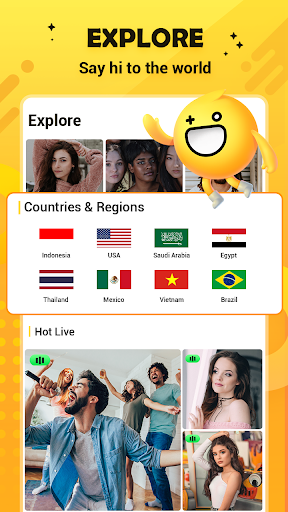
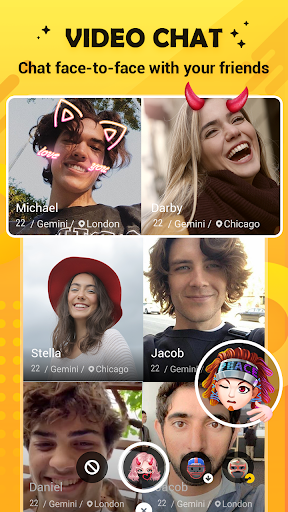
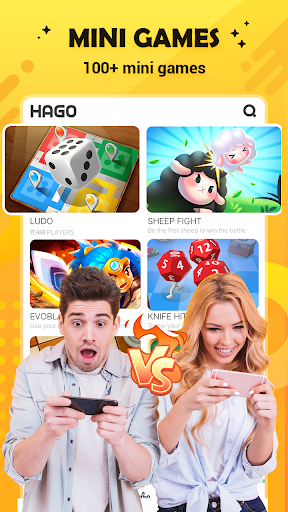
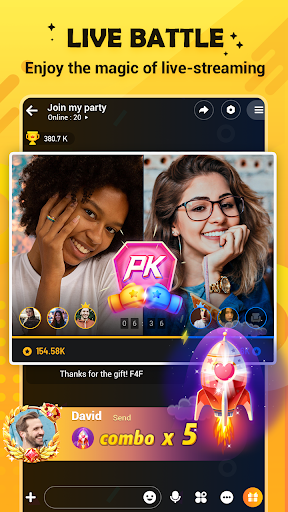
Hago- Party, Chat & Games sits in an interesting space between a social network, a casual gaming app, and a hangout platform. After spending time with it, what stands out most is that it understands a simple truth about online social apps: talking to strangers is awkward, but talking while doing something light and playful is much easier. That idea gives Hago its appeal, and in day-to-day use, it often works better than you might expect. The first thing I noticed is how quickly the app tries to pull you into activity. Hago does not feel like a passive messaging app where you stare at an empty inbox and wonder what to do next. It is built around motion. There is usually something happening, whether that is a game, a live social space, or some kind of group interaction. For users who get bored with plain text chat, that energy is a real strength. It lowers the pressure of conversation and gives you an immediate reason to stay in the app beyond just messaging. That is the first major thing Hago gets right: it is genuinely good at breaking the ice. Casual games may sound trivial, but in practice they make social interaction much easier. Instead of forcing people into a direct conversation with no context, the app creates a shared activity. In use, that makes the whole experience feel less stiff and more natural. Even when interactions are brief, they feel less empty because there is some kind of playful structure around them. The second strength is accessibility. Hago is not hard to understand. You do not need to invest a lot of time learning a complicated system before you can enjoy it. The overall design encourages quick entry, quick interaction, and short bursts of use. That matters because this kind of app succeeds or fails on momentum. In my testing, it was easy to jump in, explore, and find something to do without too much friction. For a free app with mass appeal, that ease of use is a big part of why it has such broad pull. The third strength is variety. Hago does not pin everything on one feature. If you are not in the mood for one kind of interaction, there is usually another route available. That helps the app avoid feeling repetitive in short sessions. It also broadens its audience. Some people will come for the games, some for social chat, and some for the general party-like atmosphere. That variety gives the app staying power, especially for users who like their social apps to feel lively instead of purely functional. Still, the same design choices that make Hago engaging can also make it tiring. My biggest complaint is that the app can feel busy to the point of clutter. There is a lot competing for your attention, and not all of it feels equally valuable. If you like calm interfaces and focused communication, Hago can come off as noisy. It often feels like it is always nudging you toward the next interaction, the next room, the next game, the next social moment. That high-energy approach fits the app's identity, but it can become overwhelming over longer use. A second weakness is that the quality of interaction can vary a lot. Because the app is built for quick, lightweight social contact, not every exchange feels meaningful. Some moments are fun and spontaneous; others feel disposable. That is not unique to Hago, but it is noticeable here because the platform encourages volume and momentum. If you are looking for deeper, more intentional communication, this is probably not the app that will satisfy you for long. The third issue is that Hago can sometimes feel more exciting in concept than in sustained use. The core loop is entertaining, but after the novelty settles, you may find that your enjoyment depends heavily on whether you click with the people and activities the app puts in front of you. When that chemistry is there, Hago feels lively and surprisingly effective. When it is not, the app can start to feel like a carousel of social prompts without much emotional payoff. What impressed me most is that Hago generally understands its job. It is not pretending to be a serious messaging platform or a deep gaming experience. It is a social entertainment app, and when approached that way, it does a lot right. It is at its best in casual use: a place to kill time, meet people in a low-pressure way, and keep conversation moving through shared activities instead of awkward small talk. Who is it for? Hago is best for extroverted users, casual gamers, younger audiences, and anyone who enjoys energetic digital hangouts rather than private, one-to-one conversation. It also suits people who want social interaction without the commitment or intensity of more traditional community apps. If you like spontaneity, quick entertainment, and the idea of chatting while playing, Hago makes sense. Who is it not for? If you want a clean, minimal chat app, Hago will likely feel distracting. If you are private, reserved, or easily exhausted by busy social environments, it may feel like too much. And if your idea of a good communication app is one that gets out of the way and lets conversation take center stage, Hago is built around the opposite philosophy. Overall, I came away thinking Hago is better than cynical readers might assume. It is not polished in a quiet, elegant way, but it is effective in a practical one. It creates easy entry points for interaction, offers enough variety to keep sessions from feeling flat, and turns casual socializing into something more active and playful. At the same time, it is undeniably noisy, inconsistent in interaction quality, and not especially satisfying if you want depth. For the right audience, though, it is a fun, approachable social app with a clear personality and a surprisingly sticky loop.
Alternative apps