
Apps Games Articles
JPay
Jpay Mobile
Rating 4.1star icon
Editor's summary
Editor rating
star icon star icon star icon star icon empty star icon
4.1

One-line summary JPay is one of the most practical ways to stay connected with an incarcerated loved one, but its usefulness is heavily shaped by facility support and occasional app reliability hiccups.

  • Installs

    5M+

  • Developer

    Jpay Mobile

  • Category

    Finance

  • Content Rating

    Everyone

  • Latest version

    23.1.2

  • Package

    com.brisk.jpay

Screenshots
In-depth review
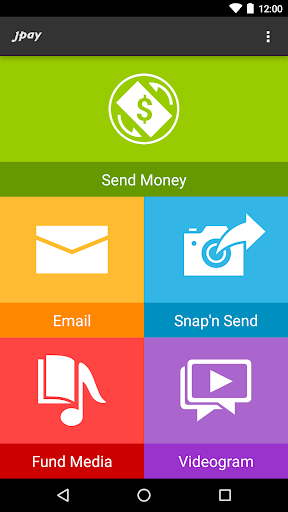
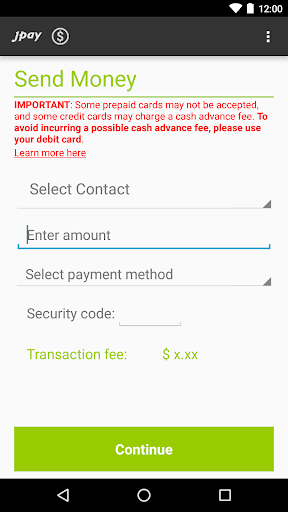
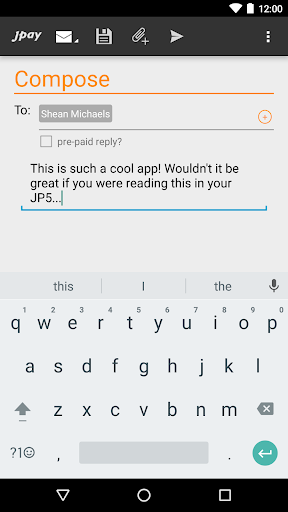
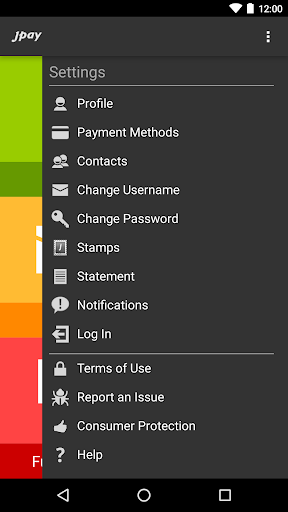
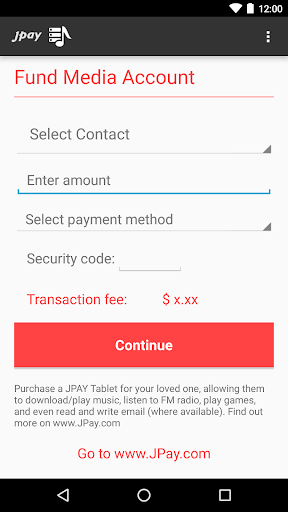
JPay is not the kind of app people download for fun. It fills a very specific, emotionally important role: helping families and friends stay in touch with someone who is incarcerated. After spending time with it, that purpose comes through immediately. This is an app built around communication first, and when it works smoothly, it can feel genuinely invaluable. The first thing that stood out in daily use is that JPay lowers the friction of staying connected. Instead of dealing with traditional mail delays or navigating a clunky website on a phone browser, the app puts the most important tools in one place: sending money, buying stamps, writing messages, attaching photos, and checking for replies. For people trying to maintain regular contact, that convenience matters a lot. The core experience is straightforward enough that most users can get set up without much hand-holding. Account management, payment options, and messaging tools are laid out in a way that makes sense once you spend a few minutes in the app. The messaging side is the heart of the experience, and in my testing it felt more useful than elegant. Writing and sending messages is simple, and the app does a good job of making the process feel closer to email than to a specialty correctional service. That alone is a major strength. It makes communication feel more normal, more immediate, and less intimidating for first-time users. The option to send photos adds another layer of connection, and that feature gives the app some emotional weight beyond basic text exchange. In a category like this, convenience is not just a nice bonus; it directly affects whether people stay in touch consistently. A second big strength is how many support functions are integrated into the same app. You are not bouncing between separate tools for communication and account funding. Being able to send money, buy stamps, and manage payment details inside the same environment makes JPay feel complete. For families already carrying the stress of navigating correctional systems, reducing those extra steps is one of the app's best qualities. I also liked that reminders and notifications are part of the package, because they help make communication more routine instead of something you have to remember manually. A third strength is that the app generally feels purpose-built rather than overloaded. It does not try to be a social network or a flashy media platform. It stays focused on a narrow set of tasks, and that focus mostly works in its favor. If your facility supports the features you need, JPay can become part of a daily rhythm: check messages, send a note, attach a photo, add funds if needed, move on. There is real value in that predictable loop. That said, JPay is not polished enough to earn an unqualified recommendation. The biggest weakness is reliability. At times the app feels solid, and at other times it can seem temperamental. Logging in is not always seamless, and there are moments where screens hang, spin, or fail to connect as quickly as they should. In an ordinary finance or messaging app, that would be annoying. In an app used for contact with a loved one in prison, it feels much worse, because every delay carries more emotional weight. If you are counting on JPay as your primary communication channel, even a temporary outage or failed load can be deeply frustrating. The second weakness is speed, especially around message flow. JPay is faster than physical mail, but that does not mean it feels instant. Messages can move slowly, and the overall experience depends partly on the correctional facility's own processes and approvals. That means the app sometimes gives the impression of being more immediate than the real system behind it actually is. You may send something quickly, but delivery and response timing can still be uneven. For people expecting chat-like responsiveness, this will be a letdown. The third weakness is inconsistency in feature usefulness across facilities. On paper, JPay offers a healthy set of options: emails, photos, videograms, money transfers, tablets, media funding. In practice, availability varies enough that the app can feel different depending on where your contact is located. That limits confidence, because you cannot assume every feature shown in the interface will be meaningful for every user. It makes JPay feel slightly fragmented, as if the app experience is only partly under the app's control. There are also some smaller quality-of-life issues. Notifications are helpful, but they do not always feel perfectly synchronized. Occasionally the app can make you double-check whether something truly arrived or whether the system is just catching up. The interface is functional rather than refined, and some flows still feel more transactional than modern. None of that breaks the app, but it stops JPay from feeling as polished as the best mainstream communication tools. Who is JPay for? It is for anyone who needs a practical mobile way to communicate with and support an incarcerated family member or friend, especially if they value the convenience of messages, photo sharing, and account funding in one place. It is particularly good for people who want something easier than mailing letters or using a desktop site. Who is it not for? It is not for users who expect flawless, instant messaging behavior or a fully standardized experience regardless of facility. If your patience is thin for connection issues, delayed delivery, or service limitations outside the app's control, JPay can be frustrating. Overall, JPay succeeds because it solves a real problem in a reasonably accessible way. It is not beautiful, and it is not always dependable, but when it works, it makes staying connected far easier than the alternatives. For the right user, that makes it more than just useful; it makes it essential.