
Apps Games Articles
Vinted: Shop & sell pre-loved
Vinted
Rating 4.0star icon
Editor's summary
Editor rating
star icon star icon star icon star icon
half star icon
4.5

One-line summary Vinted is one of the easiest and most satisfying ways to buy and sell second-hand fashion, but the added buyer fees and a few clumsy interface choices keep it just short of a full-throated recommendation.

  • Installs

    50M+

  • Developer

    Vinted

  • Category

    Shopping

  • Content Rating

    Teen

  • Latest version

    26.8.1

  • Package

    fr.vinted

Screenshots
In-depth review
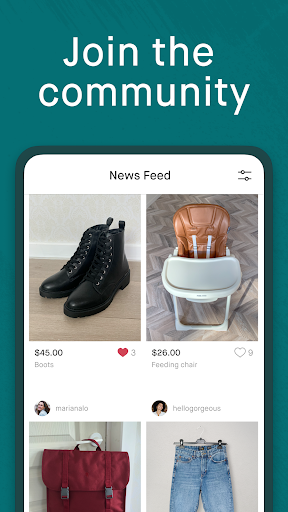
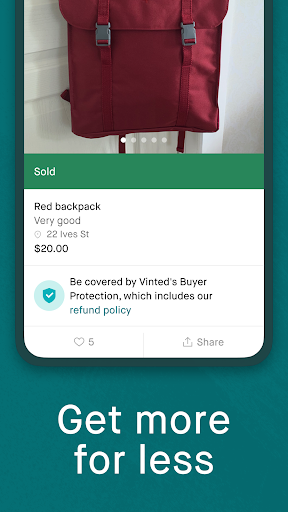
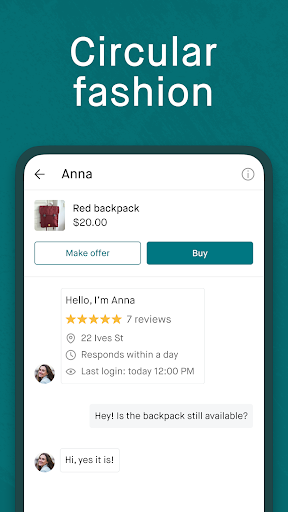
After spending real time with Vinted as both a buyer and a seller, I came away understanding exactly why it has become such a habitual app for clearing wardrobes and hunting bargains. It gets the core loop right: list something quickly, chat without friction, ship with minimal hassle, and move on. That sounds simple, but in resale apps the difference between “simple” and “annoying” is everything. Vinted is usually on the right side of that line. The first thing that stands out is how approachable it feels. Listing an item is refreshingly low effort. You take a few photos, add a short description, set a price, and you are basically done. The app doesn’t bury the process under too many unnecessary steps, and that matters because resale platforms live or die on whether people can get things uploaded before they lose motivation. Vinted feels built for people who want to turn a pile of clothes into listings in one sitting, not for power sellers who enjoy spending ages optimizing every field. That ease carries over into the selling experience more broadly. One of the app’s biggest strengths is that it feels like a selling platform designed around convenience rather than ceremony. Once something sells, the shipping flow is straightforward, and prepaid labels remove a lot of the usual faff. In practice, that means less time worrying about logistics and more time actually moving things out the door. For casual sellers decluttering wardrobes, spare rooms, or children’s outgrown clothes, this is exactly the right emphasis. Buying is just as strong in everyday use. Browsing is fast, categories are broad enough to keep the app interesting, and it is easy to fall into that “just one more scroll” rhythm that good marketplace apps create. Filters help, especially when you know roughly what you want, and the bundle-friendly nature of the platform makes it feel more social and opportunistic than a standard retail app. I liked how easy it was to jump from an item to the rest of a seller’s wardrobe. When it works, Vinted captures the genuine thrill of second-hand shopping: finding something useful, affordable, and slightly unexpected. There is also a reassuring structure around transactions. The app keeps communication, order updates, and payment flow in one place, which makes the experience feel more controlled than informal marketplace buying. As a buyer, that sense of protection matters. As a seller, the fact that the process is so standardized reduces the awkwardness and uncertainty that can plague person-to-person platforms. Still, Vinted is not friction-free, and the biggest drawback is cost transparency from the buyer’s side. Prices can look extremely attractive at first glance, especially on low-cost items, but by the time postage and the mandatory buyer protection fee are added, the final total can feel less like a steal and more like a mental recalculation exercise. On higher-value items this is less jarring, but for bargain-bin shopping the difference between list price and checkout price is noticeable. Vinted is still often good value, but it does occasionally undermine its own “great deal” energy. The second issue is that the interface, while generally clean, is not always as polished as it first appears. During testing, some parts of the app felt oddly inconsistent. Photo handling could be smoother, and there are corners of the experience where organization seems to have taken a step backward rather than forward. Order management is a good example: when purchase and sales information is not clearly separated, keeping track of active, pending, and completed transactions becomes more tedious than it should be. On an app built around lots of small transactions, that kind of navigation friction adds up quickly. The third weakness is that discovery still has rough edges once you move beyond simple browsing. If you are trying to shop strategically rather than casually, Vinted can sometimes make you work harder than necessary. Looking through larger wardrobes, building bundles, or narrowing down mixed listings would benefit from stronger filtering and sorting in more places. You can usually get where you want to go, but not always with the graceful efficiency that the best shopping apps manage. There are also occasional signs of localization or language oddities, where parts of the interface do not feel fully consistent. It does not break the app, but it can chip away at that sense of polish when menus or system text behave unexpectedly. Even with those frustrations, the app is highly recommendable because the fundamentals are so strong. It is especially good for casual sellers, sustainability-minded shoppers, parents buying and selling frequently changing sizes, and anyone who prefers a low-effort way to turn unused clothes and accessories into a bit of cash. It is also a very good fit for bargain hunters who enjoy browsing and are willing to factor in shipping and protection fees before convincing themselves they have found an absurd deal. Who is it not for? If you hate variable final costs, want ultra-precise search tools everywhere, or expect every corner of the interface to feel immaculate, Vinted may occasionally test your patience. Likewise, if you are hoping for a premium luxury resale experience with zero messiness, this is not really the vibe. Vinted works best when you meet it on its own terms: practical, fast, slightly scruffy around the edges, but genuinely useful. My overall impression is that Vinted succeeds because it makes second-hand selling feel normal instead of complicated. That is a bigger achievement than it sounds. The app is not perfect, and there are enough little annoyances to stop me calling it flawless, but it absolutely nails the everyday convenience that matters most. For most people who want to buy and sell pre-loved items without turning it into a part-time job, Vinted is one of the best places to start.
Alternative apps