Apps Games Articles
Rolling Beat: EDM Ball Dance
Potato Games Studio
Rating 4.0star icon
Editor's summary
Editor rating
star icon star icon star icon star icon
half star icon
4.5

One-line summary Rolling Beat: EDM Ball Dance is easy to recommend if you want a slick, satisfying rhythm game with responsive controls and strong music-game flow, but it’s harder to love if ads, IAP nudges, or the lack of deeper customization start to wear on you.

  • Installs

    1M+

  • Developer

    Potato Games Studio

  • Category

    Music

  • Content Rating

    Everyone

  • Latest version

    1.3.2

  • Package

    com.dash.dancing.smash.game.tiles.circles.beat.piano.rhythm.hop.rolling

Screenshots
In-depth review
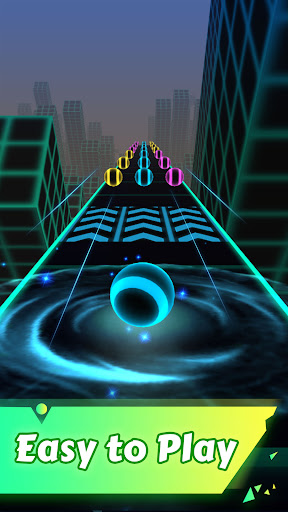
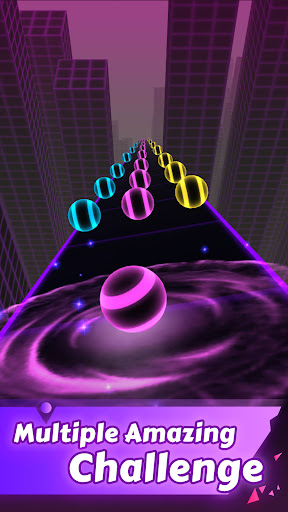
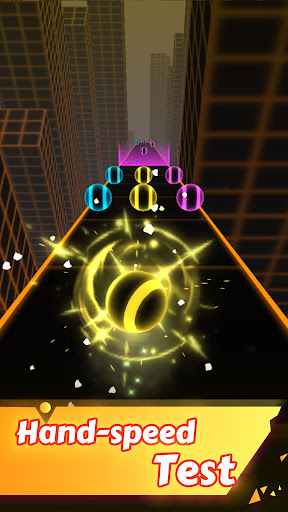
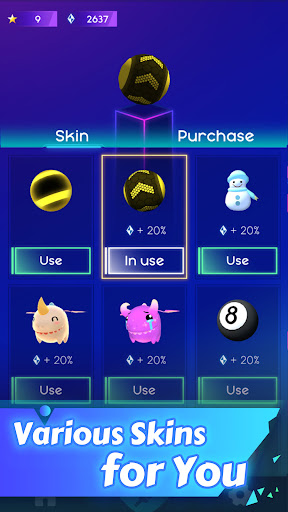
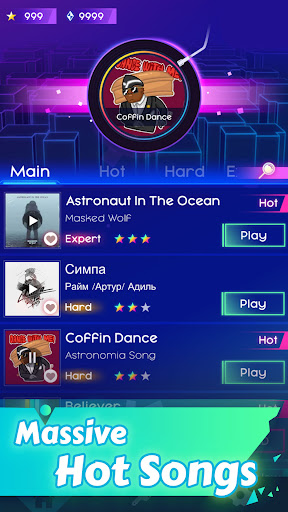
Rolling Beat: EDM Ball Dance lands in a crowded corner of mobile gaming, but after spending time with it, I came away thinking it earns its place more than most. This is one of those rhythm games that understands a very simple truth: on a phone, the controls have to disappear. If the player is fighting the input, missing beats because the ball feels loose, or struggling to read the track, the whole experience collapses. Rolling Beat gets that core interaction mostly right. You hold and drag the ball across a path of cubes, trying to stay in rhythm, avoid slipping off the route, and keep the run going. It sounds basic, and it is basic, but it’s executed with enough polish that the game becomes immediately playable and, more importantly, hard to put down in short bursts. The first thing that stood out to me in actual play was how readable everything feels. The lane structure is clear, the target cubes are easy to track, and the ball movement has enough responsiveness to feel connected to your finger without turning twitchy. That balance matters. A lot of music games on mobile either overcomplicate the visuals or make movement feel slippery, which creates the sense that you failed because the game was imprecise. Here, misses generally felt like my fault. That is a compliment. I could recover quickly, understand what went wrong, and jump straight back into another run without frustration boiling over. The second major strength is the rhythm-game loop itself. Rolling Beat is very good at creating that “one more try” momentum. The songs are paired with a gameplay structure that rewards focus without demanding too much mental overhead. It’s not a note-dense, highly technical rhythm experience aimed at hardcore players who want advanced input systems. It’s more about flow. You settle into the beat, drag with the music, and let the visual rhythm carry you forward. For casual players, that makes the game accessible almost immediately. Even if you are not especially good at rhythm games, the learning curve is inviting rather than punishing. The music and overall presentation also help. The app clearly leans into EDM energy, and that style suits the format well because it gives the movement a natural pulse. The bright visual design, shifting lanes, and satisfying contact with the cubes all create a sense of momentum that matches the soundtrack. I would not call it revolutionary, but I would absolutely call it effective. The game knows the fantasy it is selling: speed, beat, color, and smooth reaction. In that sense, it delivers. That said, the app is not without friction. The biggest downside in day-to-day use is that its simplicity can eventually start to feel limiting. Rolling Beat is great when you want a quick, stylish rhythm fix, but after longer sessions I found myself wishing for more variety in how it evolves. The central mechanic is polished, yet it doesn’t always expand into something richer. Different balls and songs help keep things fresh at a surface level, but the fundamental interaction remains very similar from run to run. If you want a music game with layers of progression, complex mechanics, or deep player expression, this can start to feel a bit thin. Another weakness is the broader free-to-play atmosphere. Since the app contains ads and in-app purchases, there is an unavoidable sense that the experience is occasionally structured around interruption and monetization rather than pure flow. I am not saying it becomes unplayable, because it does not, but rhythm games thrive on immersion, and anything that breaks that rhythm stands out more sharply here than it might in another genre. If you are the kind of player who is very sensitive to ads or to being nudged toward extras, that can chip away at the otherwise clean experience. I also found myself wanting more customization and music flexibility. The game offers a decent hook through its song-driven structure and the different ball options, but it stops short of feeling truly personal. A game like this naturally invites the fantasy of building your own vibe around your own music taste, and while the included direction is enjoyable, there is still a ceiling to how tailored the experience feels. You play within the framework the app provides, and if that framework matches your taste, great. If it doesn’t, there is only so much room to bend it toward your preferences. Even with those complaints, I think Rolling Beat succeeds because it understands its audience. This is for players who want an instantly accessible music game they can enjoy in short sessions, with clean controls, upbeat presentation, and enough challenge to stay engaging. It is especially good for people who like EDM-flavored rhythm experiences but do not necessarily want something brutally demanding. It is also a strong pick for younger players or casual mobile gamers who want a game that feels lively and polished without requiring a big time investment. It is not the best fit for players who want a premium-feeling, interruption-free rhythm game, or for experts chasing mechanical depth and highly technical chart design. It is also not ideal for anyone who gets bored quickly with a single core mechanic and expects a lot of structural variety over time. Overall, my time with Rolling Beat: EDM Ball Dance was more enjoyable than I expected. It does not reinvent the rhythm genre, but it does something arguably more important on mobile: it feels good to play. The controls are smooth, the visual feedback is strong, and the music-driven momentum makes it easy to lose ten or fifteen minutes without noticing. Its weaknesses are real, especially around long-term depth and the usual free-to-play annoyances, but the foundation is solid enough that I would still recommend it to most casual rhythm fans. When a music game gets you back into the next run before you have time to second-guess it, that usually means it is doing something right.