
Apps Games Articles
Cell Survivor
Snap Brain Games
Rating 4.2star icon
Editor's summary
Editor rating
star icon star icon star icon star icon empty star icon
4.1

One-line summary Cell Survivor is easy to recommend for players who want a surprisingly sticky roguelike action game with satisfying build choices, but its aggressive ad economy and occasional ad-related hiccups keep it from being an automatic install.

  • Installs

    5M+

  • Developer

    Snap Brain Games

  • Category

    Role Playing

  • Content Rating

    Everyone 10+

  • Latest version

    2.01

  • Package

    defense.roguelike.cell.shoot.survivor

Screenshots
In-depth review
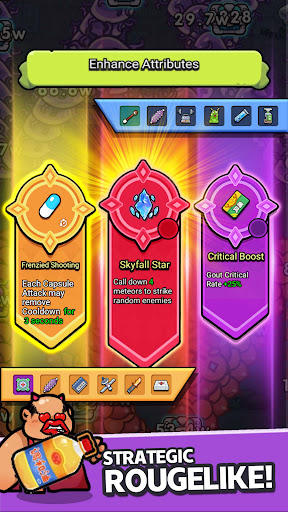
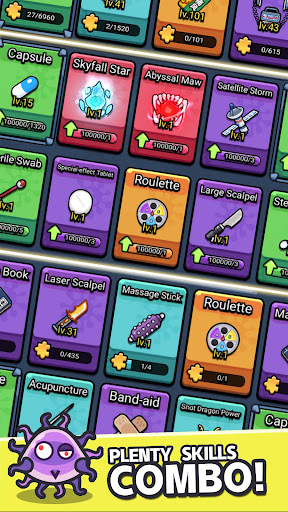
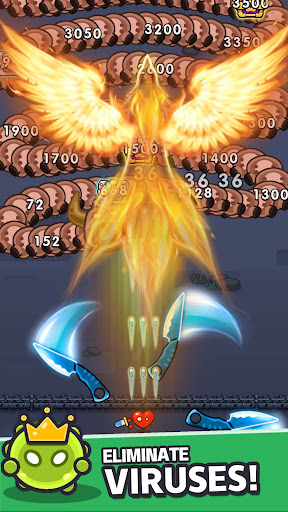
Cell Survivor is one of those mobile games that looks a little generic at first glance and then quietly eats far more of your time than you planned to give it. After spending real time with it, the best thing I can say is that it understands the basic hook of the modern mobile roguelike: get into a run quickly, throw meaningful upgrade choices at the player, make each fight feel a little different, and keep the pace brisk enough that failure leads to “one more try” instead of an uninstall. The setup is straightforward. You are dropped into microscopic combat scenarios, fighting waves of virus-like enemies and larger bosses while building out your loadout through random skill selections. On paper that sounds familiar, and in practice it is familiar, but Cell Survivor is at its best when it leans into that formula with confidence instead of trying to overcomplicate it. Runs are easy to understand, the controls are approachable, and the game does a good job of creating that pleasant roguelike tension where every upgrade choice feels like a small bet on the rest of the run. That moment-to-moment progression is the app’s strongest feature. The random skill picks do not just exist to create noise; they give the battles shape. Early in a session, you are testing possibilities. Mid-run, you are trying to turn a handful of decent upgrades into a coherent build. By the time a boss arrives, the game has usually done enough to make you feel invested in your current setup. It is a good sign when a mobile action RPG makes you care not just about surviving, but about whether this particular run is becoming powerful in the way you hoped. The boss design also helps. Cell Survivor wants you to pay attention rather than simply coast on stats, and that makes it more engaging than many idle-feeling action games on the store. Bosses have patterns, they create pressure, and they ask for at least some positioning and reaction instead of pure brute force. The game never felt like it was demanding fighting-game precision, but it did regularly reward focus. That balance matters. It gives the action a tactical edge without making the whole thing feel punishing or inaccessible. Another pleasant surprise is that the grind, while definitely present, does not completely smother the fun. Free-to-play progression always raises the question of whether the game respects your time, and Cell Survivor lands in a better place than many games in this lane. You can make progress without feeling instantly hard-walled, and there is enough variation in runs to prevent the loop from becoming stale too quickly. It is the sort of game that works well for players who want something they can dip into for short sessions but still feel gradual advancement over time. That said, Cell Survivor’s biggest weakness is impossible to ignore: ads are woven deeply into the experience. This is not a subtle part of the design. The game can still be enjoyable in spite of them, but the ad load is heavy enough that you remain aware of the monetization layer almost constantly. The most frustrating part is not simply that ads exist; mobile players have learned to live with that. It is that the attempt to escape them does not appear especially player-friendly. If you are the kind of user who wants a clean premium-style experience after paying once, this app is likely to test your patience. Ad reliability can also be shaky. During use, one of the most annoying scenarios is finishing a video only to be told it did not register properly, or seeing the app stumble after an ad sequence. Even if it does not happen constantly, it chips away at trust. In a game built around rapid runs and momentum, nothing feels worse than a break in flow caused by the monetization plumbing. The other issue is polish around information and feedback. Cell Survivor is fun to play, but it does not always feel as informative as it could be. Because so much of the strategy revolves around stacking weapons or upgrades and seeing what pays off, there is a real desire for clearer post-battle breakdowns and more transparent performance data. The game gives you action and progression, but not always the analytical tools that would help more invested players understand why a run succeeded or failed. For a game that invites build experimentation, that missing layer stands out. Visually and structurally, Cell Survivor falls into the category of competent rather than dazzling. It is readable, energetic, and functional, but it is not the sort of game you install for audiovisual spectacle. What carries it is pacing. It gets to the action quickly, keeps decisions coming, and generally avoids drowning the player in unnecessary complexity. That makes it especially well suited to players who enjoy roguelike build-crafting, light tactical action, and the familiar “survive, upgrade, adapt” loop. If you like mobile games that are easy to start but have enough variety to support repeat sessions, this is very much in your lane. Who is it not for? Anyone with zero tolerance for ad friction should think twice. The same goes for players who want a premium-feeling interface, deep combat telemetry, or a highly polished presentation. If your ideal roguelike shooter is something elegantly minimal and interruption-free, Cell Survivor will probably feel too commercially noisy. But judged by the standard of free mobile action RPGs rather than by premium PC roguelikes, Cell Survivor is a good game. It has a strong enough core loop to survive its own monetization choices, and that is not faint praise. I kept coming back because the runs are fun, the upgrade choices are compelling, and the boss encounters create just enough pressure to keep the whole thing from becoming brainless. It is not the cleanest or most elegant game in its category, but it is an absorbing one, and for the right player that matters more.