
Apps Games Articles
Judge 3D - Court Affairs
CrazyLabs LTD
Rating 4.0star icon
Editor's summary
Editor rating
star icon star icon star icon
half star icon
empty star icon
3.6

One-line summary Judge 3D - Court Affairs is an entertaining, easy-to-digest courtroom time-waster with a fun premise, but repetitive cases, heavy ad pressure, and progress hiccups make it harder to recommend wholeheartedly.

  • Installs

    1M+

  • Developer

    CrazyLabs LTD

  • Category

    Role Playing

  • Content Rating

    Teen

  • Latest version

    1.9.2.0

  • Package

    com.TimurBesli.Judge3D

In-depth review
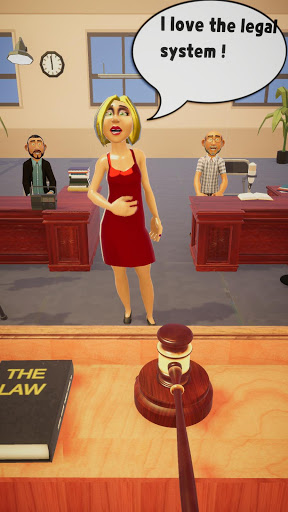
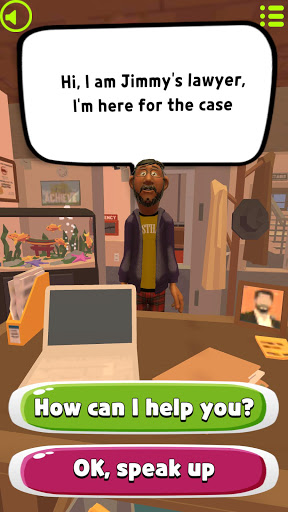
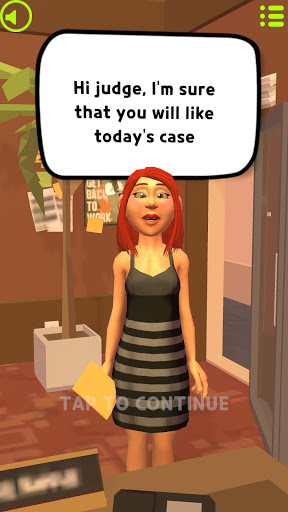
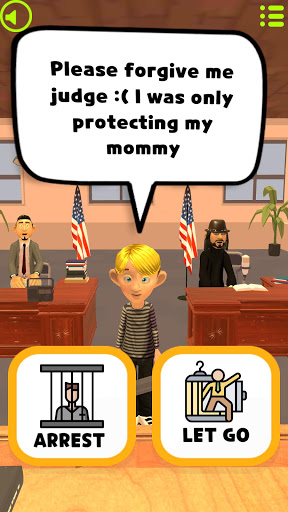
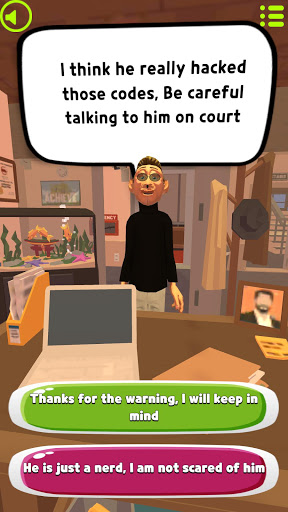
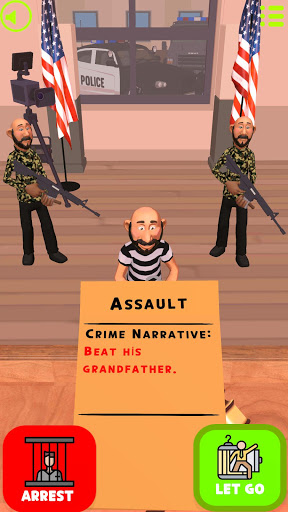
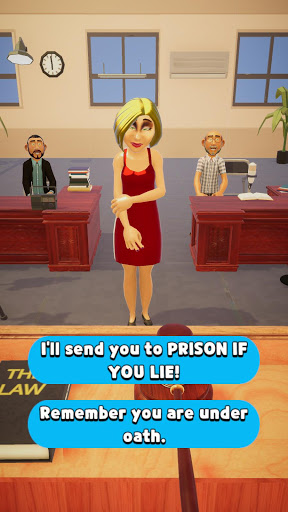
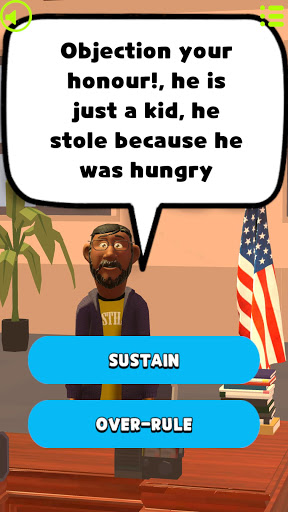
Judge 3D - Court Affairs is one of those mobile games that wins you over with its premise before you even get into the details. The fantasy is instantly understandable: you sit on the bench, hear out oddball cases, look at evidence, and decide who is lying, who is guilty, and what punishment fits. That setup is strong enough that the game feels inviting from the first few minutes. You do not need a tutorial-heavy onboarding process or any real familiarity with legal dramas to understand the loop. Open the app, take the next case, make a judgment, move on. It is built for quick sessions, and in that respect it absolutely works. In my time with it, the biggest strength was how approachable it is. This is not a deep simulation of courtroom procedure, and it does not pretend to be. Instead, it leans into a light, almost toy-like format where each case is delivered in broad strokes and your role is to react. That makes it easy to play in short bursts. If you have a few spare minutes, the game is very good at delivering a little hit of decision-making without asking much from you. There is a simple satisfaction in seeing a scenario, weighing the clues presented, and dropping the metaphorical gavel. The second thing it gets right is tone. Judge 3D is not serious in the way a legal thriller is serious. It is playful, exaggerated, and sometimes a bit absurd, which is exactly what keeps it from becoming dry. The 3D presentation is simple but readable, and the courtroom framing gives the whole app a more distinct identity than the average idle or choice-based mobile game. Even when the mechanics are thin, the theme does a lot of work. There is a mild charm to being put in charge of petty disputes and criminal cases in this stylized world, and that charm carries the experience further than it might deserve on mechanics alone. A third strength is that the game is immediately understandable even offline. In practice, this matters because Judge 3D feels far smoother when distractions are reduced. Played as a casual offline game, it becomes much easier to appreciate the core loop. The stop-start structure of hearing a case and deciding on an outcome is naturally suited to that style of play. That said, the game also shows its limitations pretty quickly. The most obvious issue is repetition. After the novelty of being “the judge” settles in, you start to notice how narrow the gameplay really is. Cases may change in theme, but the rhythm remains very similar, and the sense of discovery fades faster than I wanted. This is the kind of game that makes a strong first impression and then starts recycling that impression. It is still playable in short sessions, but it does not meaningfully grow into something richer the longer you stay with it. The second major weakness is ad pressure. Because the app is free, ads are not surprising, but they are still a big part of the overall feel. If you are playing connected, interruptions can break the flow often enough to become irritating. In a game that depends so heavily on quick momentum, anything that repeatedly cuts between cases makes the experience feel more fragmented. This is one of those titles where your tolerance for mobile ads will heavily influence your verdict. If you are already used to free-to-play friction, you may shrug and keep going. If you prefer a cleaner, uninterrupted experience, this app will test your patience. The third issue is that it can feel unstable or limited in progression. During my play time, I could see the rough edges in how some scenarios resolve and how the overall structure holds together over time. There is a lingering sense that the content ceiling arrives sooner than expected, and the game does not always feel completely smooth once you get deeper in. In a title built around case progression, any moment where advancement feels awkward or unexpectedly loops back hurts the illusion that you are building toward something. That tension really defines Judge 3D - Court Affairs. It is fun in the way many mobile novelty games are fun: the premise is strong, the sessions are short, and the mechanics are simple enough to keep things moving. But it also has that familiar downside where the initial hook is better than the long-term follow-through. I enjoyed dipping in and making a few judgments at a time. I was less convinced by long play sessions, where repetition and interruptions became much harder to ignore. Who is this for? It is best for casual players who want a light, low-commitment game with a clear gimmick and instant feedback. If you like decision games, simple role-playing scenarios, or quirky courtroom setups, there is enough charm here to justify a download. It is also a decent fit for players who often play offline and are comfortable with mobile games that are more about amusement than depth. Who is it not for? If you want a thoughtful detective experience, meaningful branching choices, polished progression, or a premium-feeling courtroom sim, this is probably not it. It is also a poor match for anyone with a very low tolerance for ads or repetitive loops. In the end, Judge 3D - Court Affairs is better as a guilty pleasure than as a must-play. I had fun with it, and I can see why it has found a large audience. But I would recommend it with conditions: enjoy the concept, keep your expectations modest, and treat it as a disposable but entertaining courtroom snack rather than a deep legal adventure.
Alternative apps