
Apps Games Articles
Lingua: Speak & Learn English
Now Tech
Rating 4.3star icon
Editor's summary
Editor rating
star icon star icon star icon empty star icon empty star icon
3.4

One-line summary Lingua makes spoken English practice feel approachable and genuinely useful, but its biggest weakness is how quickly the “free” experience runs into payment friction.

  • Installs

    1M+

  • Developer

    Now Tech

  • Category

    Tools

  • Content Rating

    Everyone

  • Latest version

    1.2.6.0

  • Package

    com.learn.speak.language.english.aitutor.spainish.lingua

In-depth review
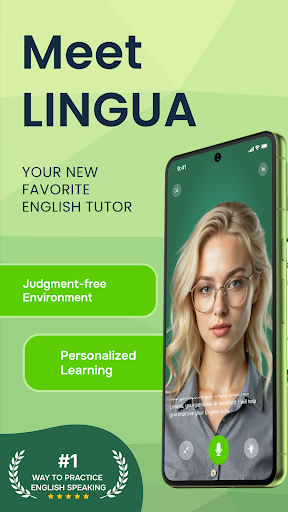
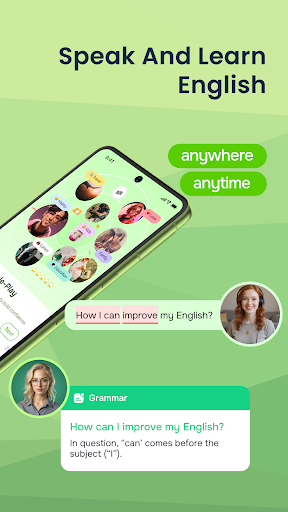
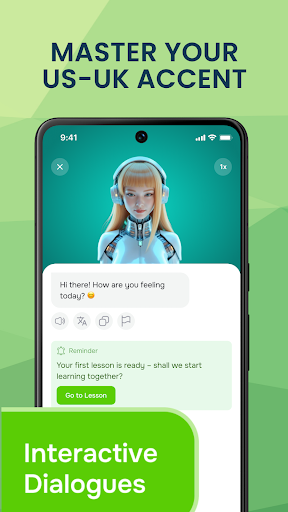
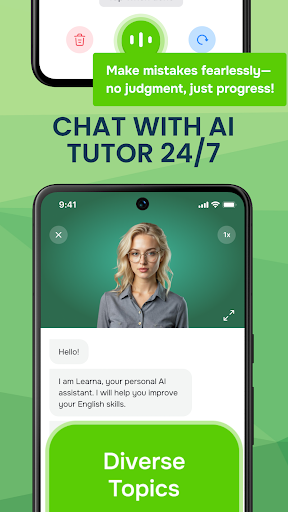
Lingua: Speak & Learn English is the kind of app that immediately tells you what it wants to be: a practical speaking coach rather than a traditional lesson-heavy language course. After spending time with it, that focus comes through clearly. This is not an app built around endless grammar charts or gamified tapping exercises. It is trying to get you speaking, listening, and reacting in English with the help of an AI tutor, and when it works, it feels far more relevant than the usual vocabulary flashcard routine. What stood out first in daily use is that Lingua keeps the barrier to entry low. The app’s overall concept is easy to understand, even for learners who are not especially tech-savvy. You open it expecting conversation practice, pronunciation help, and some vocabulary support, and that is broadly what it delivers. There is value in that clarity. Too many language apps try to be everything at once and become cluttered. Lingua feels more direct. It pushes you toward speaking, which is exactly where many learners freeze up in real life. The strongest part of the experience is the AI conversation angle. Practicing with an AI tutor is less intimidating than speaking with a real person, especially if you are a beginner or someone embarrassed by your accent. In use, that gives Lingua a real emotional advantage. You can try sentences, make mistakes, repeat yourself, and generally practice without the social pressure that makes many learners avoid speaking altogether. For shy learners, solo learners, and people who have studied English for years but rarely spoken it out loud, this is a meaningful benefit. The second thing Lingua does well is keeping the focus on spoken English rather than abstract language study. Its positioning around fluency, pronunciation, and real-world conversation feels appropriate because the app seems built for people who want to sound more natural and gain confidence, not just passively recognize words. If your main goal is to get more comfortable speaking in common situations, this approach is easier to appreciate than a course that spends too much time on textbook drills. Pronunciation training is also one of the more appealing parts of the package. The app clearly wants to help learners pay attention to how English sounds, not just how it is spelled. That matters because many English learners can read reasonably well but hesitate when they have to pronounce words under pressure. Lingua’s emphasis on accent and pronunciation gives it a practical edge. Whether you care more about being understood or about sounding more polished, that part of the app feels aligned with real learner pain points. But Lingua is also an app that reveals its limits fairly quickly. The biggest issue is not the core idea; the core idea is solid. The frustration comes from access. The app presents itself as free, yet the free experience feels narrow enough that it can quickly turn into a paywall encounter. In practice, that changes the tone of the whole app. A speaking app lives or dies by whether it allows enough time for rhythm, confidence, and habit to build. When a conversation feels cut short or continued use starts pointing you toward payment too early, the experience shifts from supportive coach to restricted demo. That is disappointing because the app’s best feature is conversation, and that is exactly the feature that needs room to breathe. That leads to the second weakness: the sessions can feel too brief to create momentum. With language learning, especially speaking practice, short bursts can be useful, but they still need enough continuity to feel satisfying. In Lingua, there is a sense that the app gets interesting just as it begins to pull back. That hurts immersion. Instead of settling into a useful exchange and gradually building confidence, you may end up feeling like you only had time for a sample. The third weakness is that the app’s value proposition can feel a little narrower than its ambitious marketing suggests. It talks like a full fluency solution, but in actual use it feels more like a focused speaking companion with pronunciation support than a complete all-in-one English system. That is not necessarily bad, but expectations matter. If you come in wanting a broad, structured course covering every aspect of English in depth, Lingua may feel lighter than you hoped. If you come in specifically wanting speaking practice, it makes more sense. So who is Lingua for? It is best for learners who need a confidence bridge into spoken English: beginners who want low-pressure practice, intermediate learners trying to speak more regularly, and professionals who want a more conversation-oriented tool instead of a traditional classroom style app. It is especially suitable for people who like the idea of an AI tutor and want guided speaking prompts without the awkwardness of live human interaction. Who is it not for? It is not ideal for users who expect a truly generous free app, or for learners who want long, uninterrupted sessions before deciding whether to pay. It is also not the best fit for someone looking for a deeply structured, comprehensive curriculum with the feel of a full course from start to finish. In the end, Lingua is easy to like but slightly harder to fully recommend without reservations. Its strengths are real: approachable AI speaking practice, a practical focus on fluency, and useful attention to pronunciation. Those are meaningful wins. The problem is that the app seems most compelling right at the point where access becomes more restricted. If you are willing to pay for guided speaking practice, Lingua may be worth a look. If you are specifically searching for a genuinely free English-learning app, the experience may leave you feeling that the welcome mat was pulled away a little too soon.