
Apps Games Articles
Pole Star
CrazyLabs LTD
Rating 4.4star icon
Editor's summary
Editor rating
star icon star icon star icon
half star icon
empty star icon
3.8

One-line summary Pole Star is an easy, goofy, surprisingly smooth time-killer with quick dress-up appeal, but its repetitive progression and ad-heavy pacing make it hard to recommend for anyone looking for depth.

  • Installs

    5M+

  • Developer

    CrazyLabs LTD

  • Category

    Role Playing

  • Content Rating

    Teen

  • Latest version

    0.4.4.0

  • Package

    com.crazylabs.pole.dancing

Screenshots
In-depth review
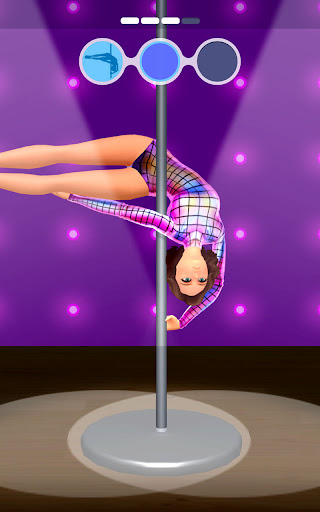
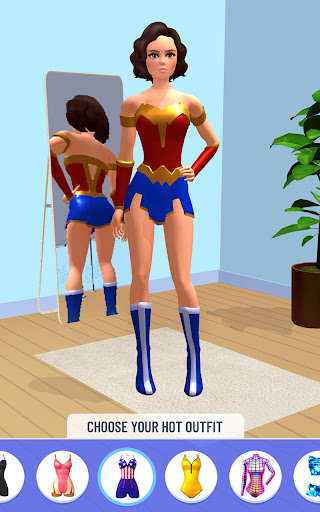
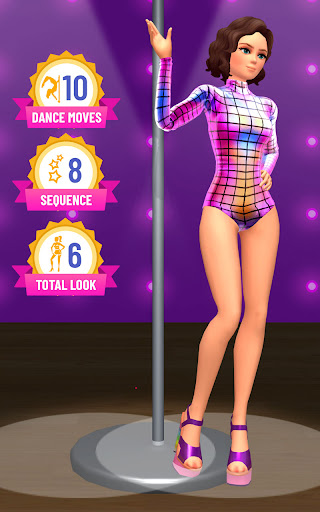
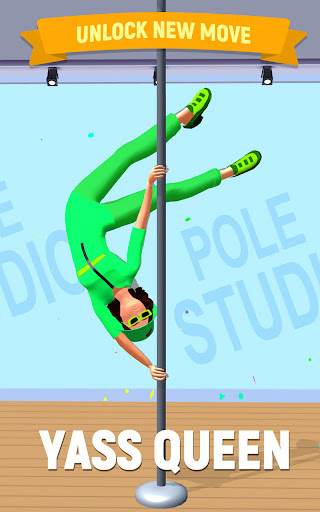
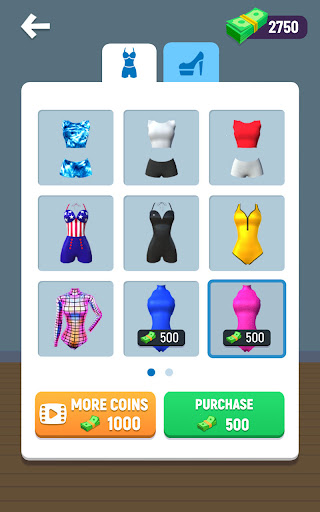
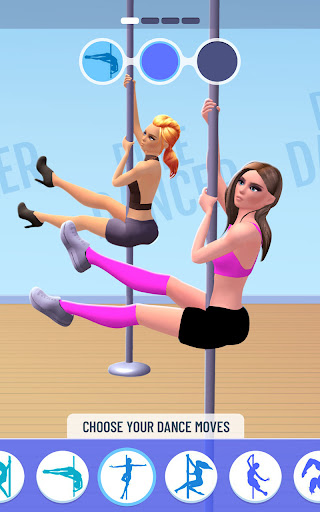
Pole Star is one of those mobile games that tells you exactly what kind of experience it wants to be within the first minute: bright, fast, low-pressure, and more interested in keeping you moving than teaching you a deep system. After spending time with it, that impression held up. This is not a serious simulation of pole fitness or a demanding rhythm game. It is a casual role-playing/arcade hybrid built around sliding down a pole, striking stylish poses, and unlocking cosmetics. If you go in expecting a lightweight, colorful distraction, it works better than you might think. If you want challenge, progression depth, or much variety over the long run, its limitations show up quickly. What stands out first is how approachable it is. Pole Star doesn’t bury the player in menus or complicated mechanics. You get into the action quickly, and the core loop is easy to understand almost immediately. That matters on mobile, where a lot of games confuse “simple” with “sloppy.” Here, the simplicity feels intentional. The basic flow is readable, the interactions are easy to pick up, and the game does a decent job of delivering that little burst of satisfaction you want from a short phone session. I found it especially well-suited to idle moments: a few rounds while waiting, a few rounds before bed, a few rounds when I didn’t want to commit to something more involved. Another thing the game gets right is presentation, at least within the expectations of this genre. The visual style is flashy and exaggerated rather than refined, but it fits the material. Outfits, heels, and character styling are clearly a big part of the app’s appeal, and the dress-up element gives the game a stronger identity than it would have had as a bare arcade mechanic. Unlocking or switching looks adds just enough personalization to keep the app from feeling like a sterile score-chaser. There is an obvious emphasis on glam and stage presence, and for the audience that enjoys fashion-forward mobile games, that layer does help. The third strength is that the game generally feels smooth in motion. I didn’t come away thinking it was especially advanced, but it was easy to play and responsive enough to stay enjoyable. That’s important because the whole app depends on the sensation of sliding, posing, and flowing through a level without friction. In casual games like this, rough performance can kill the fantasy immediately. Pole Star mostly avoids that problem. It feels light and playable, which is a big reason it is easy to keep launching for “just one more round.” That said, the game also reaches its ceiling fairly fast. The biggest issue is repetition. Once you’ve seen the core loop a handful of times, you start to realize how little the experience evolves. Pole Star offers a fun premise, but it doesn’t build enough on that premise. I kept waiting for the game to introduce more meaningful variation: new structures, more demanding sequences, a stronger sense of risk, or at least progression that changed how I approached a level. Instead, it settles into a pattern that becomes predictable. For a while, that’s relaxing. Eventually, it feels thin. Related to that is the lack of challenge. Pole Star is extremely accessible, but accessibility and flatness are not the same thing. The game rarely gave me the sense that I could truly fail in an interesting way or improve through mastery. It often feels tuned for smooth completion rather than skill expression. That makes it friendly for younger or more casual players, but it also limits the thrill. A game about performance should ideally create tension: the possibility of messing up, recovering, and pulling off a great run. Here, that sensation is muted. The result is an experience that can feel more like watching progress happen than actively earning it. The other major annoyance is ad pressure. For a free game, some ad presence is expected, and Pole Star is far from unique in that respect, but it does affect the rhythm of play. The app works best when you can bounce through several short sessions seamlessly. Interruptions break that flow. Because the underlying gameplay is already fairly simple, ads stand out more sharply than they would in a deeper game. When your rounds are quick, any friction feels bigger. There is also the matter of tone. Pole Star leans heavily into heels, outfits, and stage glamour, and the presentation may strike some players as playful and campy while others will find it too narrow or too suggestive for their tastes. In practice, the game felt more like stylized mobile dress-up fantasy than anything especially provocative, but the framing is unmistakable. Whether that is a plus or a drawback depends entirely on what you want from the app. So who is Pole Star for? It is for players who enjoy simple mobile games with dress-up elements, bright visuals, and low-stakes arcade loops. It is a decent pick for someone who wants a casual time-filler that is easy to understand and easy to dip in and out of. It is not for players looking for rich progression, long-term goals, competitive challenge, or meaningful mechanical depth. If you need your mobile games to keep surprising you after the first few sessions, this one probably won’t last. In the end, Pole Star is enjoyable in short bursts because it understands the basics of casual mobile play: get the player in quickly, keep things visually lively, and make the controls painless. It just doesn’t have enough layers to stay fresh for very long. I had fun with it, especially early on, but I also hit that familiar point where the costumes and animations could no longer hide how repetitive the loop had become. Recommended, then, with conditions: good for quick, breezy entertainment, not ideal for anyone hoping the concept will develop into something deeper.