
Apps Games Articles
Melon Sandbox
playducky.com
Rating 4.7star icon
Editor's summary
Editor rating
star icon star icon star icon star icon
half star icon
4.5

One-line summary Melon Sandbox is one of the most creative and replayable mobile sandbox games around, but its frequent ads, occasional jank, and performance hiccups keep it from feeling truly premium.

  • Installs

    50M+

  • Developer

    playducky.com

  • Category

    Simulation

  • Content Rating

    Teen

  • Latest version

    34.6.1

  • Package

    com.studio27.MelonPlayground

Screenshots

In-depth review
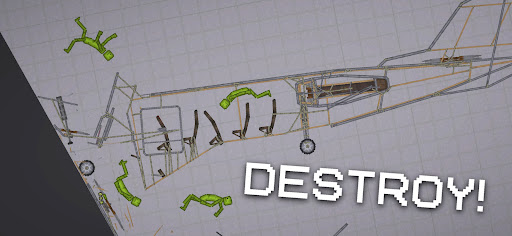
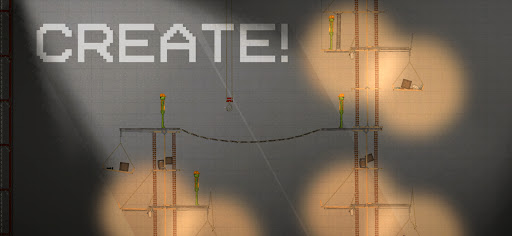
Melon Sandbox understands a very specific kind of player fantasy: giving you a box of toys, a physics engine, and just enough structure to let your imagination do the rest. After spending real time with it, what stood out most was not the violence or the chaos, but how quickly it becomes a creativity tool. You open the game thinking you will mess around for five minutes, and suddenly you are building a scenario, testing chains of reactions, arming characters, arranging props, and trying to turn a simple sandbox into a miniature story. At its best, Melon Sandbox feels like a sketchbook for absurd ideas. The core interaction is simple enough to understand quickly: place things, move them, equip them, damage them, and see what the ragdoll physics do. That simplicity is the app’s biggest strength. It does not bury the fun under tutorials or progression walls before letting you play. Within minutes, we were dropping characters into improvised battle scenes, creating destructive setups with weapons and objects, and experimenting with how different items interact. There is a lot of room for emergent fun here, and that is why the game has such strong staying power. The second thing that impressed us was the flexibility. This is not just a “spawn object, watch it explode” novelty app. It supports a wider style of play than that. You can treat it as a destruction simulator, but you can also use it as a crude animation stage, a storytelling board, or a construction playground. Building contraptions and scenes takes patience, but that effort is rewarded. We found ourselves repeatedly restarting setups, tweaking object placement, adjusting the logic of a fight or chain reaction, and generally fussing over details in a way that only happens when a sandbox has real creative pull. The modding angle adds even more to that feeling. Even if you never go deep into it, the game clearly wants players to make the experience their own, and that gives it more life than many mobile physics toys. A third strength is that it autosaves and generally supports long-form play surprisingly well. In a game like this, where a “session” often turns into an evolving project, that matters a lot. You are not just dropping in for a single round and leaving. You build, test, revise, and return. Melon Sandbox handles that loop well enough to encourage experimentation rather than punish it. That said, this is not a polished masterpiece. It is a very good sandbox game that still feels rough around the edges, and those edges show up regularly. The biggest annoyance in day-to-day play is monetization friction. The game is free, and that generosity is part of its appeal, but you feel the presence of ads. They are not subtle. If you are the kind of player who wants a smooth, uninterrupted tinkering session, the ad flow can chip away at the game’s otherwise excellent “just one more experiment” rhythm. There is also an in-game currency tied to mods and extra content, and while the game does offer ways to engage with that system, it can make some desirable items feel further away than they should. The result is not unplayable, but it is one of those free-to-play designs where the creative high occasionally crashes into a reminder that you are in a mobile economy. The second weakness is technical instability. On a light setup, Melon Sandbox runs fine enough, and the basic interactions feel responsive. But as soon as you start doing the things the game encourages—larger scenes, more moving parts, busier maps, more physics interactions—the cracks become visible. We ran into moments where performance dipped hard, particularly in more demanding scenarios. Some actions and object behaviors also felt inconsistent, the sort of bugs that are not always catastrophic but can absolutely ruin the payoff of an elaborate setup. In a sandbox game, reliability matters, because a lot of the fun comes from carefully constructed chaos. If the app freezes or an interaction fails when your experiment is finally ready, it stings more than it would in a more disposable game. The third weakness is interface friction. Melon Sandbox gives you plenty to work with, but it is not always elegant about how you work with it. Some controls feel fiddly, especially when you are trying to create more precise builds or manipulate complex arrangements. The UI is functional, not graceful. You can learn it, adapt to it, and eventually work around it, but there is a noticeable gap between the game’s creative ambition and the smoothness of its tools. That does not kill the experience, but it does make advanced play more labor-intensive than it needs to be. Even with those frustrations, Melon Sandbox is easy to recommend because the core sandbox is genuinely good. It creates that rare “what if I try this?” loop that keeps sandbox fans engaged for hours. Every time we felt ready to put it down, some new idea pulled us back in: test a different weapon combination, build a small machine, stage a fight, customize a character, or attempt a more elaborate scene. A game does not need to be perfect to be compelling, and this one is compelling. Who is it for? Players who love open-ended experimentation, ragdoll physics, improvised storytelling, and construction-by-chaos will get a lot out of it. If you enjoy making your own fun rather than following a strict objective list, Melon Sandbox is absolutely in your lane. It is also a great fit for tinkerers who like the idea of creating characters, devices, or scenarios instead of simply consuming prebuilt content. Who is it not for? If you want clean goals, competitive structure, polished controls, or a highly refined premium feel, this may wear on you quickly. Likewise, if you have low tolerance for ads, bugs, or slowdown, the game’s roughness can become more memorable than its creativity. But taken on its own terms, Melon Sandbox earns its reputation. It is chaotic, inventive, occasionally messy, and consistently entertaining. More importantly, it gives mobile players something many games fail to offer: the feeling that the best content in the app is the content you come up with yourself.