
Apps Games Articles
Magic Hop: EDM & Dancing
Badsnowball Limited
Rating 4.4star icon
Editor's summary
Editor rating
star icon star icon star icon star icon empty star icon
4.2

One-line summary Magic Hop is an easy-to-enjoy music runner with colorful style and a broad song mix, but the ad interruptions and occasional rough edges keep it from feeling as smooth as its best moments suggest.

  • Installs

    10M+

  • Developer

    Badsnowball Limited

  • Category

    Music

  • Content Rating

    Everyone

  • Latest version

    2.2.6

  • Package

    com.dash.dancing.smash.game.tiles.circles.beat.piano.rhythm.hop

Screenshots

In-depth review
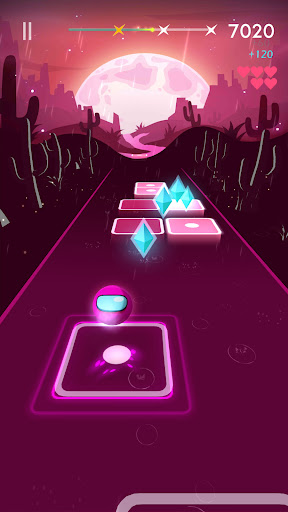
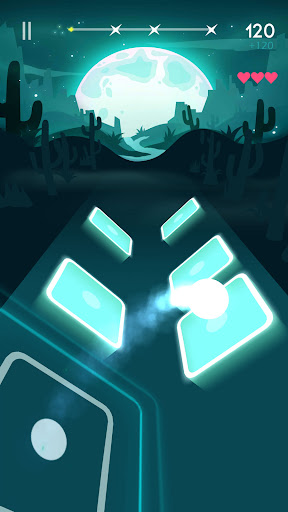
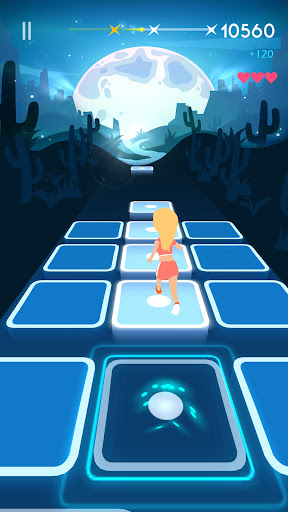
Magic Hop: EDM & Dancing is one of those mobile music games that understands its job immediately: get you into a groove fast, keep the visuals bright, and make each short session feel satisfying enough that you tap into another song. After spending time with it, that core appeal is very easy to understand. This is not a deep rhythm simulator or a precision-heavy arcade game for experts. It is a flashy, accessible beat-hopping game built for people who want music, motion, and a little bit of challenge without too much friction. The basic loop is simple. You guide a ball across a path of tiles, trying to stay aligned with the flow of the song while avoiding mistakes and traps. That simplicity works in the app’s favor. It takes almost no time to understand, and within a few rounds the game starts to hit a satisfying rhythm where your hands and eyes settle into the lane changes naturally. The best sessions are the ones where the movement, music, and neon presentation lock together and the app briefly feels hypnotic. Magic Hop is at its strongest when it becomes a low-pressure zone-out game: colorful, kinetic, and just challenging enough to keep you focused. Visually, it does a good job of selling that mood. The presentation leans hard into glowing tiles, bright effects, and energetic backdrops. It is not subtle, but it is effective. The game has an immediately recognizable mobile-music aesthetic, and for this kind of title that is exactly what you want. There is enough style here to make routine runs feel lively rather than mechanical. Even after multiple songs, the visual feedback still gives each hop a satisfying sense of motion. It feels designed to be appealing at a glance, and in actual play that polish helps. The song selection is another real advantage. The store page clearly positions the app as broad rather than niche, and in use that is the right way to think about it. The appeal is variety. Pop, EDM, rap, rock, K-pop, J-pop, anime-adjacent tracks, meme-friendly picks, and mainstream crowd-pleasers all fit the game’s tone. That range matters because this kind of app lives or dies by whether you can quickly find a track that matches your mood. Magic Hop usually succeeds there. It is easy to imagine different players opening it for different reasons: one person wants recognizable hits, another wants something energetic and disposable for five minutes, another just wants a stress-relief game with music in the background. The app is flexible enough to serve all three. That said, Magic Hop is also a reminder that “music game” can mean very different things. If you are looking for a tightly authored rhythm experience where every input feels musically precise, this is not quite that. The game captures the feel of riding along with the beat more than the strict discipline of matching every note. Sometimes that works beautifully because it keeps the app relaxed and approachable. At other times, the timing and flow can feel a little more approximate than rhythm purists may want. It is fun first, exacting second. The free-to-play structure is where the experience becomes more uneven. Ads are very much part of the package. They are not constant to the point of making the game unusable, but they do appear often enough to break the mood, especially when you are jumping between songs. In a music game, momentum matters. You want that “one more track” feeling. Advertising can interrupt that flow and make the app feel more transactional than immersive. The VIP pitch is not surprising for this category, but players who are sensitive to ad-heavy mobile design will notice the pressure quickly. Performance is mostly fine, but not flawless. During play, the game generally responds well enough to remain enjoyable, yet it does not always feel perfectly smooth. Small hiccups, brief freezes, or rough transitions can be especially frustrating in a title where one mistimed moment means a failed run. Even occasional stutters stand out more here than they would in a puzzle game or idle app, because rhythm games depend on trust. You need to feel that if you miss, it was your fault and not the app’s. Magic Hop usually earns that trust, but not consistently enough to ignore the issue. The other area where the app feels slightly undercooked is progression and long-term depth. The core gameplay is fun, but after a while you start noticing what is missing as much as what is present. More robust difficulty options, competitive rankings, stronger challenge modes, or richer customization would give the game more staying power. As it stands, Magic Hop works best as a highly playable casual app rather than a game that grows more rewarding the longer you invest in it. It entertains well in bursts, but it does not always build toward something more meaningful. Who is this for? It is a strong fit for casual players, younger players with some supervision around music content, and anyone who enjoys bright audio-visual mobile games without wanting a brutal difficulty curve. It is especially good for short sessions, commuting, killing time, or decompressing with headphones on. Who is it not for? Players who hate ads, demand highly precise rhythm mechanics, or want a feature-rich competitive music game may bounce off it fairly quickly. Overall, I came away liking Magic Hop more than not. It has a clean, instantly readable concept, a strong visual identity, and enough musical variety to stay engaging. Its weaknesses are familiar ones for the genre: ad friction, occasional technical roughness, and a sense that the long-term feature set could go further. Even so, when everything clicks, it delivers exactly what it promises: a bright, catchy, easy-to-pick-up music game that can make ten spare minutes disappear surprisingly fast.