
Apps Games Articles
Dancing Cats 2: Music Games
Cobby Labs
Rating 4.4star icon
Editor's summary
Editor rating
star icon star icon star icon star icon empty star icon
4.2

One-line summary Dancing Cats 2 is easy to recommend if you want a cute, instantly playable rhythm game with real personality, but the ad load and lightweight depth make it harder to love for long sessions.

  • Installs

    10M+

  • Developer

    Cobby Labs

  • Category

    Music

  • Content Rating

    Everyone

  • Latest version

    0.2.7

  • Package

    com.rolling.hop.dancing.cats.tiles.musicgames

Screenshots
In-depth review
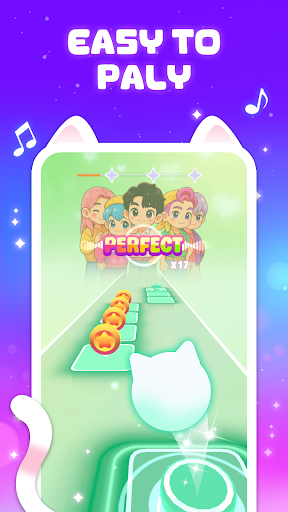
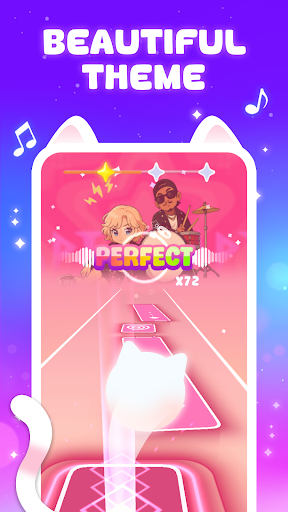
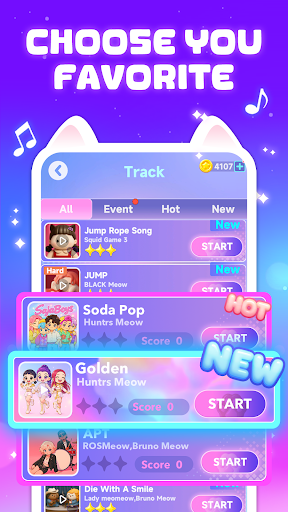
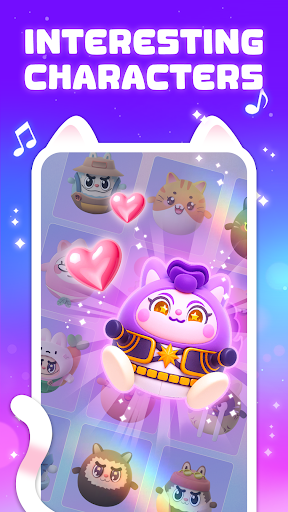
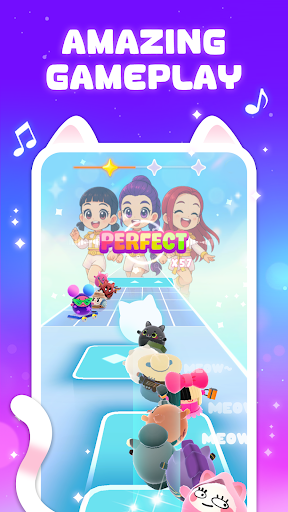
Dancing Cats 2: Music Games knows exactly what it is, and to its credit, it rarely pretends to be anything else. This is a bright, cat-themed rhythm game built for quick hits of cheerful fun rather than serious music-game mastery. After spending time with it, what stood out most was how immediately likable it is. The core idea is simple: guide a cat across tiles in time with the music, keeping your movement smooth and your timing clean. Within minutes, the game communicates its hook clearly, and for the right audience, that hook works. The first thing the app gets right is its tone. A lot of mobile rhythm games chase intensity, sleekness, or competitive edge. Dancing Cats 2 goes in the opposite direction. It leans hard into cuteness, exaggerated charm, and playful sound design, and that decision gives it a distinctive identity. The cats are the main attraction, and the game understands that. Their animations, the meowing touches, and the toy-like presentation give the whole experience a light, friendly feel. Even when the gameplay gets a little faster, it never stops feeling approachable. That accessibility is the second big strength. The controls are easy to grasp, and the basic loop of dragging and guiding the cat from tile to tile is straightforward enough that younger players or casual rhythm-game fans can jump in without friction. There is challenge here, but it is mostly the kind of challenge that comes from concentration and consistency rather than from complex mechanics. The game does a decent job of creating that “one more song” effect because each run is short, readable, and inviting. You can fail, restart, and get back into the groove quickly. The music selection also helps carry the experience. I would not describe the game as a deep destination for rhythm purists looking for sophisticated chart design, but it does have enough catchy material to keep sessions enjoyable. The songs are tuned for accessibility first, and that works in the game’s favor. Combined with the bright visuals, they create a breezy, candy-colored rhythm experience that feels designed to keep your mood up rather than test your limits. When the song, visual effects, and cat sounds line up, Dancing Cats 2 can be genuinely charming. That said, the game’s biggest weakness appears quickly: ads. This is not an unusual problem in free mobile games, but it is noticeable here because Dancing Cats 2 works best in short, spontaneous bursts, and ads interrupt that flow. The app is not completely buried under them, but they are frequent enough to become part of the experience. In a game built around rhythm and momentum, anything that repeatedly breaks tempo matters. If you are patient and treat it like a free pick-up-and-play distraction, the ads are tolerable. If you are the kind of player who wants a smooth, uninterrupted session, they will wear on you. The second limitation is depth. Once the initial charm settles in, the game shows its boundaries. The core action is pleasant, but it is not especially varied. The cat theme and visual changes do a lot of the heavy lifting, and they succeed for a while, yet the underlying structure remains fairly light. That is not inherently a flaw for a casual game, but it does mean the app is better at creating short-term delight than long-term obsession. If you come in expecting a robust rhythm game with lots of strategic systems or deeply expressive play, this is probably not it. A third issue is that the presentation, while cute, can sometimes feel more sugary than refined. There is a lot of visual and thematic enthusiasm packed into the app, and not all of it lands with equal polish. Some players will love the nonstop cat-forward energy. Others may find it a little repetitive or overly childlike after extended use. This is one of those games where the central gimmick is both its greatest selling point and its ceiling. Still, I had more fun with Dancing Cats 2 than I expected. What kept pulling me back was not complexity, but personality. The game has a cheerful confidence to it. It delivers exactly the kind of quick, low-pressure entertainment it promises, and it does so with enough charm that even small moments feel rewarding. Picking a cat, jumping into a song, and hearing those playful audio cues creates a feedback loop that is immediately satisfying. It is the sort of game that is easy to open when you have a few spare minutes and want something upbeat rather than demanding. This app is best for kids, casual players, cat lovers, and anyone who enjoys soft-edged rhythm games with simple controls and a strong visual theme. It is also a decent fit for players who want something that can be played offline. It is much less suited to rhythm-game veterans hunting for precision challenge, players who are highly sensitive to ads, or anyone who gets bored quickly when a game’s core mechanic does not evolve much over time. In the end, Dancing Cats 2 succeeds because it understands the value of being instantly enjoyable. It is cute without apology, accessible without being completely mindless, and musically engaging enough to justify repeat play in short doses. Its ad pressure and limited depth stop it from being an easy universal recommendation, but for the audience that wants exactly what it is selling—a cheerful cat rhythm game with quick gratification—it lands more often than it misses.