
Apps Games Articles
Tap Music 3D
Tap Lab
Rating 4.0star icon
Editor's summary
Editor rating
star icon star icon star icon star icon empty star icon
4.1

One-line summary Tap Music 3D is easy to recommend if you want a lively, accessible rhythm game with a big song pool and satisfying note patterns, but its ad load and occasional rough edges keep it from being an unquestioned pick.

  • Installs

    5M+

  • Developer

    Tap Lab

  • Category

    Music

  • Content Rating

    Everyone

  • Latest version

    1.9.2

  • Package

    com.eyu.music.tap.tap2

Screenshots
In-depth review
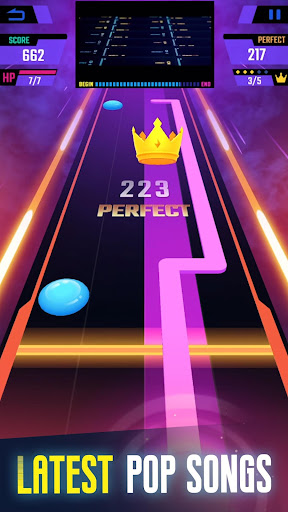
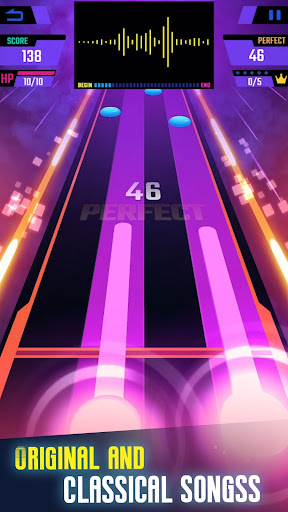
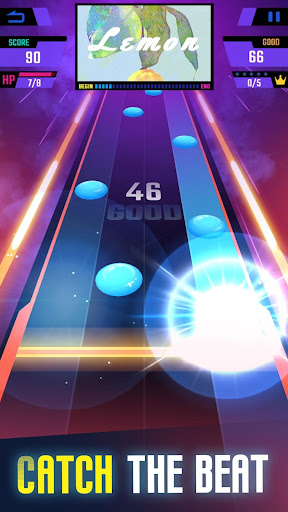
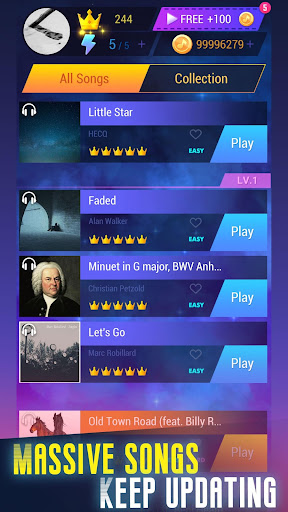
Tap Music 3D is the kind of mobile rhythm game that wins you over quickly because it understands the most important part of the genre: tapping along to music should feel instantly satisfying. After spending time with it, what stood out most was how approachable it is in the first few minutes. The game throws you into songs without much friction, the core rules are simple, and the visual language is clear enough that even if you are not a rhythm game regular, you can start playing almost immediately. The basic loop is familiar but energetic. Notes travel toward scoring zones, and you tap or slide in time with the track. What gives Tap Music 3D a bit more personality than the most generic entries in the category is that it does not rely on only one kind of input. The sliding notes help break up the monotony of pure tapping, and they add just enough motion to keep songs from feeling like the same pattern repeated over and over. On easier tracks, this makes the game relaxing and almost meditative. On harder songs, it becomes a genuine test of timing and concentration. That sense of rhythm is one of the app’s biggest strengths. In most of our sessions, the note timing felt believable and enjoyable, which is absolutely critical for a game like this. When a rhythm game is off, even slightly, everything falls apart. Here, the better runs feel smooth, and the connection between the beat and your fingers is strong enough to make “just one more song” a very real temptation. Visually, the game also gets the balance mostly right. It looks bright and polished enough to be engaging, but it usually avoids cluttering the screen with effects that interfere with readability. That matters more than flashy presentation in this genre, and Tap Music 3D generally understands that. Another clear advantage is variety. Even without overselling what is on offer, the app does feel generous in how often it presents different musical moods and track styles. You can jump between lighter pop energy, more electronic tracks, and songs that are built to feel busier and more demanding. The result is that the game remains interesting longer than many disposable rhythm apps. It is also the kind of app that can work in different moods: a casual time-killer when you have a few spare minutes, or a score-chasing reflex test when you want to focus. That said, Tap Music 3D is not free of the usual free-to-play friction, and the biggest annoyance is obvious almost immediately: ads. They are not so overwhelming that they make the app unusable, but they are present often enough to interrupt the flow. Rhythm games live on momentum. You want to finish a song, tap into another one, retry after a mistake, and keep that sense of engagement alive. Ads break that rhythm outside the songs themselves, and over longer play sessions they become the main reason the game feels more like a mobile product than a truly polished music experience. The second issue is that the game can be harsher than it needs to be when you miss. In practice, a one-miss failure structure creates tension, and that tension can be exciting on difficult songs. But it also means the game sometimes punishes experimentation. If you are learning a track with awkward timing or denser patterns, an early mistake can abruptly stop what would otherwise have been a fun practice run. This design makes success feel rewarding, but it can also make the app less inviting for players who want a smoother learning curve. The third weakness is inconsistency around performance and song behavior. Most of the time, Tap Music 3D plays cleanly enough, but there are moments when a chart or song start does not feel as stable or readable as it should. In a rhythm game, even small hiccups stand out because your success depends on precision. When you miss because of your own timing, that is fair. When a note pattern feels awkwardly introduced, or the start of a song does not give you enough room to settle in, the illusion of fairness weakens. These rough edges do not ruin the game, but they keep it from feeling fully refined. What I appreciated overall is that Tap Music 3D knows exactly what kind of app it wants to be. It is not trying to drown you in menus, lore, or unnecessary systems. It is trying to deliver quick, catchy rhythm sessions that are easy to understand and satisfying to replay. At its best, it succeeds. The interplay of taps and slides is fun, the presentation is clean enough to support accuracy, and the range of songs gives the app longer legs than many mobile rhythm titles. This is a strong choice for players who want an accessible rhythm game they can dip into casually, especially if they enjoy chasing better scores and gradually stepping up to harder songs. It is also a good fit for people who like discovering tracks while playing rather than sticking only to a tiny curated set. On the other hand, it is not ideal for anyone with very low tolerance for ads, or for rhythm game purists who expect flawless precision and a more forgiving or better-tuned practice flow. In the end, Tap Music 3D is better than its generic name suggests. It delivers real pick-up-and-play appeal, and when it locks into the beat, it is genuinely fun. It just falls short of greatness because the interruptions and small bits of instability occasionally pull you out of the groove. If you can accept that trade-off, there is a lot here to enjoy.