
Apps Games Articles
Supremacy 1914 - WW1 Strategy
Bytro Labs
Rating 4.5star icon
Editor's summary
Editor rating
star icon star icon star icon star icon empty star icon
4.4

One-line summary Supremacy 1914 is one of the rare mobile strategy games that respects patience and planning, but its glacial pace and occasional monetization friction will quickly weed out anyone looking for instant action.

  • Installs

    5M+

  • Developer

    Bytro Labs

  • Category

    Strategy

  • Content Rating

    Everyone 10+

  • Latest version

    0.138

  • Package

    com.bytro.supremacy1914

Screenshots
In-depth review
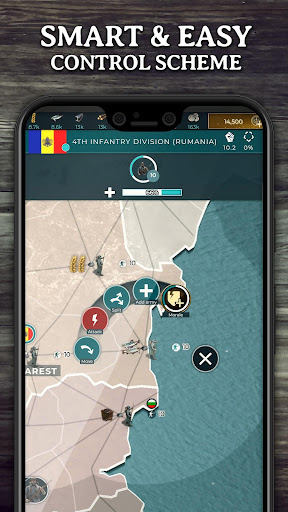
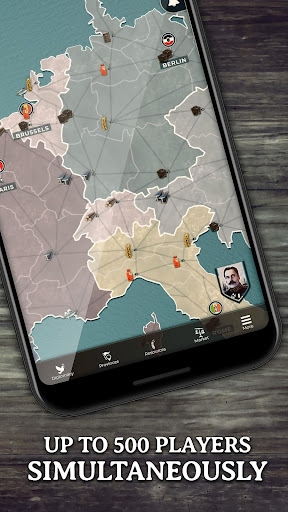
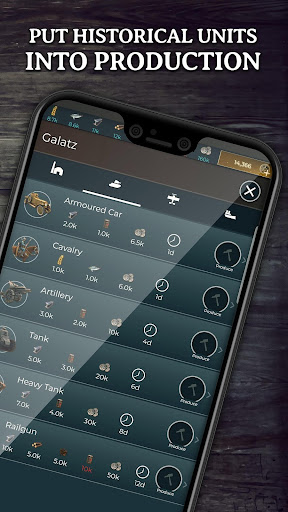
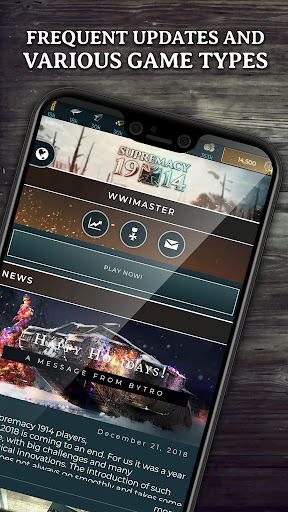
Supremacy 1914 feels like a deliberate rejection of what most mobile strategy games have become. Instead of funneling you into constant pop-ups, frantic timers, and shallow combat loops, it asks for patience, map awareness, and long-term thinking. After spending time with it, the biggest takeaway is that this is a real strategy game first and a mobile game second. That is both its greatest strength and, for some players, its biggest problem. The core experience is built around controlling a nation during a World War I scenario, managing production, moving troops across large distances, building up infrastructure, and using diplomacy as more than just decorative menu text. Matches unfold in real time, and that dramatically changes the rhythm. You are not tapping through battles every few minutes. You issue orders, set production priorities, watch borders, read the political mood, and then often step away for a while. When the design clicks, it creates a satisfying commander’s perspective that many mobile strategy titles never reach. What impressed me most is how naturally the game encourages thoughtful play. Early on, every decision matters: where to expand, how thinly to spread troops, whether to gamble on aggression, and when to avoid a fight entirely. There is a genuine tension to the opening hours of a match because one bad move can snowball. The map game feels tactical in a way that rewards foresight rather than reflexes. If you enjoy planning several moves ahead and adapting to slow-burn geopolitical chaos, Supremacy 1914 can be deeply absorbing. The second major strength is that the mobile version does a good job preserving the feel of a larger-scale strategy game. It does not come across like a stripped-down companion app. Menus, map interactions, and nation management all feel substantial enough to support long sessions, but the structure also works surprisingly well in shorter check-ins. I found it especially effective as a “set plans, leave, return, reassess” kind of game. That cadence will not excite everyone, but it suits busy players who like games that can run in the background of daily life without demanding constant babysitting. The third strength is the multiplayer layer. Diplomacy, alliances, and coalition play add unpredictability that the map alone cannot provide. There is a real sense that military strength is only one part of winning. Negotiation, timing, and reading other players matter just as much. When a match has active participants and shifting alliances, Supremacy 1914 becomes much more than a war game. It turns into a political sandbox where every border can become either a frontline or a bargaining chip. That said, the game absolutely tests your tolerance for slowness. This is the clearest weakness and the one that will determine whether you stick with it. Troop movement takes time. Production takes time. Positioning for a decisive attack takes time. Sometimes a lot of time. For players who want momentum, the experience can feel less like strategic tension and more like waiting for the game to start again. The pace is not inherently bad; in fact, it is part of the identity. But there were moments when the delays felt excessive rather than immersive, especially when moving units over long distances or waiting for key military pieces to come online. Another issue is that some parts of the economy and unit balance can feel more functional than elegant. The broad system works, but not every unit or investment feels equally worthwhile at all times. In longer sessions, I had stretches where certain military options seemed too niche for their cost, and that can make experimentation less appealing than it should be. A grand strategy game is at its best when multiple paths feel viable; here, some choices can feel more like luxury items than practical tools unless the circumstances are unusually favorable. The last notable frustration is monetization friction, even if the game is far less obnoxious about it than many free-to-play strategy titles. It does not drown the experience in nonstop ad spam, which is a major positive. Still, the presence of purchasable advantages and ad-based rewards can occasionally break immersion. In a game built so carefully around long-form planning, anything that makes outcomes feel nudged by spending or inconsistent reward delivery stands out more than it would in a disposable arcade app. It does not ruin the experience, but it does introduce just enough doubt to keep the game from feeling completely clean. I also ran into one of the structural problems that often affects large asynchronous multiplayer games: inactive participants can distort the quality of a match. When a map is full of engaged players, Supremacy 1914 is excellent. When several countries go quiet and the human drama fades out, parts of the map can start to feel less dynamic than they should. Since diplomacy is one of the game’s biggest hooks, anything that reduces meaningful interaction is felt immediately. Who is this for? Players who want a serious, methodical strategy game on mobile, especially those who enjoy diplomacy, attrition, logistics, and long match arcs. If you like checking in a few times a day, adjusting plans, and slowly building toward domination, this is one of the better options on Android. It is also a strong fit for people who miss the feel of older PC strategy experiences and want something with more weight than the average mobile war game. Who is it not for? Anyone looking for fast matches, instant unit production, constant tactical spectacle, or a game that showers you with rapid rewards. If your ideal strategy game is highly active minute to minute, Supremacy 1914 will probably feel too slow and too distant. Overall, I came away impressed. Supremacy 1914 understands that strategy can be about patience, pressure, and positioning rather than noise. Its pacing will absolutely divide players, and a few rough edges keep it from greatness, but for the right audience, this is one of the most convincing grand-strategy experiences available on mobile.