
Apps Games Articles
Harry Potter: Hogwarts Mystery
Jam City, Inc.
Rating 4.5star icon
Editor's summary
Editor rating
star icon star icon star icon star icon empty star icon
4.2

One-line summary If you want a story-driven Hogwarts life sim with real fan-service and strong atmosphere, this is easy to recommend—just be ready for energy timers, timed-event pressure, and the occasional progress-saving headache.

  • Installs

    50M+

  • Developer

    Jam City, Inc.

  • Category

    Adventure

  • Content Rating

    Teen

  • Latest version

    4.3.0

  • Package

    com.tinyco.potter

In-depth review
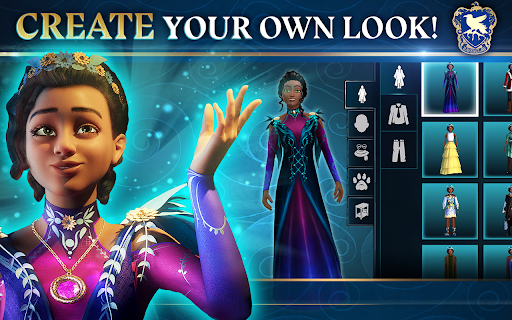
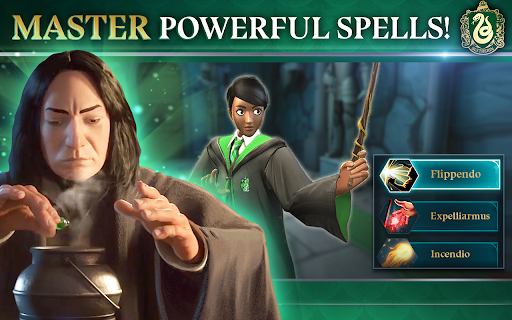
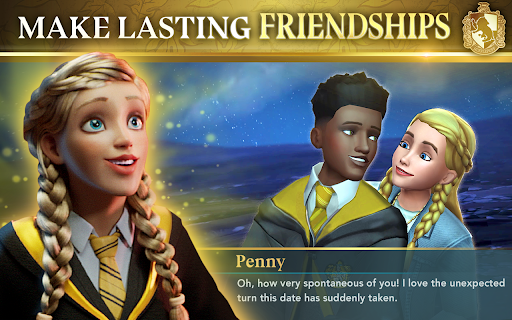
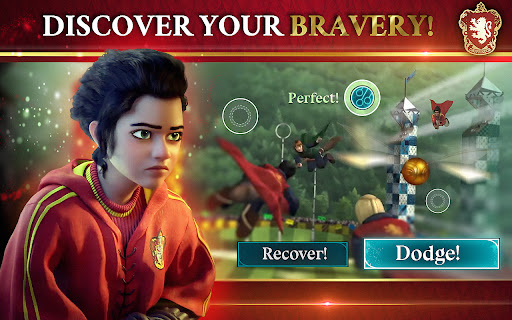
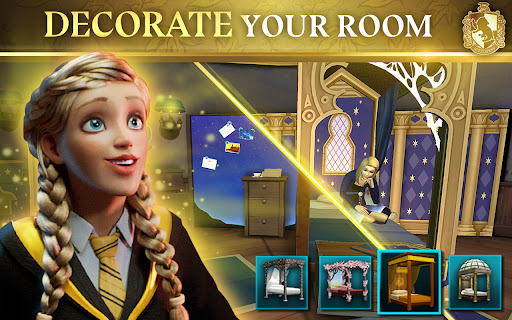
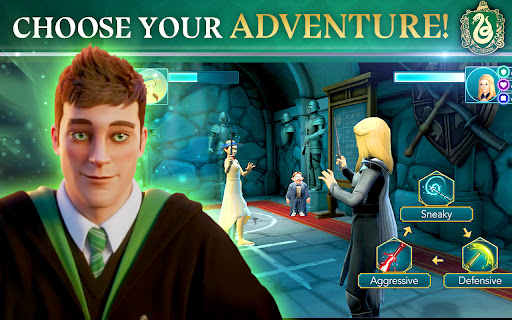
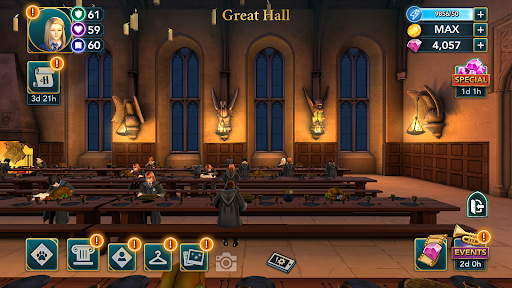
Harry Potter: Hogwarts Mystery is one of those licensed mobile games that could easily have been shallow fan bait, but after spending real time with it, I came away thinking it genuinely understands why people want to be at Hogwarts in the first place. This is not an action-heavy open-world wizard game, and it is not trying to be one. It is a narrative-led, timer-based mobile RPG built around classes, dialogue choices, friendships, and the fantasy of carving out your own school life in the Wizarding World. When it works, it feels charming, surprisingly cozy, and much more authentic than many franchise tie-ins. When it doesn’t, it reminds you very quickly that it is still a free-to-play mobile game designed around waiting. The biggest strength here is atmosphere. From the moment you’re sorted into a house and start moving through the early school-year routines, the game leans hard into the fantasy of being a Hogwarts student rather than a spectator. Lessons, rivalries, teachers, magical creatures, dorm customization, and familiar faces from the Harry Potter universe all help sell that illusion. The art style is polished for a mobile game, with expressive character models, recognizable locations, and enough visual detail to make classrooms and corridors feel warm and inviting. It is not technically groundbreaking, but it is consistently attractive and, more importantly, it feels like Harry Potter. The story hook also does a lot of heavy lifting. Instead of simply re-enacting the books, the game gives you your own student, your own house identity, and your own mystery to chase. That choice matters because it lets the game feel personal. In play, the best moments come from the quieter pieces of role-playing: choosing how your character responds, building relationships, deciding how you want to approach friends and rivals, and gradually unlocking more of Hogwarts life over the school years. There is enough structure here to keep progressing, but enough role-play flavor to make it feel like more than a checklist of tasks. Another thing the game gets right is session design. Hogwarts Mystery fits nicely into short bursts. You can jump in, spend your available energy, advance a class or story scene, maybe do a side activity, and step away. On paper, that sounds like a compromise, but in practice it works well for mobile. It is easy to make progress in small chunks, and if you treat it like a long-term game rather than something to binge over a weekend, it has a nice rhythm. There is a surprising amount to do as well, from lessons and story chapters to Quidditch, creature-related activities, and relationship-focused side content. For fans who enjoy collecting, customizing, and steadily growing their character, it can be very engaging. That said, the energy system is the game’s single biggest weakness, and it affects almost every part of the experience. Tasks burn through energy quickly, and regeneration is slow enough that the game often pushes you out just as you are getting into a scene. This is especially frustrating during longer classes, story objectives, and limited-time events, where the pacing can shift from magical to mechanical in a hurry. Instead of asking, “What happens next?” you start asking, “Do I have enough energy to finish this before the timer runs out?” That is not a great trade for a story-focused game. You can absolutely play without spending money, but patience is not optional. The second major issue is event pressure and content overload. The game often feels like it wants your attention on its schedule, not yours. Timed side quests and events can be exciting in moderation, because they add urgency and variety, but they can also pile up in a way that makes the experience feel hectic rather than whimsical. There were stretches where I wanted to focus on the main story, only to be nudged toward temporary activities with their own deadlines. If you like checking in frequently and optimizing your energy use, that may be part of the appeal. If you want a relaxed story adventure, it can become exhausting. The third frustration is technical roughness and repetition. In my time with the game, there were moments where the flow felt less polished than it should. Progress-saving can feel unreliable if you leave at the wrong moment, and that is especially painful in a game built around timers and limited resources. Even when things are working properly, some of the class and practice structure becomes repetitive. You will see familiar interactions, repeated lesson beats, and routine tapping cycles that start to feel like maintenance between better story scenes. The world is rich, but the minute-to-minute interaction is not always. Still, there is a reason the game remains easy to sink time into. It understands the fantasy of belonging at Hogwarts. The combination of house identity, school-year progression, friendships, creature collecting, and familiar magical iconography creates a strong sense of place. Even when I was irritated by energy limits, I kept wanting to come back because the broader role-playing framework is genuinely appealing. There is comfort in unlocking another lesson, decorating your space, meeting characters, and seeing your version of a Hogwarts student take shape. Who is this game for? It is for Harry Potter fans who want immersion more than challenge, and for mobile players who are happy to play in short sessions over a long period. If you enjoy story progression, collecting, customization, and light role-playing, there is plenty here to like. It is not for players who hate waiting mechanics, who want free exploration, or who prefer deep combat and constant action. If you want to roam Hogwarts freely like a console RPG, this will feel restrictive. If you want a polished, atmospheric, slow-burn mobile companion to the Wizarding World, it delivers. In the end, Harry Potter: Hogwarts Mystery is better than its monetization friction, but not free from it. It captures the fantasy of being a student at Hogwarts with real affection and a solid sense of identity, and that carries it a long way. The slow energy recharge, timed-event stress, and occasional technical annoyances stop it short of greatness, but for the right audience, it is still one of the more convincing Harry Potter experiences on mobile.
Alternative apps