
Apps Games Articles
Facebook
Meta Platforms, Inc.
Rating 4.6star icon
Editor's summary
Editor rating
star icon star icon star icon star icon empty star icon
4.3

One-line summary Recommend it if you want the broadest all-in-one social hub for friends, groups, events, and Marketplace, but hesitate if you’re tired of clutter, ads, and settings that don’t always feel fully under your control.

  • Installs

    10B+

  • Developer

    Meta Platforms, Inc.

  • Category

    Social

  • Content Rating

    Teen

  • Latest version

    551.1.0.58.63

  • Package

    com.facebook.katana

In-depth review
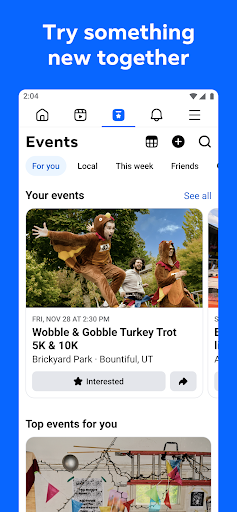
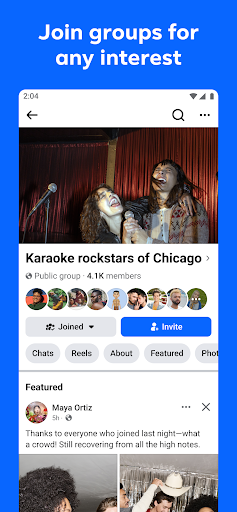
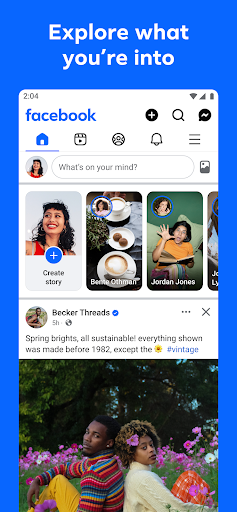
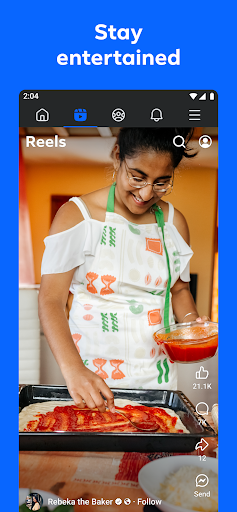
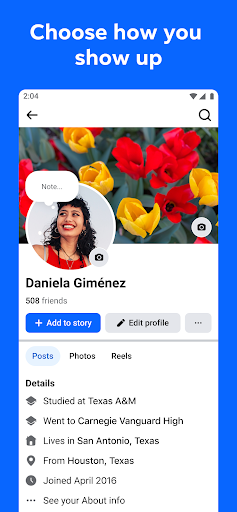
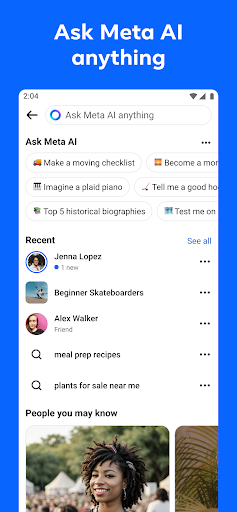
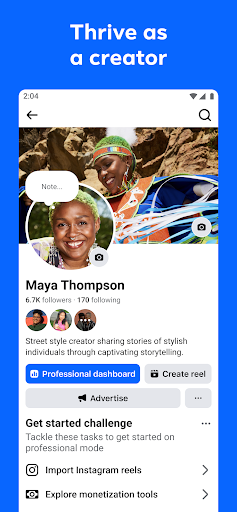
Facebook remains one of those rare apps that can still feel genuinely useful even after years of bloat, redesigns, and shifting priorities. After spending time with the Android app in regular daily use, my takeaway is simple: this is still one of the most capable social apps you can install, but it is no longer a clean or effortless one. At its best, Facebook feels like several good apps stitched together. Open it up and you can keep up with relatives, check in on local community chatter, browse interest-based groups, watch short videos, shop secondhand items, and catch event announcements without leaving the same ecosystem. That breadth is still Facebook’s biggest strength. Few apps do such a convincing job of making you feel connected not just to friends, but to neighborhoods, hobby circles, school networks, local sellers, and old acquaintances you would otherwise lose track of. In everyday use, the app is strongest in three places. First, Groups remain excellent. This is where Facebook still feels indispensable. Whether you are looking for practical advice, niche communities, local recommendations, or a place where real people answer real questions, Groups are often the part of the app that justifies keeping it installed. They are easy to browse, active, and often much more useful than the main feed. Second, Marketplace is genuinely handy. Facebook has built one of the easiest casual buying and selling experiences around, especially for local items. It is not glamorous, but it works. During testing, hopping between listings, seller profiles, and related recommendations felt straightforward enough that Marketplace can easily become a reason to use Facebook even if you care less about posting status updates. Third, Facebook still does a very good job with basic social connection. Posting photos, reacting to updates, checking stories, and finding people you have not talked to in years all work with a kind of familiar ease. There is very little learning curve here. If you have used Facebook before, you know how to move around, and if you have not, the main actions are still easy to figure out. That said, using Facebook today also means accepting a lot of friction. The app’s biggest weakness is clutter. Too many surfaces compete for attention: feed posts, suggested content, reels, groups, pages, stories, notifications, prompts, and shopping elements all push into the same experience. Instead of feeling like a focused social network, Facebook often feels like a crowded digital mall. Even when the app is functioning well, it can be mentally noisy. The second weak point is advertising and interruption. Ads are not just present; they are woven into the experience in ways that can make casual browsing feel less relaxed than it should. Video viewing especially can feel interrupted, and the line between organic discovery and algorithmic promotion is not always satisfying. If you are the sort of user who values a calm, intentional social experience, Facebook can start to feel exhausting. The third issue is trust in the interface and settings. On paper, Facebook offers a lot of control over your profile, feed, and privacy, and there are useful customization tools if you are willing to dig. In practice, that control does not always feel elegant. Some settings are buried, some parts of the app are less intuitive than they should be, and occasional glitches create the uncomfortable feeling that the app is not always reflecting your choices as clearly as it should. Even small inconsistencies in notifications, activity indicators, or saved preferences can chip away at confidence. Performance-wise, Facebook is generally smooth enough for everyday use, especially for routine scrolling, posting, and browsing. But this is not a lightweight app in spirit or design. It feels dense. You are always one tap away from another feature, another prompt, another panel. Some people will read that as power; others will read it as overcomplication. Both are fair. I also found the app more enjoyable when I actively shaped it instead of passively accepting whatever the algorithm served up. Following specific pages, joining useful groups, and using the friends-focused areas made the experience noticeably better. Left unattended, the feed can become a messy stream of mixed relevance. Curated a bit, it becomes much more rewarding. The newer AI-flavored additions and creative tools are there, but they are not the main reason to use Facebook. The real value still comes from the social infrastructure underneath: identity, history, community, messaging ties, events, and the giant web of people and interests already embedded there. Facebook is less exciting than it used to be, but in practical terms it is still deeply functional. So who is this app for? It is for people who want one place to keep up with family, participate in communities, browse local listings, and stay loosely connected to a wide social graph. It is especially good for users who benefit from groups, events, and Marketplace as much as from the core social feed. It is not ideal for minimalists, privacy-sensitive users who dislike ambiguous settings, or anyone looking for a clean, distraction-light social experience. In the end, Facebook remains easy to recommend with reservations. It is still one of the most useful social apps on Android because of the sheer range of everyday things it helps you do. But using it also means putting up with clutter, ads, and a constant sense that the app wants more of your attention than it deserves. If you can tolerate that trade-off, Facebook still delivers a lot of value.
Alternative apps