
Apps Games Articles
Crowd City
VOODOO
Rating 3.9star icon
Editor's summary
Editor rating
star icon star icon star icon
half star icon
empty star icon
3.8

One-line summary Crowd City is easy to recommend if you want a fast, mindless competitive mobile game with instant gratification, but it is harder to recommend if you need depth, variety, or long sessions that stay interesting.

  • Installs

    100M+

  • Developer

    VOODOO

  • Category

    Arcade

  • Content Rating

    Everyone

  • Latest version

    2.6.3

  • Package

    io.voodoo.crowdcity

In-depth review
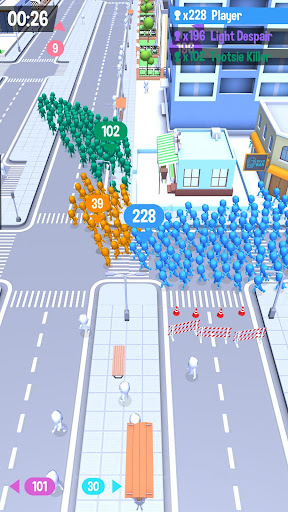
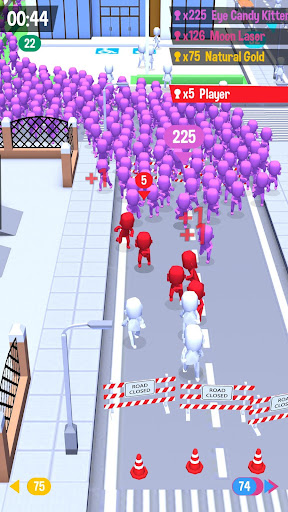
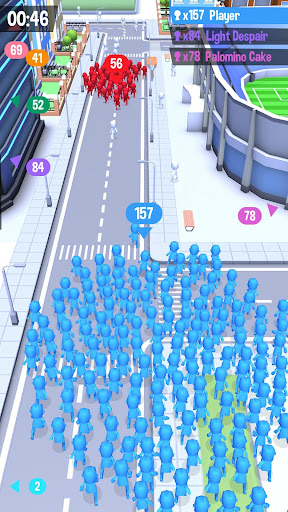
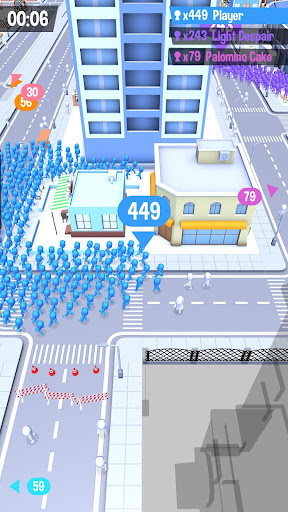
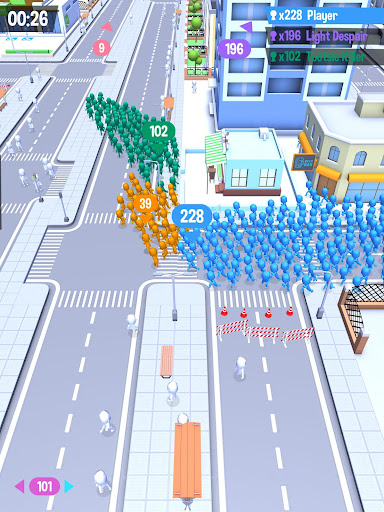
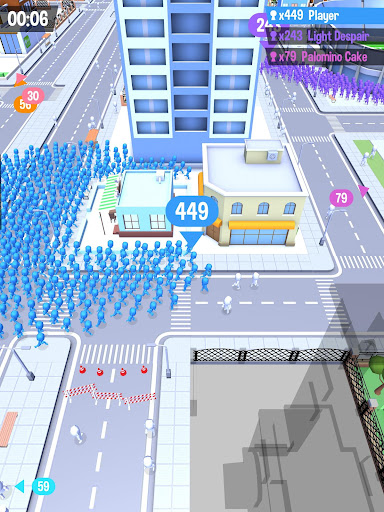
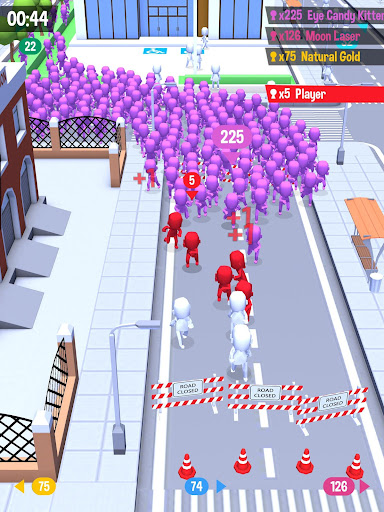
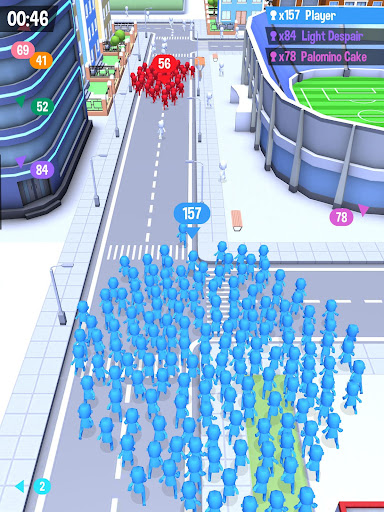
Crowd City is the kind of mobile game that explains itself in seconds and delivers its appeal almost immediately. You drop into a city, start with a tiny group, and spend the next few minutes trying to absorb neutral bystanders and outgrow rival crowds before the clock runs out. That core loop is simple, readable, and surprisingly satisfying at first touch. In our time with it, the strongest thing Crowd City does is remove friction. There is very little learning curve, almost no setup, and no need to memorize systems before the game becomes fun. You launch it, move, collect, grow, and compete. For a free mobile title, that instant accessibility is a genuine strength. What makes the early experience work so well is the visual clarity of the gameplay. Even without a lot of complexity, Crowd City gives you immediate feedback. A tiny cluster following behind you feels vulnerable; a larger one feels powerful. The map becomes a hunting ground where every wandering person is useful and every larger enemy group is a threat to avoid. That rise from insignificant to dominant is the game’s best trick. In short bursts, it creates a clean arcade rhythm: scout, grow, dodge, absorb, repeat. When that rhythm clicks, the app feels polished enough to be genuinely entertaining for a few rounds at a time. Another thing we appreciated is how well the game suits short play sessions. Crowd City fits naturally into the kind of fragmented moments when mobile games are at their best. A round does not demand a huge commitment, and the objective is so easy to read that you can jump in even if you have only a couple of minutes. There is no long warm-up period, no heavy menu management, and no emotional barrier to starting another match. For players who want something immediate and low-pressure, that convenience is a big reason the game works. The third clear strength is the basic competitive tension. Even though the mechanics are straightforward, there is a nice push and pull in deciding when to roam for easy growth and when to challenge another crowd. A slightly larger group can swallow a smaller one and swing the standings quickly, so there is enough unpredictability to keep a match from feeling completely automatic. You do get those satisfying comeback moments where a smart route through dense areas suddenly turns you from prey into the biggest force on the map. For a lightweight game, that feeling of momentum is handled well. That said, Crowd City also runs into its limitations fairly quickly. The biggest issue is repetition. Once the novelty of leading a growing mass through the city wears off, there is not much beneath the surface to sustain long-term interest. The core mechanic is clever, but the app leans on that one idea very heavily. After several rounds, we started to feel like we had already seen the full range of what the game wants to offer. The matches are still functional and occasionally fun, but they stop feeling fresh much sooner than the strongest mobile games in this category. A second weakness is that the moment-to-moment play can drift into autopilot. While there is some strategy in route choice and engagement timing, the overall decision-making is fairly shallow. Most of the time, success comes from staying efficient, avoiding bigger groups until you are ready, and collecting as many easy additions as possible. That makes the app approachable, but it also means it can become passive. We found ourselves playing more by habit than by intention after a while, which is not a great sign for replay value. The third frustration is that the game’s simplicity can sometimes make matches feel more chaotic than meaningfully competitive. Crowd movement, map flow, and the scramble for size create excitement, but they do not always create the sense of a deeply skill-based contest. There are rounds where everything clicks and your movement choices feel smart, and others where the action feels more loose and disposable than rewarding. That is fine in a casual time-killer, but it limits how invested we felt over extended use. From a design standpoint, Crowd City succeeds best when treated as a snack-sized game rather than a hobby game. Open it for five or ten minutes, and its strengths are obvious: fast onboarding, satisfying growth mechanics, and enough competitive energy to make a quick session feel worthwhile. Try to make it your main mobile game, though, and its shortcomings become harder to ignore. It does not offer much variety in structure, and it rarely surprises you once you understand the loop. So who is Crowd City for? It is a good fit for players who want instant, low-commitment fun and enjoy simple arcade competition. It also works well for anyone who likes games that can be understood almost entirely through play, without tutorials, story, or systems getting in the way. It is not for players who want deep progression, strategic complexity, or a game that evolves significantly over time. If you tend to get bored when a mobile title shows all its cards early, Crowd City will probably feel shallow. Overall, our experience with Crowd City was positive but measured. We enjoyed it most when we respected its limits. It is a slick, easy-to-pick-up mobile game with a strong central hook and excellent short-session appeal. At the same time, it struggles to stay engaging once that hook becomes familiar. Recommended as a casual diversion, not as a destination.
Alternative apps