Apps Games Articles
Touchgrind BMX 2
Illusion Labs
Rating 4.4star icon
Editor's summary
Editor rating
star icon star icon star icon star icon empty star icon
4.3

One-line summary Touchgrind BMX 2 is easy to recommend for players who want a stylish, skill-based trick game that feels genuinely hands-on, but it’s a tougher sell if you dislike steep control learning curves or progression systems that can test your patience.

  • Installs

    10M+

  • Developer

    Illusion Labs

  • Category

    Sports

  • Content Rating

    Everyone

  • Latest version

    1.5.5

  • Package

    se.illusionlabs.touchgrindbmx2

In-depth review
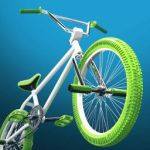
Touchgrind BMX 2 is one of those mobile games that makes a strong first impression because it understands exactly what it wants to be. This is not a casual tap-to-jump arcade rider where you drift through levels half-paying attention. From the moment we started playing, it was clear that the core appeal is physical, finger-driven control. You are not just steering a bike in a broad sense; you are manipulating it with gestures in a way that tries to mimic the feel of handling a miniature BMX with your fingertips. When that clicks, the game feels far more satisfying than the average mobile sports title. The biggest strength here is the control concept itself. At first, Touchgrind BMX 2 can feel awkward, even slightly hostile. Early runs were filled with clumsy landings, missed timing, and the kind of wipeouts that make you wonder whether the game is overcomplicated for its own good. But after some time, the logic starts to settle in. Tricks stop feeling random and begin to feel earned. That transition from confusion to competence is the app’s best trick. Pulling off a clean line after a string of failed attempts has a very real sense of payoff, and that sense of improvement is what kept us coming back. The second thing the game gets right is presentation. It has a sleek, polished style that suits the BMX theme well. Tracks look designed rather than thrown together, and there is a good sense of speed once you are moving with confidence. The visual clarity matters in a game like this because reading ramps, gaps, and landing angles is part of the challenge. On a phone screen, clutter can easily ruin a precision game, but Touchgrind BMX 2 generally stays readable enough to make failures feel like your mistake rather than the game’s. That is a small but important distinction. Its third major strength is the way it encourages repetition without every run feeling identical. This is not just about reaching the end of a course. It is about improving your route, linking tricks more smoothly, and learning where you can push for extra style. We found ourselves replaying sections not because the game forced us to, but because there was always a slightly better run to chase. For a free mobile game, that loop is compelling in the right way. It rewards persistence and mechanical understanding more than simple grinding for the sake of grinding. That said, Touchgrind BMX 2 is not friction-free, and its weaknesses show up pretty quickly if you are not fully on its wavelength. The most obvious complaint is the learning curve. This is a game that asks for patience early on, and it does not always teach its ideas as gently as it could. There is a thin line between depth and opacity, and Touchgrind BMX 2 sometimes leans too close to the latter. The controls are impressive once learned, but the opening stretch can feel punishing enough to scare off players who expected something more intuitive. Another issue is that the precision can occasionally turn into fussiness. In our sessions, there were moments where we knew what we wanted to do, performed the input with reasonable confidence, and still didn’t get the result we expected. In a skill-based game, that kind of ambiguity can be frustrating. Most of the time the app feels fair, but not always. Some crashes feel educational; others feel like the game and the player were speaking slightly different languages. The third drawback is tied to pacing. Because the game leans heavily on repeat runs and mastery, there are stretches where progress can feel slower than the excitement of the first hour suggests. If you enjoy refining technique, this is part of the appeal. If you prefer a constant stream of new rewards, the momentum can flatten out. We had sessions where the game felt thrilling and almost meditative, and other sessions where it felt like we were bashing against the same challenge waiting for a cleaner breakthrough. That inconsistency in session-to-session satisfaction is worth noting. Who is this for? It is for players who like mobile games with a skill ceiling, who enjoy learning unusual control systems, and who get satisfaction from personal improvement rather than passive progression. It is also a good fit for people who want something more tactile and focused than a generic endless runner or simple racing game. If you like the idea of mastering lines and tricks with your fingers rather than just tapping a trick button, there is a lot to admire here. Who is it not for? If you want immediate accessibility, short bursts of mindless fun, or a game that makes you feel competent within the first few minutes, this may not be your best pick. It demands adaptation, and it can be stubborn about it. Players who are easily annoyed by input-sensitive gameplay may bounce off long before they see why the game has such a loyal audience. Overall, Touchgrind BMX 2 succeeds because it has a real identity. It feels crafted around a control idea that is bold enough to stand out in a crowded app store. It is stylish, mechanically rewarding, and capable of delivering those fist-pump moments when a run finally comes together. At the same time, it asks more from the player than many free mobile games do, and that will divide people. For us, the ambition mostly pays off. It is not always smooth, and it is not always welcoming, but when it works, it feels excellent in a way few mobile sports games manage.