Apps Games Articles
Pull the Pin
Popcore Games
Rating 3.9star icon
Editor's summary
Editor rating
star icon star icon star icon star icon empty star icon
4.0

One-line summary Pull the Pin is easy to recommend if you want a genuinely relaxing, tactile physics puzzler, but it’s harder to love if repetitive levels, ad friction, and occasional glitches kill your mood.

  • Installs

    100M+

  • Developer

    Popcore Games

  • Category

    Puzzle

  • Content Rating

    Everyone

  • Latest version

    146.1.1

  • Package

    com.maroieqrwlk.unpin

In-depth review
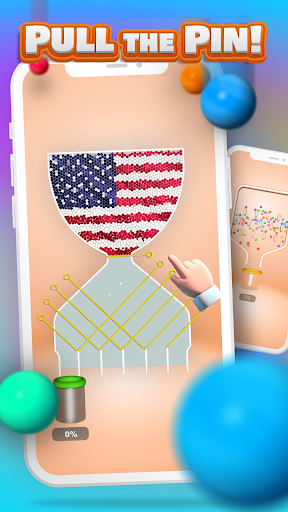
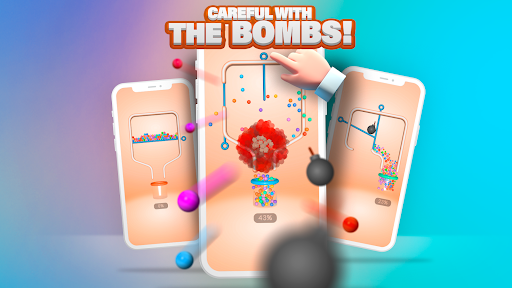
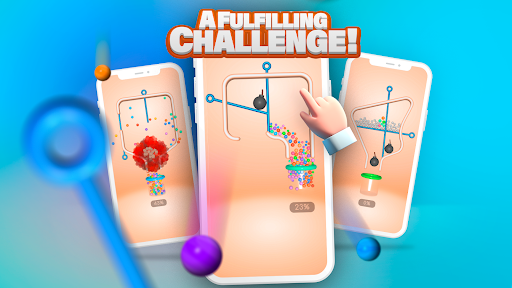
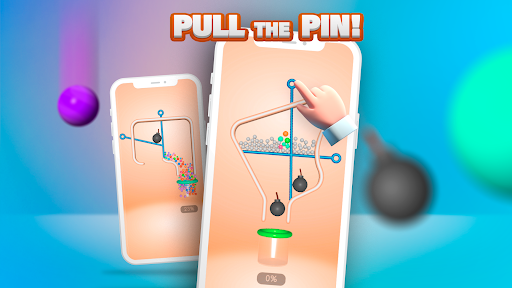
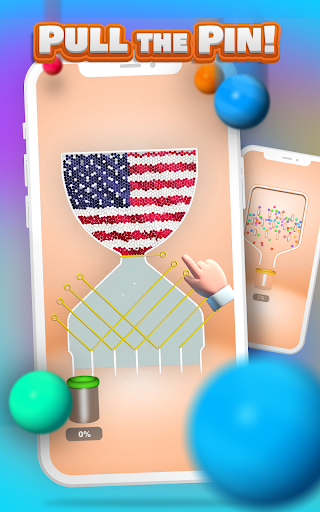
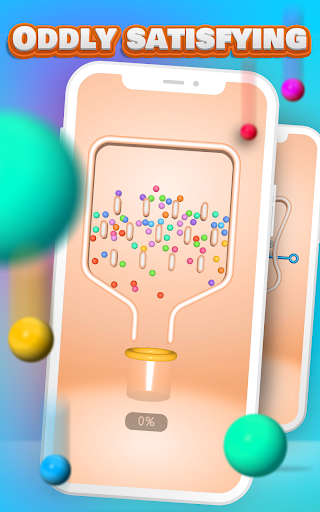
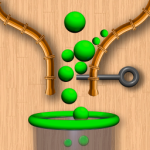
Pull the Pin is one of those mobile puzzle games that wins you over in the first few minutes because it understands exactly what it wants to be. You open it, see a chamber full of colored balls, bombs, or obstacles, and the goal is obvious: pull the right pins in the right order so everything drops into the pipe. That clarity matters. There is no bloated tutorial, no complicated systems to memorize, and no pressure to optimize every move. It is a pick-up-and-play puzzle game in the purest mobile sense, and after spending time with it, that simplicity remains both its biggest strength and its biggest limitation. What immediately works is the feel of the game. Pulling pins has a nice physicality to it, and the flow of balls through the chambers is consistently satisfying. Even when a level is extremely easy, there is still a small sensory reward in seeing the setup collapse exactly as planned. The visual style is plain rather than flashy, but it is readable, and that readability is important in a puzzle game built around quick recognition. You almost always understand the level at a glance. That makes Pull the Pin especially good in short bursts: while waiting in line, half-watching TV, or winding down before bed. It does not demand deep concentration unless you want to give it that. The best part of the design is that it knows relaxation is a feature, not a flaw. A lot of mobile puzzle games mistake friction for challenge and end up feeling like work. Pull the Pin usually avoids that. Early levels are deliberately straightforward, and even later on, the game rarely becomes so punishing that it stops being casual. There are some more interesting setups involving color spreading, bombs, and order-of-operations traps that force you to pause and think for a few seconds before acting. Those moments are where the game is at its strongest. You are not solving giant logic mazes; you are reading a compact little machine and finding the one safe sequence that makes it all click. That said, if you are hoping for a serious brain-burner, this probably is not it. A lot of levels can be cleared almost instantly, and once you have seen the core tricks a few times, the game starts leaning heavily on variations rather than genuinely new ideas. It remains pleasant, but not especially surprising. There were stretches in our play sessions where levels blended together, and the sense of progression came more from the rising level number than from any meaningful increase in complexity. Pull the Pin is fun when approached as a fidgety, low-stakes puzzle toy. It is less impressive if you come to it expecting a steadily evolving logic challenge. The app also walks the familiar free-to-play line with ads, and the experience is better than many games in the genre, but not spotless. In ordinary play, the interruptions are tolerable enough that the game remains usable, and importantly, it usually lets you finish a puzzle before shoving something in your face. That alone makes it less obnoxious than plenty of mobile puzzlers. But ad quality is inconsistent. At times the transitions are quick and painless; at others, the ad flow feels sticky, overly long, or awkward to dismiss. During longer sessions, that inconsistency becomes one of the main reasons to stop playing. The game itself is built for “just one more level,” yet the monetization rhythm occasionally breaks that spell. A more serious issue is technical polish. For a game this simple, you expect smooth reliability, and most of the time it delivers. But not all the time. We ran into occasional rough edges that undercut the lightweight appeal: moments where the app felt clumsy after an ad, or where the overall flow seemed less stable than it should be. Because Pull the Pin is so minimal, these hiccups stand out more than they would in a larger, denser game. When your entire pitch is smooth, quick puzzle-solving, any freeze, reset, or awkward interruption feels disproportionately annoying. Still, there is a reason the game is easy to keep installed. It respects the player’s time more than many puzzle apps, its central interaction is satisfying, and it does a good job creating tiny moments of success without stress. We also appreciated that it does not bury the fun under paywalls or require elaborate systems management just to keep playing. You launch it, solve a few puzzles, maybe unlock some cosmetic distractions, and move on. That straightforwardness is refreshing. Who is it for? Pull the Pin is for players who want a calming, low-commitment puzzle game that can fill spare minutes without frustration. It is particularly good for people who enjoy physics-based setups, tactile interactions, and games that are more soothing than demanding. It is not for puzzle purists chasing depth, nor for players with little tolerance for ad interruptions or occasional mobile-game jank. In the end, Pull the Pin succeeds because it delivers the basic fantasy cleanly: see the problem, pull the pins, watch the solution play out. It is not a masterpiece of puzzle design, and it can get repetitive. It can also get irritating when the ad layer or technical roughness intrudes. But when it is in its groove, it is exactly the kind of mobile game many people actually want: simple, satisfying, and easy to come back to without feeling drained.