
Apps Games Articles
Intuit Credit Karma
Credit Karma, LLC
Rating 4.7star icon
Editor's summary
Editor rating
star icon star icon star icon star icon
half star icon
4.5

One-line summary Credit Karma is one of the easiest free ways to stay on top of your credit and finances, but if you hate product recommendations woven into the experience, its constant offers can feel like the price of admission.

  • Installs

    50M+

  • Developer

    Credit Karma, LLC

  • Category

    Finance

  • Content Rating

    Everyone

  • Latest version

    26.10.1

  • Package

    com.creditkarma.mobile

Screenshots

In-depth review
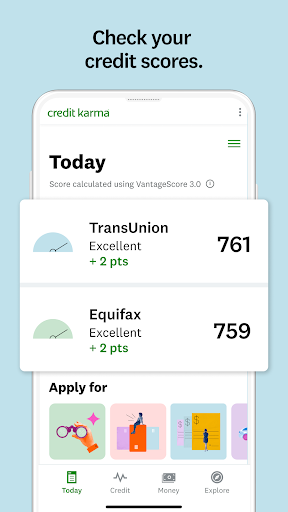
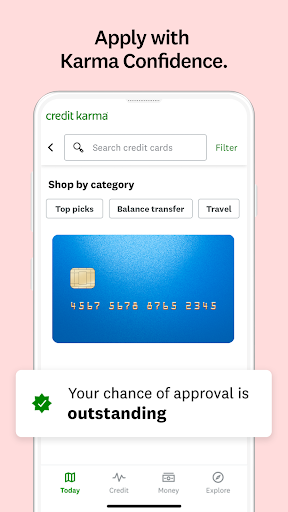
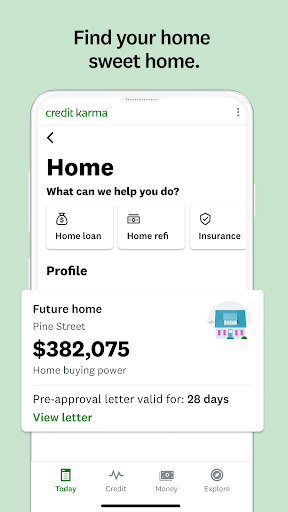
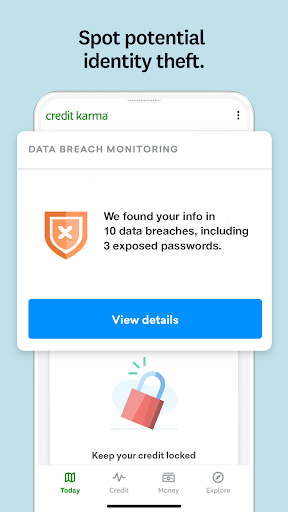
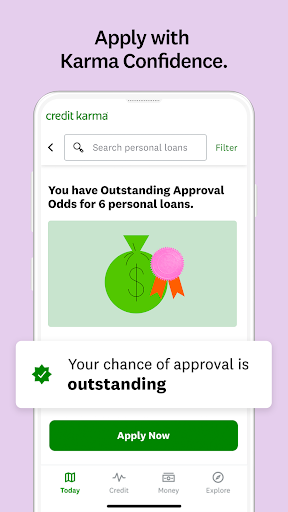
Intuit Credit Karma is one of those finance apps that tries to be useful on day one instead of making you work to see value, and after spending time with it, that remains its biggest advantage. You open the app, sign in, and very quickly understand what it wants to be: a central dashboard for your credit health, account activity, alerts, and a growing set of financial tools around banking, loans, insurance, and monitoring. The app’s pitch is broad, but in actual use it works best when you treat it first as a credit-tracking utility and only second as a marketplace for financial products. The strongest part of the experience is how approachable it feels. Credit can be intimidating, especially for people rebuilding from a rough score or simply trying to understand why their number moved. Credit Karma does a good job of turning that anxiety into something more manageable. The app surfaces score changes, factors affecting your credit, and account-level updates in a way that feels digestible instead of dense. You are not buried under jargon. Even if you are not especially finance-savvy, the app gives you enough context to understand what changed and why it matters. That ease of use extends to the overall navigation. During testing, the app felt fairly polished and readable, with the important information close to the surface. Checking credit scores, looking at report details, and reviewing alerts takes very little effort. This is an app built around repeat visits, and it understands that people usually want answers quickly: Did my score move? Was there a new account? Is something suspicious happening? On those basics, it performs well. Another thing Credit Karma gets right is the sense of momentum it creates. Many finance apps just report your status. This one tries to coach you. It nudges you toward understanding utilization, payment behavior, account mix, and other factors that shape your profile. That guidance can be genuinely helpful for beginners and for anyone trying to recover from past mistakes. In practice, the app feels less like a static report and more like a running conversation about your financial habits. For people who need motivation to stay engaged with credit health, that is a real strength. The alert system is also a highlight. Credit score changes, account activity, and identity-related monitoring add a layer of practical usefulness that goes beyond occasional score checking. In everyday use, that makes the app feel relevant rather than passive. You do not need to remember to open it constantly; it can prompt you when something important changes. For a free app, that kind of ongoing awareness is part of what makes Credit Karma easy to recommend. Still, the app is not purely a consumer-friendly utility. Its biggest weakness is that recommendations for credit cards, loans, and other financial products are deeply baked into the experience. They are often relevant, and in some cases they may be useful, but they are always present enough to remind you that Credit Karma is also a funnel for offers. The app generally stops short of feeling spammy, but it can sometimes blur the line between guidance and promotion. If you are disciplined and can separate educational tools from product marketing, this is manageable. If you want a cleaner, more neutral personal finance experience, it may wear on you. A second limitation is that the scores and insights, while very useful, should not be treated as the final word for every lending decision. In use, Credit Karma is excellent for tracking trends and understanding your profile, but it is less reliable as a perfect predictor of what a lender will use in every scenario. That does not ruin the app, but it is an important expectation to set. It is a monitoring and improvement tool, not a crystal ball. The third weak spot is that Credit Karma has become a bit of a bundle. There is banking, spending tracking, insurance shopping, credit monitoring, rate alerts, and more. Some users will love that expansion, but others will feel the app is trying to do too much. The core credit features remain the best reason to use it. Once you stray into every adjacent financial service, the experience can start to feel busier and less focused than it needs to be. Who is this app for? It is ideal for people who want free credit visibility, ongoing alerts, and simple guidance on improving their financial profile. It is especially good for younger users building credit, anyone repairing damaged credit, and people who like having account insights in one place. It is also a strong fit for users who appreciate convenience and are comfortable browsing financial offers inside the same app. Who is it not for? If you want a minimalist money app with no promotional layer, or if you expect lender-specific scoring precision for major borrowing decisions, this is probably not your perfect fit. It also may not appeal to those who prefer separate, specialized apps instead of one broad financial hub. Overall, Intuit Credit Karma succeeds because it makes credit feel visible, actionable, and less mysterious. Its interface is approachable, its alerts are useful, and its educational framing gives it more substance than a simple score checker. The tradeoff is that you have to accept a marketplace-style experience around the edges. For most people, that is a fair exchange. As a free finance app, it delivers enough real day-to-day value to earn a strong recommendation.
Alternative apps