
Apps Games Articles
Grubhub: Food Delivery
Grubhub
Rating 4.5star icon
Editor's summary
Editor rating
star icon star icon star icon star icon
half star icon
4.5

One-line summary Grubhub is easy to recommend for its smooth ordering flow, broad restaurant selection, and often lighter fees than rivals, but I’d still hesitate if you’re highly sensitive to delivery charges or expect every reward and membership perk to feel generous.

  • Installs

    10M+

  • Developer

    Grubhub

  • Category

    Food

  • Content Rating

    Everyone

  • Latest version

    2024.23

  • Package

    com.grubhub.android

Screenshots
In-depth review
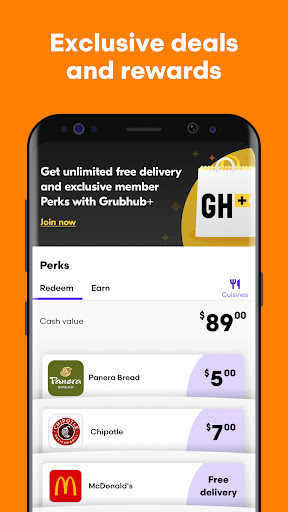
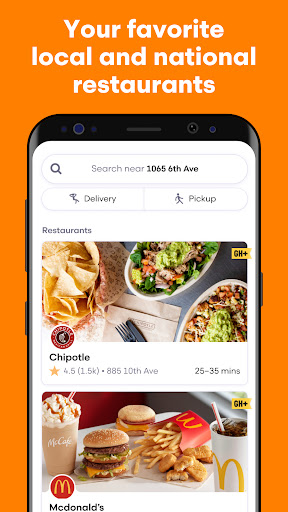
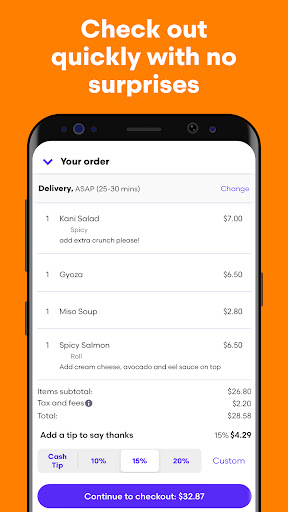
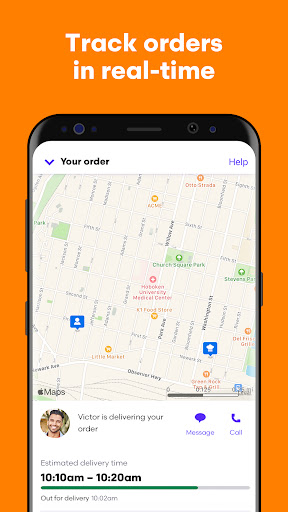
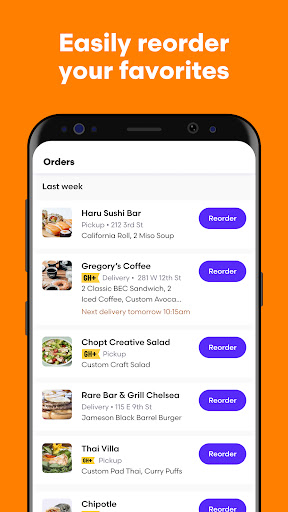
After spending real time with Grubhub, what stood out most was how little friction there is between opening the app and placing an order. That may sound like a basic requirement for any food delivery service, but Grubhub gets the fundamentals right in a way that makes it genuinely pleasant to use. The app feels built for people who already know what they want, as well as for those evenings when you open it hungry and need help deciding. In everyday use, that balance matters more than flashy promises. The first strength is simply breadth. Grubhub feels substantial the moment you start browsing. It doesn’t give the impression of a thin marketplace with a handful of options padded out by repetition. Instead, it offers the kind of variety that makes the app useful in different moods: quick fast food, coffee runs, comfort food, bigger family-style orders, and the occasional “I don’t want to leave the house” splurge. During testing, that wide selection made the app feel dependable. Even when one restaurant didn’t look appealing, there was rarely a dead end. For anyone who orders regularly, that variety is a huge part of the app’s appeal. The second strength is the interface. Grubhub is one of those apps that doesn’t make itself the story, which is a compliment. Navigation is straightforward, menus are easy to scan, and moving between restaurant pages, checkout, and order details generally feels quick and predictable. I especially appreciated that the app supports both focused ordering and casual browsing without becoming cluttered. Filtering and narrowing down meal options felt useful rather than over-engineered. On a phone, where a lot of food apps can become messy or sluggish, Grubhub keeps the experience tidy. It’s the kind of app that lets you place an order without feeling like you’ve just fought through three promotional layers and a maze of upsells. The third big win is that Grubhub often feels more reasonable on fees than some of its biggest competitors, at least on many orders. That doesn’t mean every order is cheap, and it definitely doesn’t mean you’ll never run into sticker shock. But over multiple sessions, the app gave the impression that it is trying to keep larger orders from becoming absurdly expensive. The messaging around no delivery or service fees on qualifying restaurant orders over a threshold is clearly meant to target that exact pain point. If you order for a family, split group meals, or simply consolidate into fewer, larger orders, Grubhub can make more sense than apps that stack fees too aggressively. That said, this is not a perfect app, and the first complaint is obvious: fees can still vary enough to be annoying. Even in a generally positive experience, some delivery charges stand out in the wrong way. You can go from feeling like you found a decent deal to wondering whether convenience is worth the added cost. The app is at its best when the economics line up with your order size, but on smaller or more marginal orders, the total can still drift upward fast. If you’re the kind of person who notices every line item at checkout, Grubhub can still test your patience. The second weakness is that some of the value layers feel less exciting in practice than they do in marketing. Membership perks and rewards exist, and for heavy users they may absolutely be worthwhile, but during normal use they don’t always feel transformational unless you order frequently. This is one of those apps where the economics reward repetition. If you order once in a while, you may not fully feel the benefit of premium incentives or points-based features before they expire, reset, or simply stop feeling special. Casual users can still enjoy the app, but they may not extract the same long-term value as someone ordering multiple times a week. The third complaint is that live delivery tracking, while useful, doesn’t completely erase the uncertainty that can creep into delivery apps. Grubhub does a solid job showing order progress and giving that reassuring sense that your meal is on the way, but it doesn’t always create the ultra-transparent, map-first confidence some users may expect from the category. The tracking is good enough to be practical, yet not so exceptional that it becomes a defining reason to choose the app on its own. In other words, Grubhub is dependable here, not revolutionary. In day-to-day use, the app’s personality is convenience over spectacle. It doesn’t feel desperate to entertain you. It feels like it wants to get dinner to your door with minimal drama, and most of the time that is exactly what it does. Orders were generally easy to place, restaurant pages were understandable, and the overall flow inspired trust. Customer support being available around the clock also adds to that sense of practical reliability, even if most people hope never to need it. Who is Grubhub for? It’s best for busy people, families, travelers, and regular delivery users who want a broad restaurant selection and a checkout experience that usually stays manageable, especially on bigger orders. It’s also a strong fit for anyone who values a clean, efficient interface and wants to compare options quickly without wrestling with the app itself. Who is it not for? If you only place very occasional small orders and are highly fee-sensitive, Grubhub may not feel consistently economical enough to become your default. And if you expect loyalty perks to feel rich without ordering often, you may come away underwhelmed. Overall, Grubhub succeeds because it understands the most important part of food delivery: hunger lowers your tolerance for nonsense. The app is polished, easy to use, stocked with plenty of choices, and often fairly competitive on total cost. Its weak spots are real, particularly around variable fees and the uneven practical value of rewards or membership benefits, but they don’t outweigh the fact that this is one of the more comfortable food delivery apps to actually live with. If you order delivery with any regularity, Grubhub is not just viable; it’s one of the safer recommendations in the category.
Alternative apps