
Apps Games Articles
UnitedHealthcare
UNITED HEALTHCARE SERVICES, INC.
Rating 4.6star icon
Editor's summary
Editor rating
star icon star icon star icon star icon
half star icon
4.5

One-line summary UnitedHealthcare is an unusually useful insurance app when you want fast access to claims, ID cards, cost estimates, and care search, but its uneven plan support and occasional feature accuracy hiccups keep it from feeling fully dependable.

  • Installs

    5M+

  • Developer

    UNITED HEALTHCARE SERVICES, INC.

  • Category

    Medical

  • Content Rating

    Everyone

  • Latest version

    3.0.0

  • Package

    com.mobile.uhc

Screenshots
In-depth review
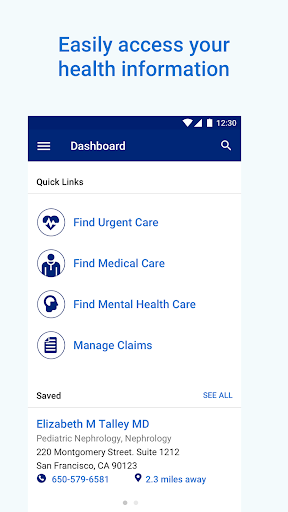
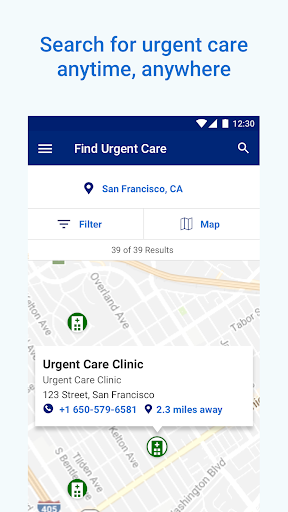
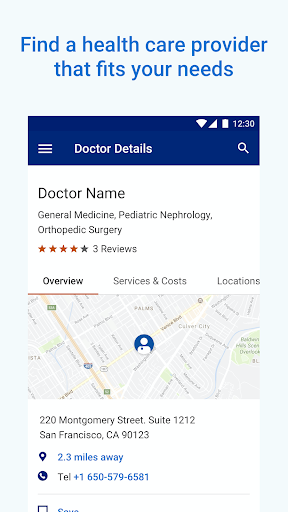
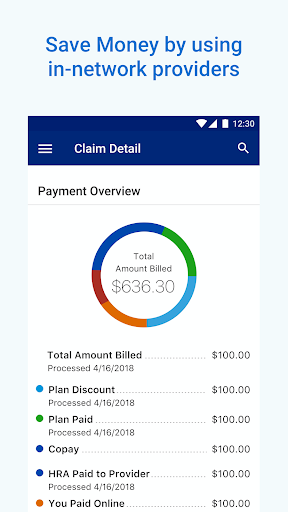
UnitedHealthcare is the kind of app that most people download for one very practical reason: they need something right now. They need their insurance card at a front desk, they want to check whether a doctor is in network, they need to understand a claim, or they want a rough sense of what a service might cost before committing. After spending time with the app in that everyday, problem-solving way, my impression is largely positive. This is not a flashy wellness toy or a reinvention of health care on mobile. It is a utility app, and when it is working within the limits of your specific plan, it does a solid job of turning insurance information into something you can actually use. The best thing about the app is convenience. Having an ID card available on demand sounds basic until you actually need it in a waiting room or at a pharmacy counter. In use, that feature feels like one of the app’s most valuable inclusions because it removes one of the oldest annoyances in health coverage: hunting for a physical card you forgot to bring. The same goes for claims. Insurance claims are often presented in ways that feel opaque on desktop portals, but here they are easier to check in the flow of a normal day. Being able to review claims by provider, status, service, or date makes the app feel more practical than many health insurance apps that bury the information people actually care about. I also came away impressed by how much the app tries to put price transparency front and center. The care search and cost estimate tools are where UnitedHealthcare starts to feel more ambitious than a simple member portal. If you are the kind of person who wants to compare care options before scheduling, this app can save time and reduce some of the guesswork. The ability to look up doctors and facilities in a guided, location-based way is especially helpful when you are trying to make a decision quickly. It is easy to imagine this being genuinely useful for families, people managing recurring prescriptions, and anyone who regularly juggles specialists, labs, or urgent care visits. Another real strength is that the app generally feels approachable. Health insurance apps often suffer from an intimidating tone, but this one is more navigable than expected. Signing in through HealthSafe ID keeps things centralized, and biometric login helps remove friction after the first setup. In regular use, those little touches matter. An insurance app should not feel like work before you can even get to your deductible or account balance, and UnitedHealthcare mostly avoids that trap. That said, the app is not as universal or as seamless as it wants to be. The first major frustration is right in the fine print: not all plans are supported equally, and not all features are available for every member. That limitation affects the experience in a meaningful way. The app may look like a comprehensive control panel for your coverage, but your actual version of it can be more limited depending on your plan. That makes the app feel a bit inconsistent. Two people using the same app name can end up having very different impressions of what it can do, simply because access varies behind the scenes. There is also a trust issue that shows up when app information does not fully line up with real-world checkout or billing moments. In a health and benefits app, accuracy matters more than design polish. If a scanner or eligibility checker suggests that an item should be covered or allowed, only for that to fail at the register, the result is more than a minor annoyance. It introduces hesitation. During testing, that is the kind of friction that stands out because these apps are supposed to reduce uncertainty, not create a second round of it. Even if that problem does not affect every feature all the time, the mere possibility makes you double-check results that ought to feel authoritative. The app can also feel a little compartmentalized. It offers a wide set of tools, from claims and balances to provider search and preventive care prompts, but not every part feels equally essential or equally polished. Some sections feel like high-value daily utilities, while others feel more like add-ons that you may or may not use depending on your coverage and habits. That unevenness does not break the app, but it does stop it from feeling truly elegant. The best insurance apps disappear into the background and simply make stressful tasks easier; UnitedHealthcare gets close, but you still notice the seams. For the right audience, though, this is absolutely an app worth keeping installed. If you are an existing UnitedHealthcare member who frequently checks claims, needs quick access to an ID card, wants to compare care options, or likes seeing balances and deductible-related information without logging into a desktop site, this app is very easy to recommend. It is also a strong fit for people who appreciate telehealth-style convenience and want more of their care administration handled from a phone rather than through customer service calls. It is less ideal for anyone expecting a perfectly consistent experience across all plans or a one-stop app where every feature is guaranteed to work the same way for every member. It is also not the app for people who only interact with their insurance once or twice a year and prefer paper documents, because much of the value comes from repeated, everyday access. In the end, UnitedHealthcare succeeds by being genuinely useful more often than not. It makes core insurance tasks faster, less painful, and more mobile-friendly. Its strongest moments come when it saves you a phone call, a login to a clunky website, or a surprise at the front desk. Its weaker moments come when feature availability and accuracy do not quite match the confidence the interface projects. Even so, for a free medical app tied to a major insurer, it delivers enough practical value to earn a place on your home screen.
Alternative apps