
Apps Games Articles
Plants vs. Zombies™
ELECTRONIC ARTS
Rating 3.9star icon
Editor's summary
Editor rating
star icon star icon star icon star icon
half star icon
4.5

One-line summary Plants vs. Zombies™ is still one of mobile gaming’s smartest, funniest strategy classics, but the excellent design now lives alongside intrusive ads and a surprisingly fragile sense of progress.

  • Installs

    500M+

  • Developer

    ELECTRONIC ARTS

  • Category

    Strategy

  • Content Rating

    Everyone 10+

  • Latest version

    3.14.0

  • Package

    com.ea.game.pvzfree_row

Screenshots
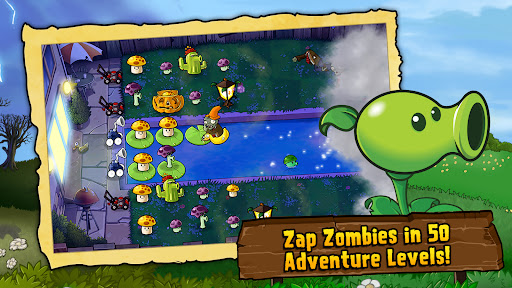
In-depth review
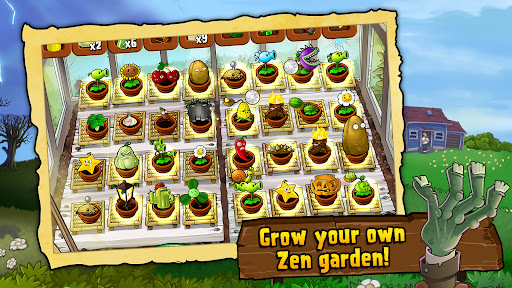
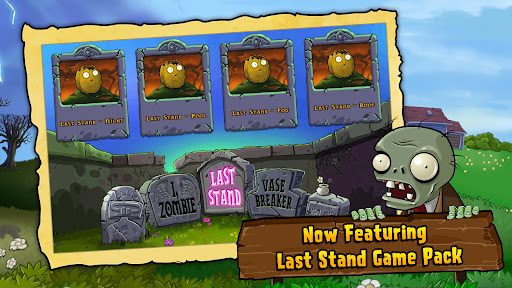
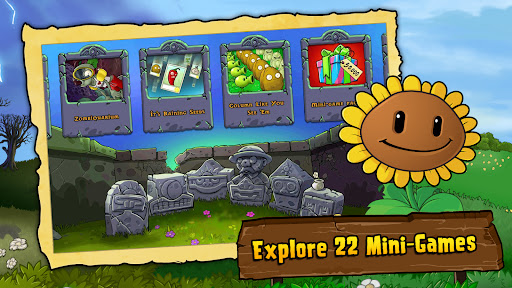
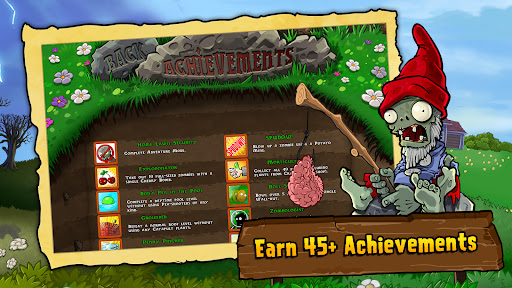
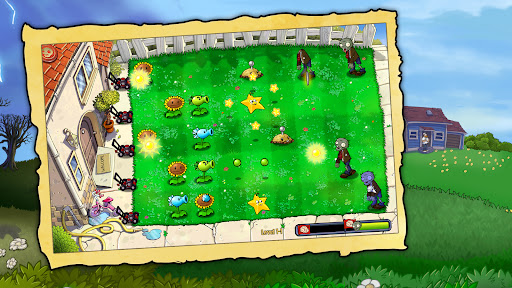
There is a reason Plants vs. Zombies™ still has such a grip on people years after its original release: the core game design is absurdly good. Even now, loading it up on Android feels like opening a perfectly tuned puzzle box disguised as a goofy backyard defense game. The premise is simple enough for anyone to understand in seconds—plant sunflowers, build defenses, stop zombies from reaching the house—but the brilliance is in how quickly that simplicity grows into real strategic depth. In everyday play, the game is immediately approachable. Early levels ease you in with peashooters, wall-nuts, and the basic rhythm of collecting sun, planting efficiently, and reacting to enemy lanes before they collapse. What still impresses is how readable everything is. You can glance at the lawn and understand the state of the battle instantly. That clarity is one of the app’s biggest strengths. Many strategy games on mobile eventually get cluttered or overly systems-heavy; Plants vs. Zombies stays elegant. Every plant has a distinct job, every zombie type changes your priorities, and every new stage theme tweaks the rules just enough to keep you from going on autopilot. That sense of pacing is the second major reason the game remains easy to recommend. Adventure mode doesn’t simply throw harder waves at you; it steadily expands the sandbox. Day stages feel different from night stages. Pool levels force you to split attention in interesting ways. Fog adds tension without becoming unfair. Rooftop stages alter projectile behavior and make familiar tactics feel fresh again. Across the full campaign, the game does an excellent job of making you feel smarter over time. You start by reacting, then gradually begin planning two or three moves ahead, saving key plants for a specific zombie, or building an economy that can support a late-game comeback. And then there is the charm, which is the third big strength and perhaps the hardest one for imitators to copy. Plants vs. Zombies is funny without trying too hard. The plant and zombie designs are memorable, the animations have personality, and the whole thing has a bright, mischievous tone that keeps the strategy from ever feeling dry. Even when you fail, it rarely feels punishing in a miserable way. It feels like the game winked at you and invited you to come back with a better plan. That lightness matters on mobile, where games often become either too disposable or too exhausting. There is also more to do than a quick glance suggests. Beyond the main progression, the app gives you extra modes, collectibles, achievements, and side activities that help extend its lifespan. The Zen Garden and shop unlocks add a layer of long-term progression, and survival-style play gives stronger players a reason to keep tinkering with setups after the campaign is done. For a free mobile version of a classic, there is a lot here to chew on. But using the app in 2025 also means running into the compromises of the modern mobile package, and they do matter. The most obvious irritation is advertising. In a perfect world, Plants vs. Zombies would be a smooth premium experience from front to back. Here, ads can interrupt the game’s rhythm and chip away at its laid-back appeal. Since the game is built around flow—prepare, place, react, recover—anything that breaks that cadence stands out more than it would in a more disposable app. It does not ruin the game, but it does make this version feel less elegant than the classic underneath it deserves. The second notable weakness is progression persistence. During testing, this version did not inspire much confidence as a forever-home for a long save file. The structure of the game encourages investment: you earn coins, unlock extras, build out side content, and slowly work toward optional purchases and completion goals. That makes any uncertainty around saving and restoring progress especially frustrating. A game this replayable can survive a restart, but it should not feel like it might ask for one. The third weak point is the economy around extras. The main campaign remains highly playable without spending, which is important and worth stating clearly. Still, some shop items and bonus content feel slower to earn than they should, and the app occasionally nudges you toward shortcuts. It is not aggressively pay-to-win in the core experience, but completionists may feel the friction more than casual players. If your joy comes from fully clearing every extra, buying every upgrade, and polishing off every side system, the grind becomes more visible. Who is this app for? Almost anyone who enjoys accessible strategy, lane defense, or polished casual games with real depth. It is particularly great for players who want a game that can be enjoyed in short sessions but still rewards long-term mastery. It is also an easy recommendation for people who appreciate classic game design that teaches through play rather than drowning you in tutorials. Who is it not for? Players with zero tolerance for ads, anyone who wants airtight cloud-save reliability, and anyone who prefers fast, hyperactive action over slower tactical planning may bounce off it. This version also may not be ideal for those chasing the absolute most complete edition of the original game experience. Even with those caveats, Plants vs. Zombies™ remains remarkably easy to like. Its strategy is timeless, its presentation is joyful, and its progression loop is still satisfying in a way many newer mobile titles fail to match. The app around the game may show some wear, but the game itself is still a masterclass. If you can live with the mobile-era annoyances, this is absolutely still worth planting your time into.