Apps Games Articles
Antistress - relaxation toys
JindoBlu
Rating 4.6star icon
Editor's summary
Editor rating
star icon star icon star icon star icon
half star icon
4.5

One-line summary Antistress - relaxation toys is easy to recommend for its huge, genuinely soothing grab-bag of tactile mini-toys, though anyone looking for deep gameplay or consistently subtle sound design may tire of it quickly.

  • Installs

    100M+

  • Developer

    JindoBlu

  • Category

    Puzzle

  • Content Rating

    Everyone

  • Latest version

    7.8.7

  • Package

    com.JindoBlu.Antistress

In-depth review
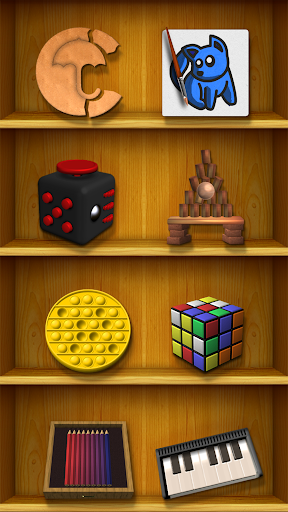
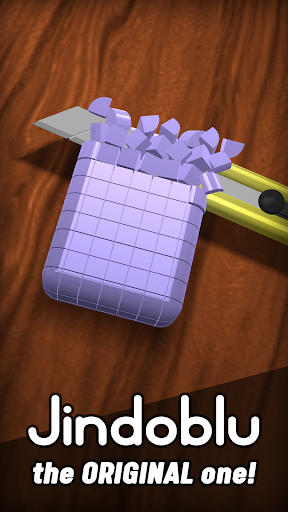
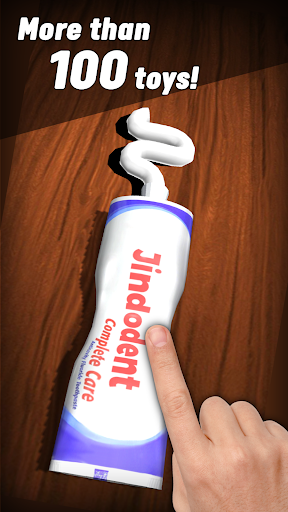
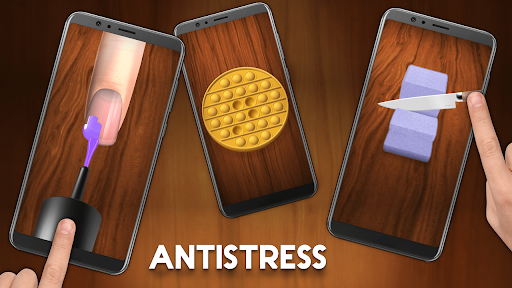
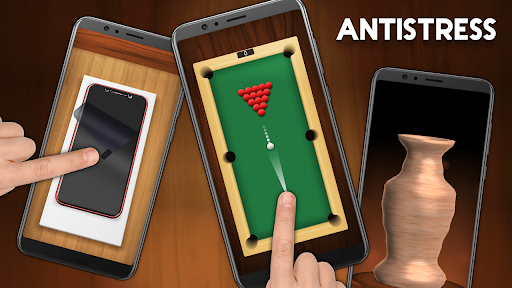
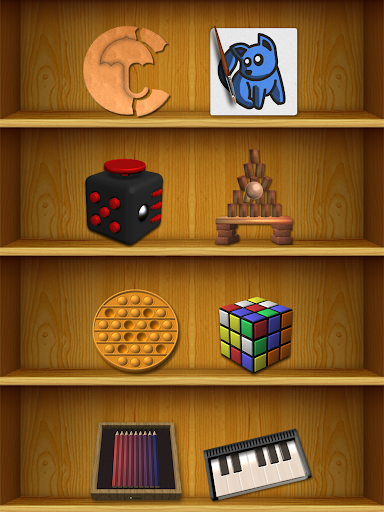
Antistress - relaxation toys is one of those apps that sounds almost too slight to take seriously until you actually spend time with it. On paper, it is just a collection of digital fidgets and tiny activities. In practice, it works surprisingly well as a pocket-sized boredom killer and, at its best, a calming little space you can dip into for thirty seconds or stay with for half an hour. What struck me first during regular use was how approachable it is. You open the app, pick a toy, and start touching, swiping, tapping, spinning, cleaning, arranging, or making noise. There is almost no learning curve. That matters because an app aimed at relaxation can easily undermine itself if it feels cluttered or demanding. Antistress largely avoids that trap. The structure is simple, the activities are easy to browse, and the option to save favorites makes a real difference once you learn which toys actually help you unwind versus which ones are just amusing novelties. The app’s biggest strength is variety. This is not one gimmick stretched thin; it is a broad assortment of little tactile diversions. Some feel like virtual desk toys, some lean into ASMR-style sound and motion, some are closer to tiny puzzles, and others are just oddly satisfying interactions. That range gives the app more staying power than expected. In my testing, the experience changed depending on mood. Sometimes I wanted something repetitive and quiet, like wiping, sorting, or gently swiping. Other times I wanted a tiny objective to complete. The app is good at accommodating both states without making a big fuss about either. Its second major strength is that many of these toys feel better than they need to. The app is not chasing console-quality visuals, but the touch interactions often have enough responsiveness and physicality to sell the illusion. A bamboo chime should sound pleasant and react naturally; a button should feel immediate when pressed; a simple cleaning or drawing activity should give you satisfying feedback. Antistress gets a lot of those fundamentals right. The result is not realism in a technical sense so much as a sense of pleasant cause and effect, which is exactly what this kind of app lives or dies on. The third strength is restraint in monetization. For a free app in this category, it is refreshingly usable without feeling like a hostage situation. There are ads and an in-app purchase, but the app does not constantly break your mood with aggressive interruptions. That is crucial here. A relaxation app that hammers you with pop-ups is self-defeating, and Antistress generally understands that. If you do decide to pay, it feels more like smoothing out an already enjoyable app than rescuing it from annoyance. That said, the app is not flawless, and its weaknesses become clearer the longer you use it. The most obvious limitation is that not every toy is equally polished. Some are clever and calming enough to revisit often; others feel like quick curiosities you try once and move past. That inconsistency is the trade-off for having so much variety. You are not getting a collection where every item is a masterpiece. You are getting a mixed box, and part of the experience is figuring out which pieces work for you. The sound design is another area where the app occasionally trips over its own relaxing premise. Much of the audio is satisfying, but some effects are sharper, louder, or more celebratory than they need to be. In a few activities, completion sounds and certain pops or claps feel a little too eager, almost like arcade feedback sneaking into a calmer space. It is not enough to ruin the app, and some users will not mind it at all, but if you are particularly sensitive to sudden or jarring sound cues, you will notice the mismatch. A third issue is that the app’s sense of depth is intentionally limited. That is fine for what it is, but it also defines who this app is not for. If you want progression, strategy, challenge, or the kind of puzzle design that keeps you engaged for long sessions, Antistress will feel shallow. The point is tactile distraction, not mastery. Even when there are classic game-like elements mixed in, they are there to complement the mood rather than become the main event. If you come in expecting a proper puzzle app or a serious mindfulness tool, you may bounce off it. In day-to-day use, though, I found it easy to appreciate what the app does well. It is especially good in the in-between moments: waiting rooms, commutes, study breaks, or those restless stretches when you do not want to scroll social media again but also do not want to commit to a full game. It also works better than expected as a grounding tool, simply because it gives your hands and attention something gentle to do. The best activities create a small loop of motion, sound, and feedback that is absorbing without being demanding. Visually, the app is functional rather than beautiful, and that is mostly fine. Some parts look charming, some look plain, and a few feel a little cheap compared with the stronger interactions underneath. But because the app is driven more by touch than by spectacle, presentation is rarely the deciding factor. So who is it for? It is for people who like fidget toys, low-stakes mini activities, sensory distractions, and casual stress relief that does not ask for much effort. It is also good for anyone who wants a broad menu of short, pick-up-and-play experiences instead of one central game loop. Who is it not for? Players who want depth, polished consistency across every mode, or a perfectly serene audio profile may find it uneven. Overall, Antistress - relaxation toys succeeds because it understands its job. It is not trying to transform your life or gamify wellness into a chore. It simply gives you a large, accessible, mostly well-made collection of things to tap and tinker with, and more often than not, that is enough to make you feel a little calmer.
Alternative apps