Apps Games Articles
Talking Tom Cat
Outfit7 Limited
Rating 3.9star icon
Editor's summary
Editor rating
star icon star icon star icon star icon empty star icon
4.1

One-line summary Talking Tom Cat is still an easy recommendation as a silly, instantly funny toy for kids and families, but the heavy ad presence and limited long-session depth make it harder to love for anyone beyond short bursts.

  • Installs

    500M+

  • Developer

    Outfit7 Limited

  • Category

    Casual

  • Content Rating

    Everyone 10+

  • Latest version

    4.1.0.125

  • Package

    com.outfit7.talkingtom

In-depth review
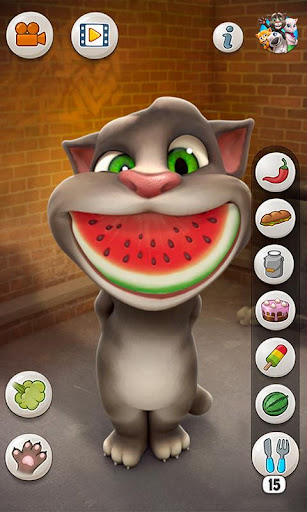
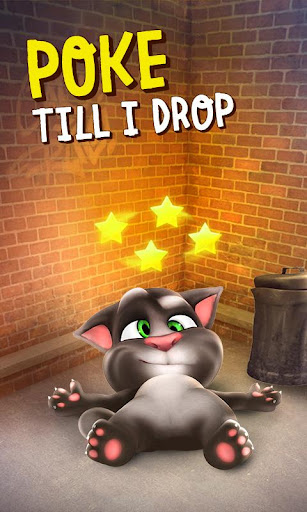
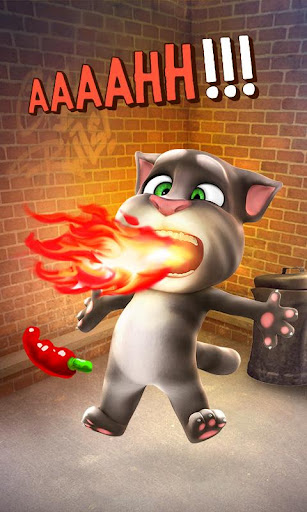
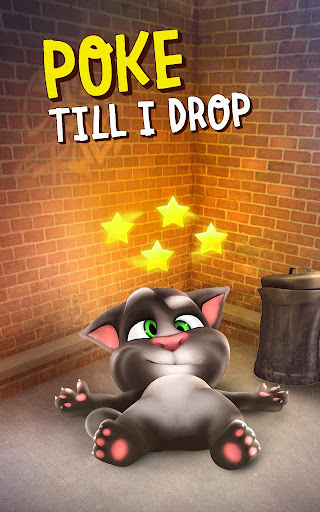
Talking Tom Cat remains one of the simplest examples of why mobile games can be so enduring: you open it, say something ridiculous, and a cartoon cat throws it right back at you in a warped little voice that is still genuinely funny. After spending time with the current version, what stands out is not complexity or progression, but how immediate the entertainment is. This is an app that understands the value of fast feedback. Tap Tom, pull at him, feed him, talk to him, and he responds right away with an expression, animation, sound effect, or exaggerated reaction. That instant payoff is the entire appeal, and in short sessions it absolutely works. The core talkback feature is still the reason most people will download this. We tested it in the exact way most families probably do: random phrases, silly noises, dramatic speeches, and a few attempts to make the voice playback break into something even funnier. Tom’s repeating mechanic is still the star because it is effortless. There is no learning curve, no setup, and no need to understand game systems. Even someone who has never touched the app can get a laugh out of it within seconds. That makes Talking Tom Cat especially good as a casual pass-around app on a phone or tablet. It is easy to imagine it being a hit with younger kids, siblings, or anyone who just wants a goofy distraction. The second thing that helps the app is how tactile it feels. Talking Tom Cat is not packed with deep mechanics, but it does a good job making small interactions feel playful. Poking Tom’s face, tapping his belly, pulling his tail, petting him, and trying different foods all create a loop of curiosity: what happens if I do this again, and what happens if I try something meaner or weirder? Some reactions are intentionally over-the-top, and that cartoon mischief gives the app its personality. The food interactions are particularly useful because they break up the repetition of just making Tom mimic your voice. Feeding him different items and watching his dramatic reactions adds enough variety to keep the app from feeling like a single joke stretched too thin. Visually, the current version is polished in the way modern Outfit7 apps usually are. Animations are smooth, the sound design is punchy, and Tom feels more expressive than he did in older mobile mascots of this type. Whether you prefer this newer look or the older nostalgic style will come down to taste, but from a purely usability standpoint, the app is readable, colorful, and easy to navigate. It also benefits from the fact that it never overcomplicates itself. You always know what the app wants from you: touch something, say something, and see what chaos comes back. That said, the app’s limitations show up pretty quickly if you stay longer than a few minutes. Talking Tom Cat is much better as a toy than as a game. Once you have tested the reactions, tried the food, and spent some time with the voice gimmick, there is not a huge amount of depth pulling you forward. The fun comes in bursts, not in extended play. That is fine if you approach it as a novelty app or a kid-friendly distraction, but less impressive if you are hoping for a richer virtual pet experience with progression, customization, or more meaningful variety. The biggest practical annoyance during our time with it was advertising. Because the app is free, ads are not surprising, but they do interrupt the rhythm of a game built entirely on quick, playful interactions. In something this simple, momentum matters. When an ad breaks that flow, the app can go from charming to mildly exhausting. For adults, that is mostly an irritation. For parents handing a device to a child, it is more of a real usability problem, because the app otherwise feels tailor-made for younger players. We also noticed that while the responsiveness is a strength, it can become noisy and repetitive fast. The same exaggerated animations and sound effects that feel funny at first can start to wear thin if you keep circling through them. This is not a criticism of quality so much as scope. The app does what it does well, but it does not have enough layers to sustain attention for long unless the person using it is very young or especially amused by repetition. A smaller but still noticeable drawback is that the app leans heavily on chaotic humor over warmth. Tom is funny, reactive, and slightly mischievous, but he does not really create the sense of attachment that the best virtual pet apps can. You interact with him more like a rubber chicken than a companion. That is not necessarily bad; it just defines the experience. If you want a proper pet simulation, this is probably not it. So who is Talking Tom Cat for? It is ideal for kids, families, and anyone looking for a harmless, low-effort laugh. It also works well for short moments when you want to hand your phone to a child or share a quick joke with friends. Who is it not for? Anyone sensitive to ads, anyone looking for deep gameplay, or anyone wanting a more developed simulation with lasting progression will probably bounce off it once the novelty fades. In the end, Talking Tom Cat succeeds because it stays true to a very specific kind of mobile fun. It is silly, immediate, and easy to enjoy in tiny doses. Even now, there is something undeniably effective about hearing your own words bounced back by a cartoon cat with bad attitude. Just do not expect much more than that, and be prepared for the free-to-play interruptions that come with the package.