
Apps Games Articles
Rush Royale: Tower Defense TD
My.com B.V.
Rating 4.2star icon
Editor's summary
Editor rating
star icon star icon star icon star icon empty star icon
4.2

One-line summary Rush Royale is easy to recommend if you want a genuinely clever, replayable PvP tower defense game with optional ads, but much harder to recommend if you hate grind, shaky matchmaking, or free-to-play pressure.

  • Installs

    10M+

  • Developer

    My.com B.V.

  • Category

    Strategy

  • Content Rating

    Everyone

  • Latest version

    13.1.38635

  • Package

    com.my.defense

In-depth review
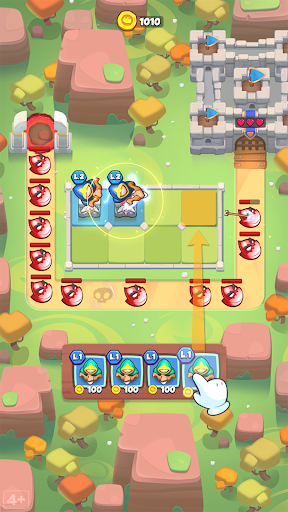
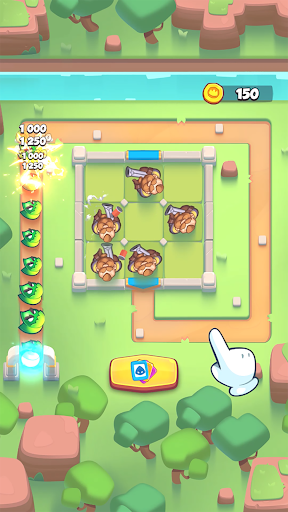
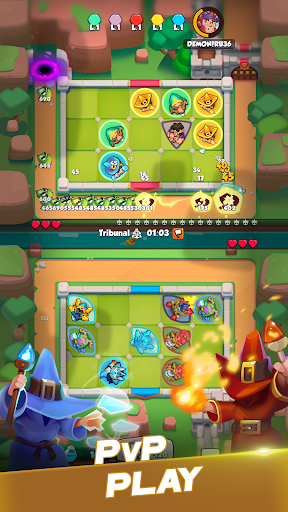
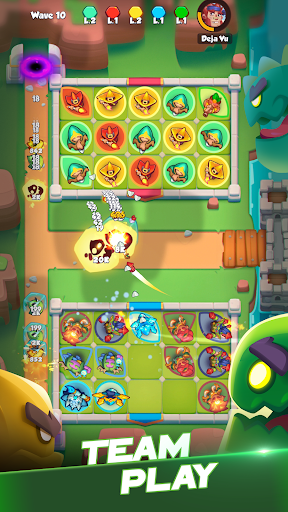
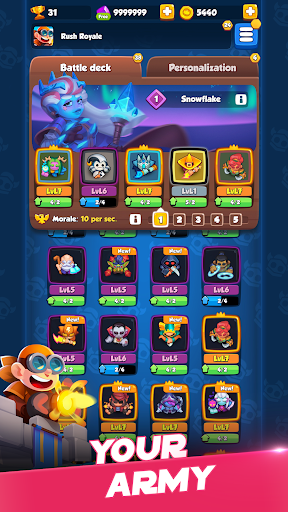
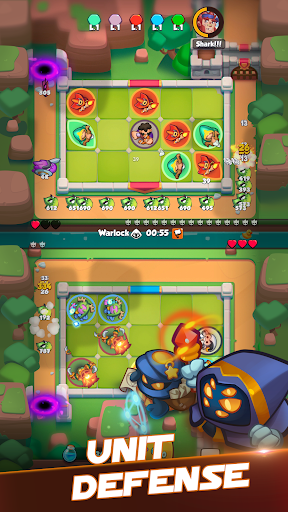
Rush Royale: Tower Defense TD is one of those mobile games that looks lightweight at first glance and then quietly eats a lot more of your time than you planned to give it. After spending real time with it, what stands out is that it does not play like a traditional lane-based tower defense game, even though it borrows the genre’s language. It feels closer to a PvP strategy battler built around unit randomness, quick adaptation, and long-term deck tuning. That mix gives it a strong identity, and for stretches, it is genuinely excellent. The core loop is the reason the game works. You build a deck, enter a match, summon units onto your side of the board, merge duplicates to raise their power, and react to what the match gives you. That last part matters, because Rush Royale is not about executing one perfect script. It is about managing chaos. Good runs feel like controlled improvisation: you are balancing mana, waiting for the right merge, deciding whether to chase a stronger board or stabilize what you already have, and trying to survive the next wave or boss without ruining your setup. When the game is in that sweet spot, it is tense, satisfying, and smart in a way many mobile strategy games are not. It also deserves credit for how readable it is in motion. Matches are busy, but not so messy that you cannot understand what is happening. Units are visually distinct enough that deck experimentation remains approachable, and the short-form nature of battles makes it easy to fit into a spare five or ten minutes. That daily usability is one of the app’s biggest strengths. It is not a game that asks for one giant evening session to become enjoyable; it works well as a repeat-visit mobile title. Another thing I liked right away is the ad design. Rush Royale has ads, but in regular use they feel optional rather than oppressive. You are not constantly getting shoved into forced interruptions after every action. Instead, the game tends to present ads as a trade: watch one, get a small reward. That may sound like a minor point, but in mobile gaming it dramatically changes the tone of the experience. The result is a game that feels much less hostile than many free-to-play strategy apps. The third big strength is that there is enough variety here to keep the game from going stale too quickly. PvP is the center of gravity, but co-op and events help break up the rhythm. Co-op in particular gives Rush Royale a different texture. Competitive mobile games can become exhausting if every session is an arms race, and co-op offers a more relaxed way to engage with the same systems while still chasing rewards and progression. It makes the app feel broader than a one-mode ladder grinder. That said, Rush Royale is absolutely not frictionless. The biggest issue is progression. You can play for free and still have fun, but the game’s economy constantly reminds you that patience is part of the design. Building up strong decks, upgrading favored units, and staying competitive over time can feel slow. It is not impossible to progress without spending, but there are enough bottlenecks and enough reminders of purchasable shortcuts that the pressure is always in the room. If you are sensitive to grind or dislike games that repeatedly wave offers in your face, you will notice it here. Matchmaking is another weak point. At its best, the game creates those close, tactical fights where every merge matters. At its worst, it can throw you into battles that feel lopsided before they really begin. That undermines one of the app’s strongest features, because a strategy game is most satisfying when losses feel instructive rather than predetermined. Rush Royale usually lands on the right side of that line, but not always. The final irritation is technical smoothness. Most sessions are stable, and the game generally feels polished in presentation and controls, but there are moments where freezing, disconnects, or failed starts can sour a run. In a game where trophies, event entries, or co-op progress are on the line, even occasional hiccups feel bigger than they would in a purely casual app. It is not enough to ruin the whole experience, but it is enough to be memorable when it happens. Who is this game for? It is for players who like strategy but do not need a pure, deterministic chess match. If you enjoy adapting on the fly, testing different deck ideas, and slowly building mastery over a living set of systems, Rush Royale is compelling. It is also a good fit for people who want a mobile game with meaningful daily play that does not bury them under mandatory ads. Who is it not for? If you want a classic tower defense structure, if you hate randomness affecting outcomes, or if free-to-play progression walls make you bounce immediately, this will likely wear you down. Likewise, players who want perfectly fair matchmaking at all times may get frustrated. Overall, Rush Royale succeeds because the moment-to-moment play is better than the monetization pressure surrounding it. The strategy is real, the matches are brisk, the deck-building is engaging, and the optional-ad model is refreshingly restrained. But the grind, occasional uneven matchmaking, and sporadic technical annoyances stop it short of being an easy universal recommendation. For the right player, though, it is one of the more absorbing strategy games on mobile.