
Apps Games Articles
School Party Craft
Candy Room Games & RabbitCo
Rating 4.5star icon
Editor's summary
Editor rating
star icon star icon star icon star icon empty star icon
4.1

One-line summary School Party Craft is easy to recommend if you want a big, playful sandbox full of cars, houses, outfits, and low-stakes chaos, but it’s harder to recommend if you expect real multiplayer, smart social interaction, or a polished ad-light experience.

  • Installs

    100M+

  • Developer

    Candy Room Games & RabbitCo

  • Category

    Adventure

  • Content Rating

    Everyone 10+

  • Latest version

    1.8.11

  • Package

    com.candyroom.clubcraft

In-depth review
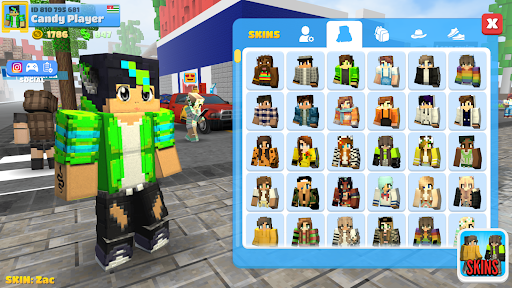
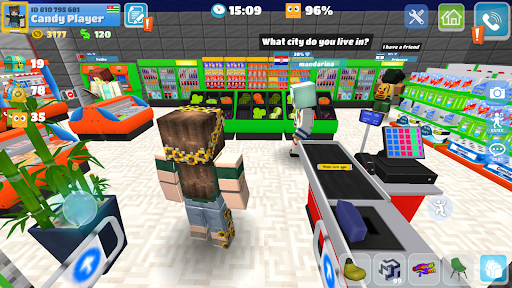
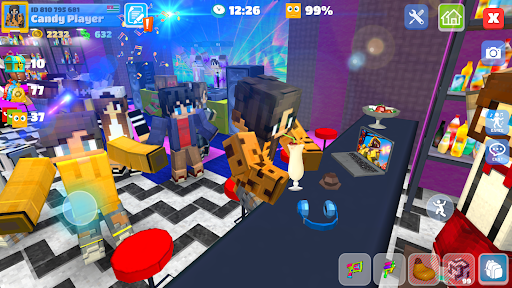
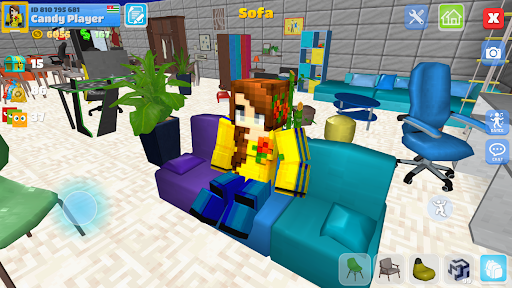
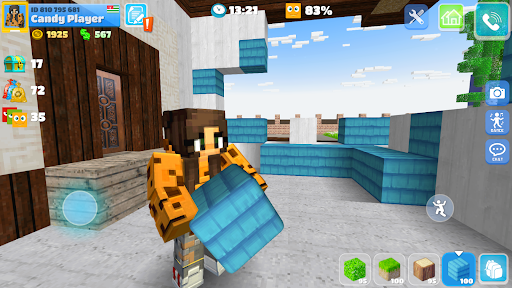
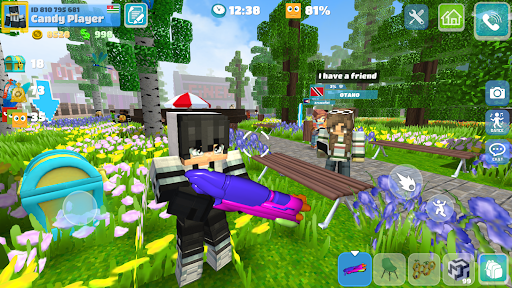
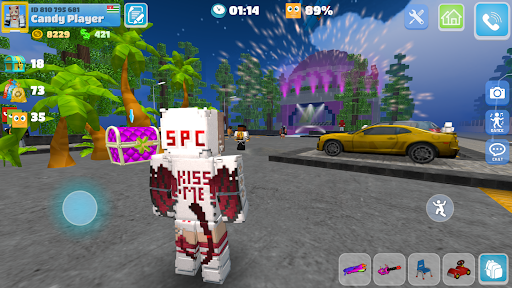
School Party Craft lands somewhere between a life sim, a blocky open-world sandbox, and a kid-friendly chaos generator, and that combination is exactly why it’s so easy to sink time into. After spending time roaming its city, buying items, testing vehicles, poking at the social systems, and generally seeing how much of the world feels interactive, my biggest takeaway is this: the game is genuinely fun in a breezy, messy, low-pressure way. It does not always feel refined, but it often feels generous. The first thing that works in its favor is how quickly it lets you play your own way. School Party Craft doesn’t trap you in lengthy setup or heavy tutorial friction. You’re dropped into a colorful cubic city and encouraged to wander, shop, drive, collect, decorate, and experiment. That freedom is the game’s core appeal. You can head to the market, browse furniture and cosmetics, drive around looking for places to explore, or focus on earning coins and upgrading your lifestyle. It has the kind of toy-box design that makes younger players, or anyone who likes open-ended mobile games, feel immediately at home. The second strength is variety. This is not a one-note builder or a one-note dress-up app. In a relatively short session, I was able to bounce from changing outfits to checking out homes, to driving around town, to messing with paintball-style combat, to exploring public spaces like the beach, pool, school, and disco. That breadth gives the game surprising staying power. Even when individual activities are fairly simple, there are enough of them that the app avoids feeling repetitive too quickly. It is especially good at creating the illusion that there is always one more thing to buy, try, or customize. The third major plus is accessibility. School Party Craft runs with a deliberately simple visual style and straightforward controls, and that makes it easy to pick up. You do not need to be a seasoned sandbox player to understand what it wants from you. The blocky aesthetic also helps the game get away with being playful rather than realistic. Driving is approachable, interior decoration is intuitive, and interacting with the world rarely feels intimidating. For the audience it is clearly chasing—kids, teens, and casual players who want a social-feeling sandbox without much complexity—that matters a lot. Still, the game’s biggest weaknesses show up after the initial charm wears off. The first is that its social layer feels thinner than the app wants you to believe. There are lots of characters and there is a chat system, but these interactions don’t feel convincingly human or especially deep. Conversations can seem disconnected, and the city can give the impression of being socially busy without actually delivering meaningful relationships or real multiplayer energy. If you come in expecting a true online social world, you will feel that gap quickly. The second issue is advertising. Because the game is free, some ad presence is understandable, but in active play it can become irritating. The interruptions are noticeable enough that they break the rhythm of what should be a relaxed sandbox. This is especially frustrating because School Party Craft is at its best when you’re moving fluidly from one activity to another—driving somewhere, shopping, changing outfits, heading into another building, and so on. Ads interrupt that flow and make the app feel more mechanical than magical. The third weakness is polish. For a game this ambitious on mobile, some rough edges are inevitable, and School Party Craft definitely has them. I ran into moments where the world felt a little awkwardly assembled: some spaces seemed emptier than expected, some systems felt underdeveloped, and parts of the environment gave off a placeholder quality rather than a fully lived-in city. The game has a lot of ideas, but not all of them are equally complete. At times it feels as though the app is aiming to be a full social simulator, a building game, a fashion game, and an action sandbox all at once, and the seams show. Even so, there is a reason it remains compelling. The everyday play loop is surprisingly sticky. Earn coins, buy better stuff, experiment with houses, try another vehicle, change your look, mess around with the city, repeat. It is not sophisticated in the way a premium life sim is sophisticated, but it understands reward pacing. You are almost always working toward a tangible new toy, cosmetic, property, or upgrade, and that keeps the experience moving. I also appreciated that the game supports both short sessions and longer wandering sessions. You can hop in for a few minutes to drive around or spend a much longer stretch decorating and exploring. Who is it for? This is a strong fit for players who enjoy open-world mobile sandboxes, block-style visuals, light roleplay, casual customization, and a sense of freedom more than structured challenge. It is especially appealing for younger players who want a game that mixes fashion, homes, vehicles, and social play in one package. It is also good for people who like offline-friendly-feeling experimentation and don’t mind making their own fun. Who is it not for? If you want true multiplayer depth, smarter NPC behavior, cleaner immersion, or a highly polished simulation with rich missions and believable interaction, School Party Craft will feel limited. It also won’t suit players with very low tolerance for ads or those expecting a tightly designed progression system. My final verdict: School Party Craft succeeds because it understands the appeal of freedom. It gives you a lively, customizable city-sized playground and enough things to do that boredom takes a while to set in. But it also feels like a game that is still reaching for a more complete version of itself. As it stands, it is enjoyable, charmingly chaotic, and often addictive—just not as deep or polished as its biggest ideas suggest.