
Apps Games Articles
BandLab – Music Making Studio
BandLab Technologies
Rating 4.6star icon
Editor's summary
Editor rating
star icon star icon star icon star icon
half star icon
4.5

One-line summary BandLab is one of the easiest ways to turn a phone into a genuinely useful music studio, but occasional latency, saving hiccups, and a few missing advanced workflow tools keep it from being an automatic pick for every serious producer.

  • Installs

    100M+

  • Developer

    BandLab Technologies

  • Category

    Audio

  • Content Rating

    Teen

  • Latest version

    11.13.3

  • Package

    com.bandlab.bandlab

In-depth review
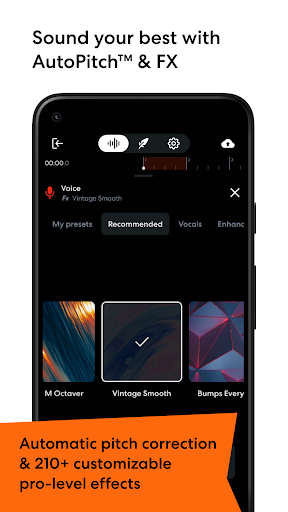
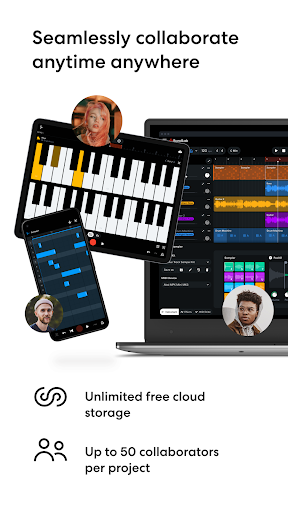
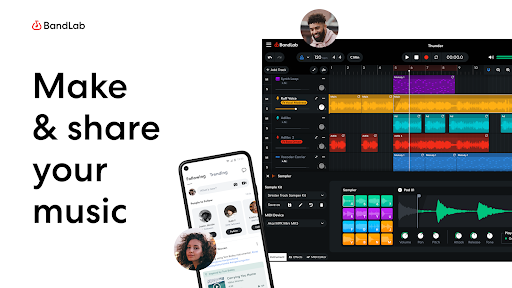
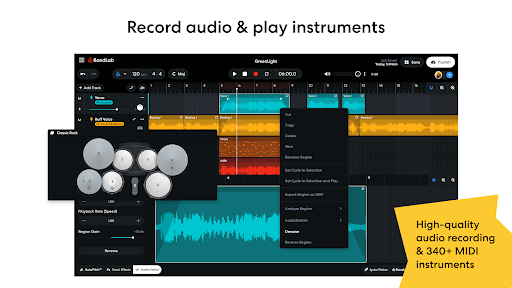
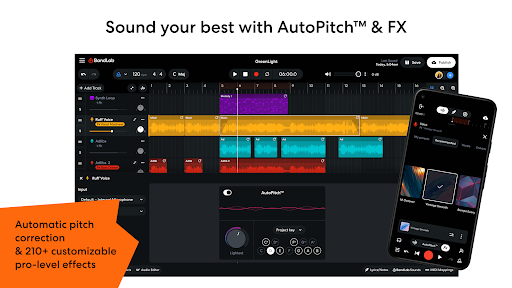
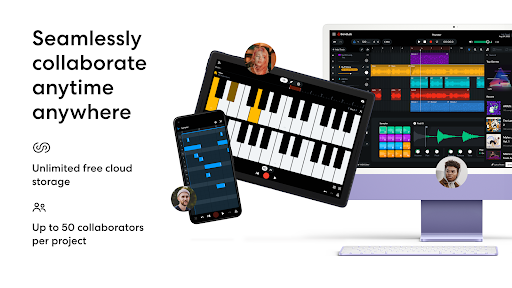
BandLab – Music Making Studio is one of those apps that sounds too ambitious on paper: a free mobile DAW, virtual instruments, beat tools, vocal recording, mastering, collaboration, and a social layer, all inside one app. After spending real time with it, the surprising part is not that BandLab can do all of that. It’s that so much of it feels usable rather than gimmicky. The best thing about BandLab is how quickly it gets you from idea to actual music. On first launch, it does a better job than many creative apps at lowering the intimidation factor. You can start with a vocal take, build a beat from loops, tap in notes with virtual instruments, or import audio and begin shaping it. Even if you have very little recording experience, the app rarely makes you feel locked out. The layout is not perfect, but it is approachable in a way that many mobile production apps are not. I was able to sketch rough song ideas fast, and that matters more on a phone than having a hundred buried pro features. That accessibility is BandLab’s first major strength. It feels designed for people who want to create now, not after watching ten tutorials. Virtual instruments are easy to pull up, the drum tools are welcoming, and recording vocals is straightforward. If your workflow is “I have a melody in my head and need to capture it before it disappears,” BandLab is excellent. It also helps that the app does not feel stingy at the free tier. There is a membership push, yes, but the free version still feels like a real product instead of a locked demo. The second big strength is breadth. BandLab covers a lot of musical ground without making every tool feel disposable. I had fun bouncing between building drum patterns, layering simple keys, trying out presets on vocals, and experimenting with song ideas quickly. The all-in-one approach is genuinely useful: you do not have to keep exporting from one app just to tune vocals in another or assemble loops somewhere else. For casual creators and aspiring artists, that convenience is enormous. It makes the app feel like a portable sketchbook that can sometimes grow into a finished track. Its third standout strength is that projects feel mobile in the best sense of the word. BandLab fits fragmented creative time well. You can chip away at an arrangement on a commute, test a vocal line during a break, and return later without feeling like you need a whole desk setup. That flexibility, mixed with online project access and collaboration features, gives the app an immediacy that desktop software often lacks. Still, BandLab is not flawless, and the cracks start to show once you lean on it harder. The first recurring frustration is performance consistency. In lighter sessions, it behaves well, but latency and lag can become noticeable enough to interrupt recording or throw off timing. That is especially annoying in a music app, because timing problems are not just technical; they break your concentration. Bluetooth monitoring in particular requires caution, and even with compensation tools available, this is an app that works best when you respect the limits of mobile audio. The second weakness is reliability around saving and project handling. Most of the time BandLab is smooth, but there are moments where it feels too dependent on everything going right. If you are moving between connection states or working quickly, there is a lingering sense that you should save often and keep an eye on what the app is doing. That does not ruin the experience, but it does make BandLab feel a little less rock-solid than the best creative tools. The third weakness is that, while BandLab is broad, it is not endlessly deep. Once I moved beyond sketching and into more exact arrangement work, I started noticing limitations. Certain editing tasks are less elegant than they should be, some advanced controls feel absent or not obvious, and a few music-making scenarios bump into missing flexibility. Time signature options, fine-grained sequencing, and some deeper sound-design or automation-style workflows would make the app stronger for experienced users. As it stands, BandLab is impressively capable, but it still leans more toward practical creation than obsessive precision. That balance defines who this app is really for. BandLab is ideal for beginners, songwriters, vocalists, beatmakers, and hobbyist producers who want a low-friction tool that actually lets them finish ideas. It is also great for musicians who like working across devices or need a convenient cloud-friendly setup. If your priorities are speed, accessibility, and having a lot of musical tools in one place, BandLab is easy to recommend. It is less ideal for producers who demand a deeply technical mobile DAW with exhaustive editing control, highly refined sequencing, or complete confidence in every session under heavy workload. Those users may find BandLab inspiring for sketches but not always satisfying as a final destination for serious production. What I like most about BandLab is that it respects the creative impulse. You open it, do something quickly, and hear results fast. That sounds simple, but many music apps fail exactly there. What keeps it from a perfect score is that once the honeymoon fades, you start noticing the rough edges: occasional lag, a bit of fragility around saving, and some workflow ceilings that advanced users will hit sooner than beginners. Even so, BandLab remains one of the most convincing music-making apps on Android. It is easy to start, generous in what it offers, and capable enough to make real songs instead of just rough demos. For a huge number of people, that combination will matter more than its limitations.
Alternative apps