
Apps Games Articles
State.io - Conquer the World
CASUAL AZUR GAMES
Rating 4.1star icon
Editor's summary
Editor rating
star icon star icon star icon star icon empty star icon
4.0

One-line summary State.io is easy to recommend if you want fast, satisfying strategy rounds you can play in short bursts, but I’d hesitate if you need deeper tactics and less repetition over time.

  • Installs

    10M+

  • Developer

    CASUAL AZUR GAMES

  • Category

    Strategy

  • Content Rating

    Everyone

  • Latest version

    0.8.4

  • Package

    io.state.fight

In-depth review
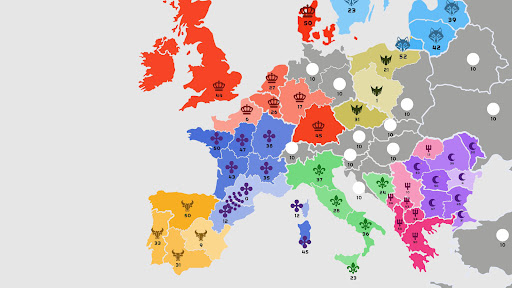
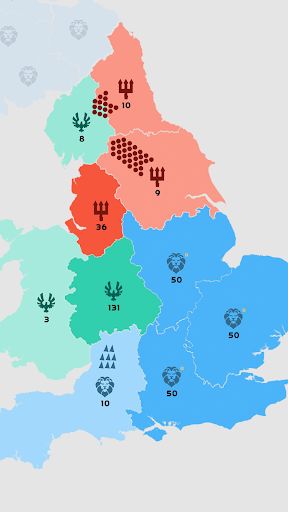
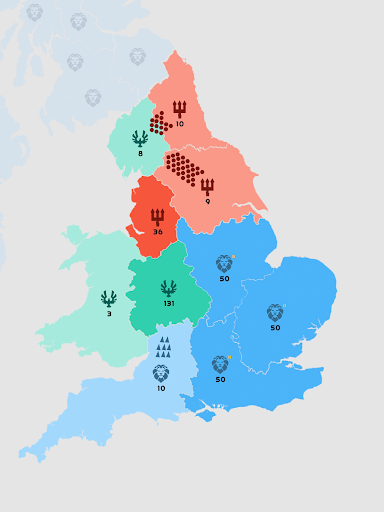
State.io - Conquer the World lands in that very crowded mobile space between strategy game and time-killer, and after spending time with it, the biggest surprise is how quickly it hooks you. This is not a grand strategy experience, and it never pretends to be one. What it offers instead is a streamlined map-control loop that is immediately readable, instantly playable, and weirdly hard to put down once you settle into its rhythm. From the first few matches, the appeal is obvious. You look at a map divided into territories, send your forces from one area to another, and try to out-expand the opposing color before they do the same to you. The controls are simple enough that you don’t need a tutorial-heavy onboarding process to understand what is happening. That accessibility is one of the game’s biggest strengths. I could open it for two minutes while waiting in line, finish a round, and feel like I had actually played something rather than just tapped through a meaningless idle screen. The second thing State.io gets right is pacing. Matches move quickly, and that matters a lot for a free mobile game. There is very little of the drag that can make strategy titles on phones feel like chores. Every decision has a visible effect almost immediately: commit too early and you expose your base, wait too long and the map gets crowded, split your units poorly and you lose momentum. That instant feedback gives the game a satisfying push-and-pull. Even when a round only lasts a short time, it still creates those tiny moments of tension where you are racing to capture a neutral zone before an opponent cuts you off. Visually, the game also benefits from its simplicity. The presentation is clean and readable rather than flashy. I never felt lost trying to understand which areas were mine, which were under threat, and where my next move should go. On a phone screen, that clarity is more important than visual ambition, and State.io mostly understands that. It feels designed around legibility first, which is exactly what this kind of map-based strategy game needs. That said, the simplicity that makes it approachable is also the main reason it doesn’t fully hold up as a long-term strategy experience. After enough rounds, I started noticing how narrow the tactical range can feel. There are definitely smart choices to make in the moment, but the overall structure tends to repeat itself. Expand, reinforce, cut off the opponent, grab openings, repeat. It is fun, but it is not especially deep. If you come in hoping for layered strategy, evolving systems, or highly varied match flow, the game can start to feel samey sooner than you might expect. A second issue is that the satisfaction curve is front-loaded. Early sessions are great because everything feels snappy and fresh, but longer play sessions expose the game’s limitations. The maps and encounters can blur together, and the excitement of the core mechanic does a lot of the heavy lifting. That core is solid, but it is asked to carry the whole experience. I found myself enjoying State.io most in short bursts, not in extended sittings. It shines as a quick-play mobile game, not as something I wanted to sink into for an hour at a time. The other drawback, and this is common in free-to-play mobile titles, is that the overall flow can feel a bit too optimized for quick retention rather than for sustained immersion. The game is good at getting you into “one more round” mode, but not always as good at making each round feel meaningfully distinct. It is engaging in a snackable way rather than a memorable way. That does not ruin the experience, but it does define its ceiling. Even with those limitations, I had a good time with State.io because it understands a basic truth about mobile gaming: friction kills fun. Here, jumping into a match is easy, understanding the objective is easy, and recovering from failure is easy. You lose a round, restart, and try a different opening. That low barrier to experimentation is a real strength. It makes the game inviting for casual players, younger players, and anyone who likes light strategy without wanting to study systems or memorize mechanics. Who is this game for? It is for players who enjoy territory-control games, fast decision-making, and short sessions that still have a competitive edge. It is especially well suited for commuters, casual strategists, and people who want a game they can learn in minutes. It is not for players looking for deep tactical complexity, rich progression, or a highly varied strategy experience that keeps unfolding over dozens of hours. After using it regularly, my overall take is positive. State.io succeeds because its core loop is polished, readable, and instantly satisfying. Its strongest qualities are accessibility, brisk pacing, and a clean strategic setup that works well on mobile. Its biggest weaknesses are limited depth, repetition over longer sessions, and a feeling that the experience can plateau once the novelty wears off. If you judge it by what it is trying to be—a lightweight, pick-up-and-play strategy game—it does that job well. If you expect more than that, you may hit its limits fairly quickly. For me, State.io is the kind of app I’m happy to keep installed for occasional play. I would not call it essential, and I would not call it deep, but I would absolutely call it effective. It knows how to turn a simple idea into a compulsive mobile loop, and that alone makes it worth recommending to the right audience.
Alternative apps