Apps Games Articles
Babbel - Learn Languages
Babbel
Rating 4.6star icon
Editor's summary
Editor rating
star icon star icon star icon star icon
half star icon
4.5

One-line summary Babbel is one of the best language apps for people who want structured, genuinely explanatory lessons rather than gamified busywork, but its more formal style and paid-first value proposition won't suit learners chasing free, flashy motivation.

  • Installs

    50M+

  • Developer

    Babbel

  • Category

  • Content Rating

    Everyone

  • Latest version

    21.52.0

  • Package

    com.babbel.mobile.android.en

Screenshots
In-depth review
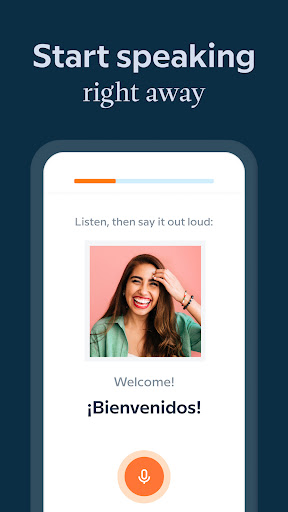
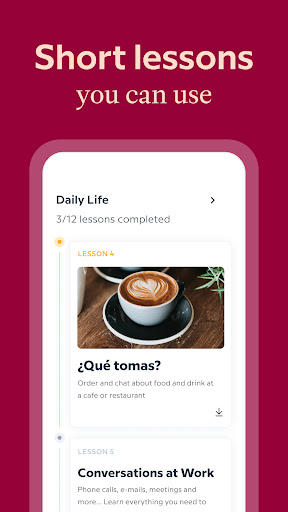
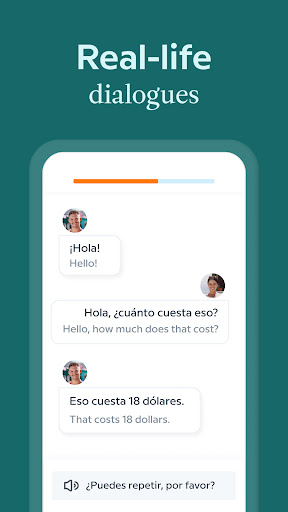
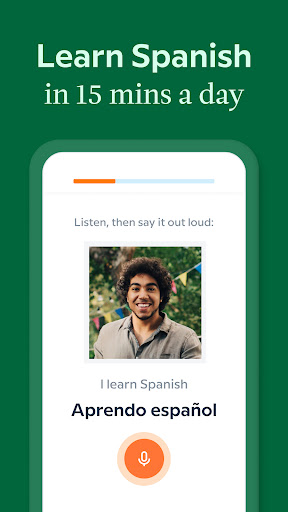
After spending real time with Babbel, the first thing that stood out to me was how intentionally unglamorous it feels—in a good way. This is not an app that tries to hook you with constant fireworks, streak theatrics, or cartoonish rewards. Instead, it behaves like a compact language course that happens to live on your phone. That makes it immediately more appealing for learners who actually want to understand a language, not just tap through vocabulary drills and feel productive. Babbel’s core strength is structure. The lessons feel sequenced by someone who cares about how people build competence step by step. New words are introduced in context, grammar ideas arrive early enough to be useful, and the app usually explains why a phrase works rather than asking you to trust pattern recognition alone. In practice, that makes a huge difference. During use, I found myself remembering not just the answer to an exercise, but the rule behind it. That is a much stronger foundation than the kind of language app experience where you can finish a lesson and still not know what you actually learned. The lesson design also deserves praise for its pacing. Sessions are short enough to fit into a commute or a coffee break, and that keeps the app from becoming mentally heavy. Babbel is at its best when you use it consistently in small bursts. A 10- to 15-minute session feels productive, and the app is good at breaking progress into manageable pieces. I never had the sense that I needed to clear an hour to make meaningful progress. For busy adults, that matters a lot. Another major strength is how many skills it tries to engage at once. Babbel doesn’t lean on one mode of interaction. You read, listen, type, match, and speak. That multimodal approach gives the lessons more stickiness than flashcard-only systems. Pronunciation practice in particular adds value, because saying the language out loud changes the experience from passive recognition to active use. When the speech tools cooperate, that feature helps push you beyond silent study and into something closer to real communication. A third area where Babbel consistently impressed me is in the quality of explanation and contextual detail. It often feels like the app was built by people who understand that language learning is not just memorizing labels for objects. Grammar notes, usage clues, and occasional cultural framing make lessons feel grounded. Visuals and examples generally support the concept being taught rather than existing as decorative filler. That gives the app a more serious educational feel without making it dry. That said, Babbel is not flawless, and some of its downsides are obvious once the honeymoon phase wears off. The first weakness is that the experience can feel repetitive in format. Even when the content is useful, the rhythm of a lesson starts to become predictable: learn a few phrases, fill in answers, repeat, do a short dialogue, move on. There is comfort in that consistency, but there is also a ceiling to how exciting it feels. If you rely on novelty to stay motivated, Babbel can begin to feel a bit mechanical. The second weakness is that its speaking technology is helpful but imperfect. In testing, pronunciation checks were valuable when they worked smoothly, but occasional recognition misses can be frustrating. Nothing kills momentum faster than knowing you said something correctly and watching the app reject it anyway. This is not a constant problem, but it happens often enough to be noticeable, especially in languages where accents, short words, or subtle pronunciation differences matter. The third weakness is that Babbel’s overall design favors methodical learners over playful ones. The interface is clean and functional, but it is not especially lively. Some parts of navigation could also be more intuitive, particularly when you want to move between learning paths or find exactly the kind of content you want next. The app generally feels polished, but not always frictionless. There were moments where I wanted quicker access to reviews, older material, or alternate content without poking around. Who is Babbel for? It is best for adults who want a school-like, guided learning experience with real explanations. If you like understanding grammar, seeing progression in a logical order, and building practical conversation skills through repetition, Babbel is easy to recommend. It is also a strong fit for learners who have bounced off more game-like apps and want something that feels more substantial. Who is it not for? If you want a totally free experience, a highly gamified system, or a language app that feels more like entertainment than study, Babbel may not grab you. It also may not satisfy learners who expect an app alone to replace deep immersion, tutoring, or advanced live feedback. Babbel is excellent within its lane, but it still works best as a structured learning tool rather than a complete language-learning universe. The bottom line is that Babbel feels mature. It knows what it wants to be, and most of the time it delivers on that promise with confidence. I came away from it feeling like I had actually studied, not just spent time in an educational-looking app. That alone puts it above a lot of competitors. It is not the most dazzling language app, and it can occasionally feel rigid or repetitive, but if your priority is meaningful progress over gimmicks, Babbel remains one of the smartest picks on Android.
Alternative apps