
Apps Games Articles
Hello Neighbor
tinyBuild
Rating 4.0star icon
Editor's summary
Editor rating
star icon star icon star icon star icon empty star icon
4.1

One-line summary Hello Neighbor is easy to recommend for players who want a genuinely tense, puzzle-heavy stealth adventure on mobile, but its rough edges, occasional bugs, and fiddly touch controls can test your patience as much as the Neighbor does.

  • Installs

    10M+

  • Developer

    tinyBuild

  • Category

    Adventure

  • Content Rating

    Everyone 10+

  • Latest version

    1.0

  • Package

    com.tinybuildgames.helloneighbor

In-depth review
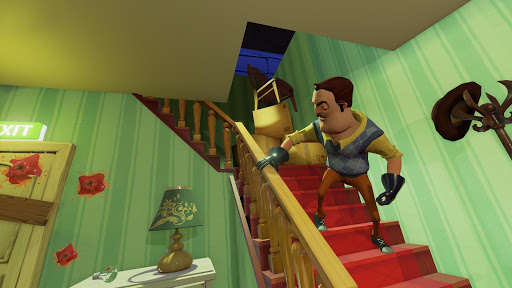
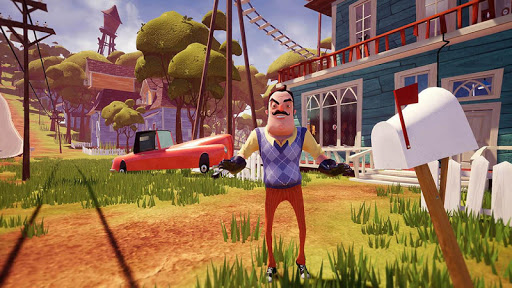
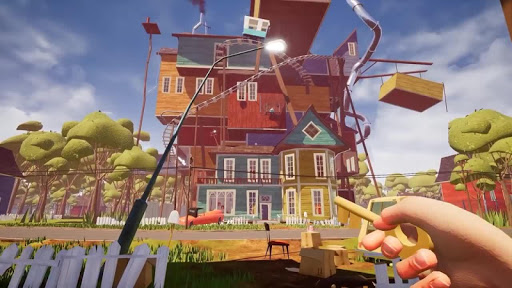
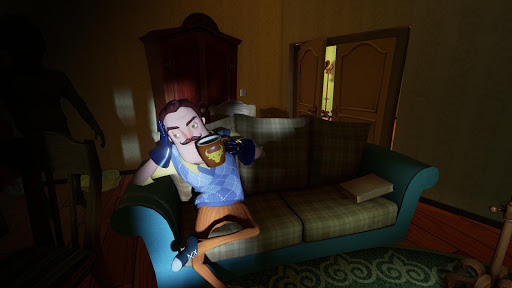
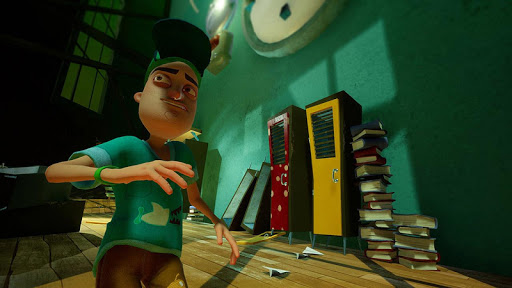
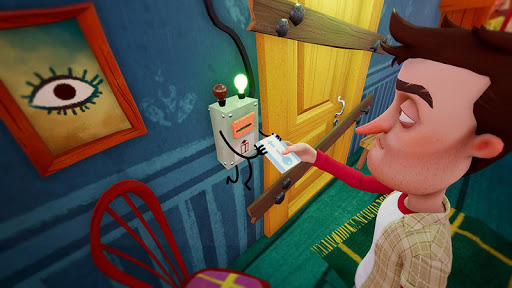
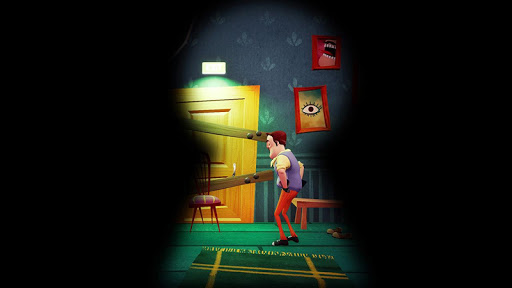
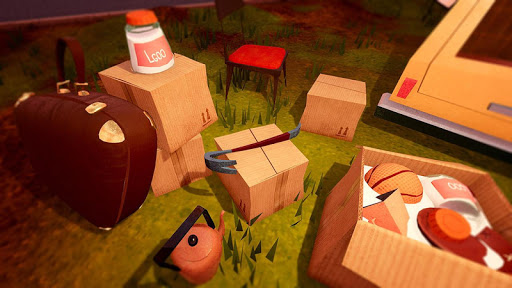
Hello Neighbor on Android is one of those mobile ports that feels more ambitious than typical. From the first few minutes, it is clear this is not a quick, disposable horror app built around jump scares and timers. It is a full stealth-puzzle experience that asks you to observe, experiment, fail, and try again. After spending real time with it, what stood out most was not the horror angle, but the feeling of being trapped in a strange mechanical playground where every object, locked door, shortcut, and trap might matter later. The core loop is strong. Sneaking into the Neighbor’s house, testing routes, getting caught, and returning with a slightly better plan creates a satisfying rhythm. The house itself is the star of the game. It feels unpredictable and layered in a way that keeps curiosity alive, and that matters because Hello Neighbor depends on you wanting to poke at every weird detail. Climbing through windows, hauling objects around, unlocking access to new areas, and slowly understanding the logic of the space gives the game its best moments. When a plan finally works after several failed attempts, the payoff is excellent. The much-advertised adaptive AI is also part of what gives the game its personality. In practice, the Neighbor feels less like a scripted patrol route and more like a constant source of pressure. If you keep leaning on the same entry point, the game pushes back. That makes the stealth more dynamic than in many mobile horror titles. It is not perfect, but it does create the feeling that the game is paying attention. Instead of sleepwalking through memorized patterns, you are encouraged to stay flexible, and that keeps the tension alive much longer than a simpler hide-and-seek setup would. Another pleasant surprise is how much of the original identity survives on mobile. The stylized visuals are intact, the bizarre architecture still has charm, and the story comes through in fragmented scenes and environmental weirdness rather than heavy exposition. This is a game that trusts the player to piece things together. It can be eerie without becoming oppressive, which makes it more approachable than many horror games. Players who usually avoid intense horror should still be able to handle this one, because the mood is more suspenseful and odd than truly terrifying. That said, Hello Neighbor is not a polished masterpiece on mobile. The biggest issue in everyday play is inconsistency. Some sessions feel smooth and immersive; others run into glitches that break the flow. I ran into moments where interactions felt unreliable, physics turned goofy, or progress became frustratingly messy. This is the kind of game where you are already repeating sections because of trial and error, so technical hiccups hurt more than they would in a simpler app. When a failure feels like your mistake, the game is thrilling. When it feels like the game lost track of an item or handled an interaction poorly, the illusion falls apart fast. The touch controls are the second major problem. They are workable, but they are rarely elegant. Picking up the wrong object, fumbling with doors, or missing a throw because the input feels awkward can turn an already demanding game into a clumsy one. Hello Neighbor asks for precision during chases and puzzle-solving, and touchscreen controls do not always deliver that precision. You can adapt over time, but there is definitely a learning curve, and some of the challenge comes from controlling the game rather than outsmarting it. The third weakness is the game’s puzzle readability. Hello Neighbor is at its best when it makes you feel clever, but it sometimes drifts into vagueness. There were stretches where progress depended less on logical deduction and more on trying every object in every place until something clicked. For players who enjoy mystery and experimentation, that is part of the appeal. For others, it can feel opaque and exhausting. This is not a breezy casual game, and it does not do much hand-holding once the basics are out of the way. Still, there is a lot to like here. First, the atmosphere works: not because it is relentlessly scary, but because it builds unease through pursuit, mystery, and the absurd design of the house. Second, the stealth-and-puzzle loop is genuinely compelling when everything clicks. Third, the game has more depth and personality than most free mobile horror titles, making it feel like an actual adventure rather than a thin mobile imitation. Who is this for? It is for players who enjoy stealth games, environmental puzzles, and a bit of friction in their games. If you like experimenting, learning through failure, and watching a strange world slowly reveal itself, Hello Neighbor is easy to appreciate. It is also a good fit for players who know the game from other platforms and want a mobile version that still captures the same odd tension. Who is it not for? If you want smooth, intuitive controls, clear objectives, and highly polished progression, this may wear you down. It is also not ideal for players with low tolerance for bugs or for anyone looking for pure horror. The fear here comes from pressure and unpredictability, not relentless scares. In the end, Hello Neighbor remains an intriguing mobile experience because it dares to be ambitious. It is clever, tense, and memorable in ways many mobile games are not. But it also demands patience. When the systems, controls, and physics align, it is fantastic. When they do not, it can feel like you are fighting the port as much as the Neighbor. Even so, for the right player, that strange, uneven journey is still well worth taking.